
Creating a tropical-style garden often feels like a promise to yourself: a promise of bold leaves, architectural shapes, and that lush, escapist feeling every time you step outside. But when winter arrives—especially in the UK—many tropical plants die back, leaving a garden that looks flat and empty. The solution is to weave in evergreen exotics that retain their foliage year-round, giving structure, colour, and drama even in the coldest months.
The nine plants below are not only beautiful and bold, but they also possess fascinating botanical adaptations that allow them to stay evergreen in chilly climates. At the end of the article, you’ll find a “Digging Deeper” section that explores the plant science behind how these foliage heroes survive freezing temperatures.
Let’s dive into the plants.
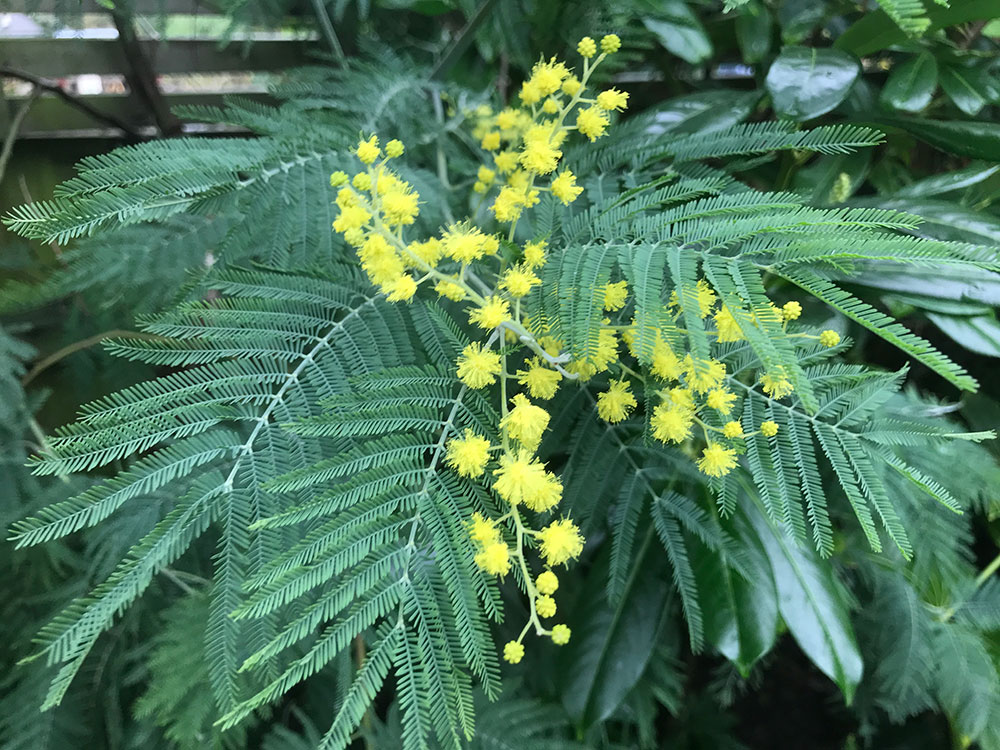
1. Acacia dealbata (Silver Wattle)
Acacia dealbata brings a soft, ethereal quality to winter gardens with its finely divided, silver-toned bipinnate leaves. Despite looking delicate, it’s more cold-tolerant than many gardeners realise. The foliage contains a thickened cuticle—a waxy outer layer that reduces moisture loss and insulates tissues from frost. Acacias also maintain evergreen phyllodes or leaf-like structures that continue photosynthesising through winter, helping the plant stay active while others enter deep dormancy.
Given shelter and drainage, Acacia dealbata adds height and a dreamy, tropical veil of foliage all year.
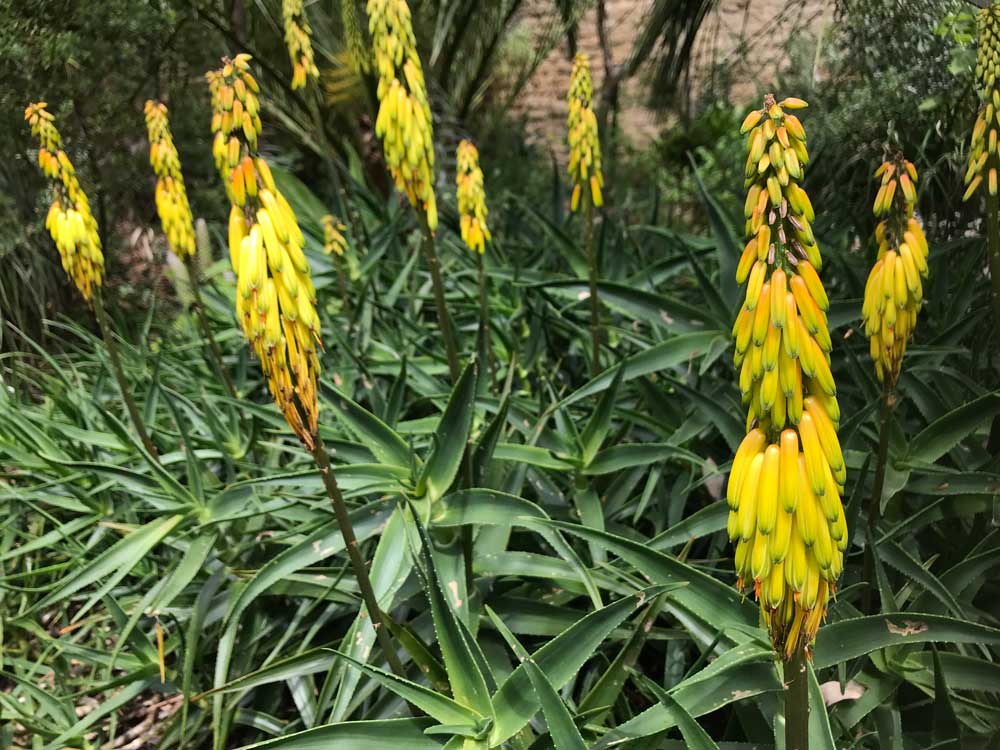
2. Aloe striatula (Hardy Aloe)
One of the hardiest aloes for UK gardens, Aloe striatula forms tall, branching stems topped with narrow, fleshy leaves. Unlike many succulent aloes, which collapse in freezing conditions, this species has evolved to survive cold nights in mountainous habitats. Its leaves contain mucilage—a water-storing gel that slows freezing by creating a protective buffer within cells.
This slow-freezing effect allows the plant’s internal structures to stay intact, helping it retain its evergreen form even after frost.
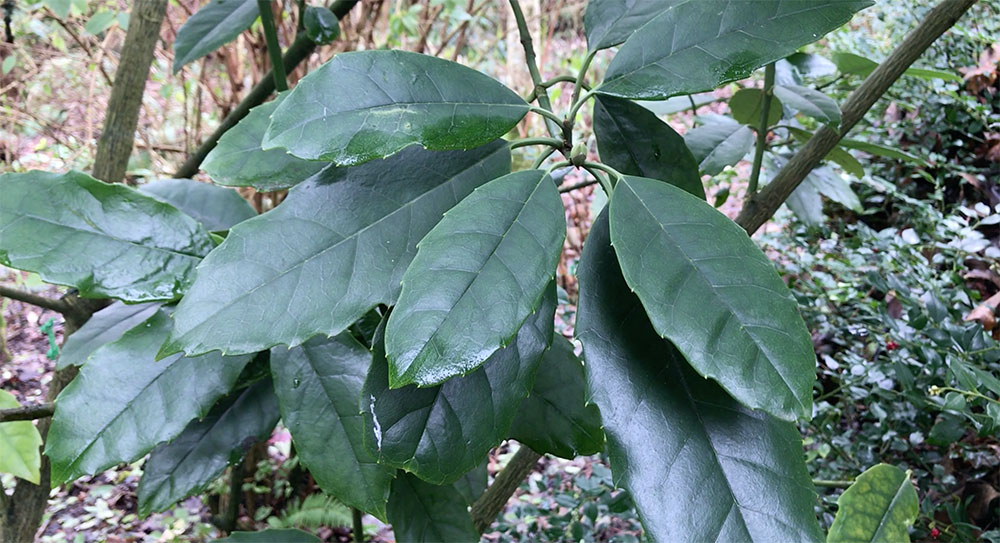
3. Aucuba omeiensis (Omei Aucuba)
Aucuba omeiensis offers broad, glossy, jungle-like leaves that bring instant tropical impact. The foliage is leathery, a characteristic known as sclerophylly, which creates a dense cellular structure that resists cold damage. The thick epidermis—essentially the leaf’s outer skin—helps retain moisture during winter and prevents ice crystals from puncturing the cells.
It’s a superb choice for shade, where it stays lush and deep green in the darkest months.
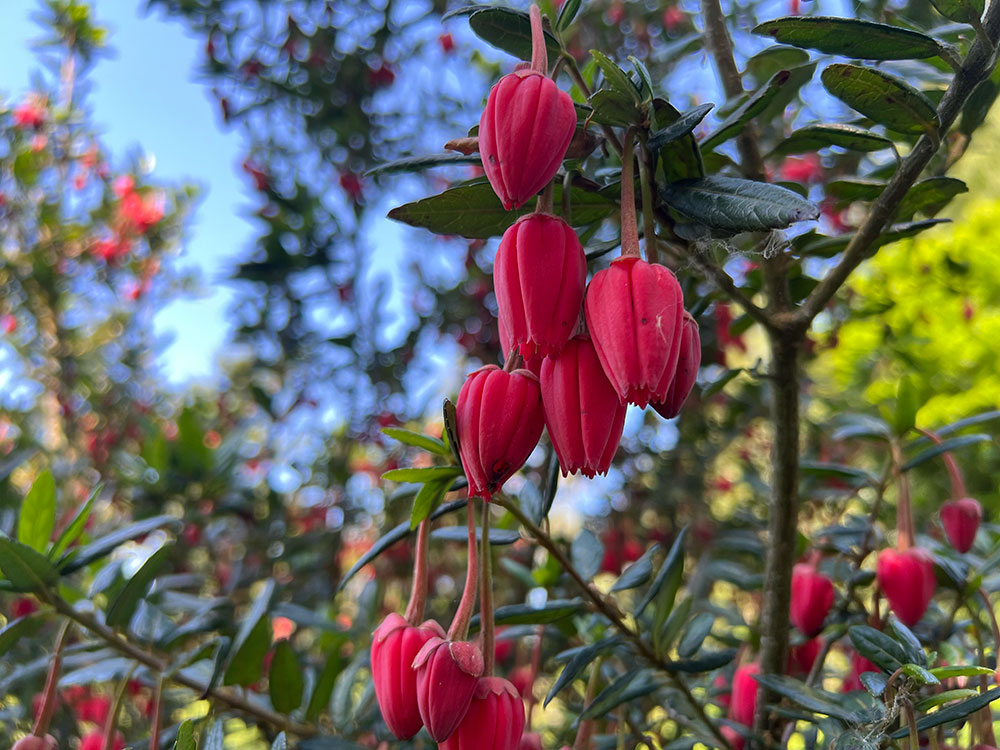
4. Crinodendron hookerianum (Chilean Lantern Tree)
With elegant evergreen leaves and distinctive hanging lantern-like flowers, Crinodendron hookerianum adds both structure and spring/summer interest. Its foliage is toughened by a layer of lignin, a woody polymer that strengthens cell walls. High lignin content allows leaves to withstand winter winds and low temperatures without tearing or collapsing.
In woodland-style or sheltered tropical gardens, it offers an evergreen backbone with real refinement.
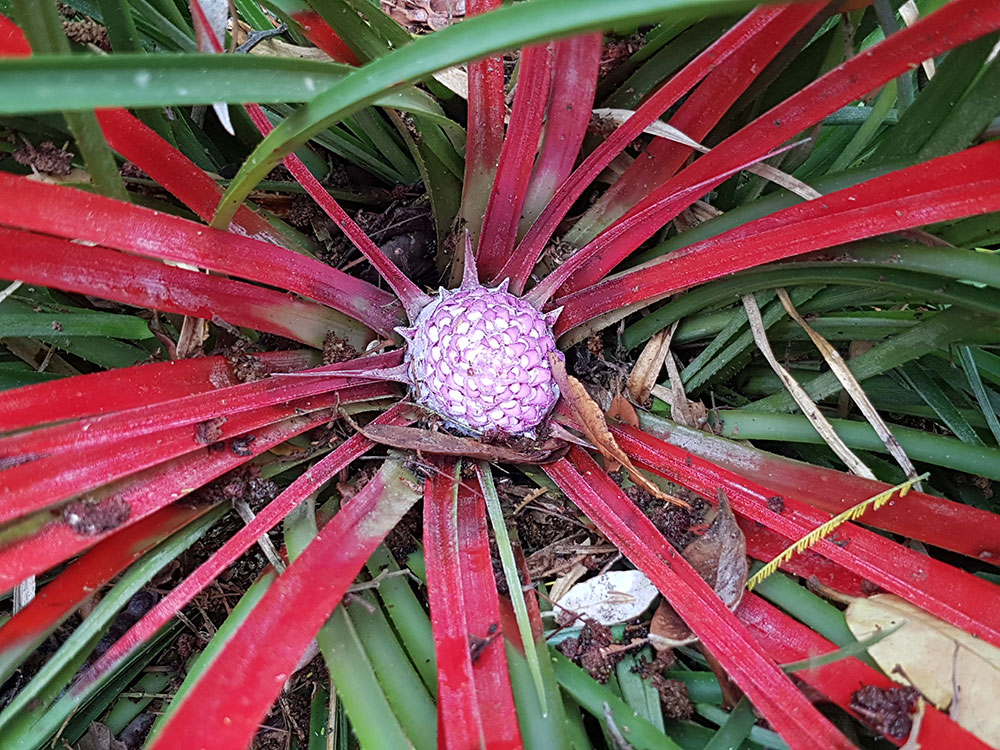
5. Fascicularia bicolour (Hardy Bromeliad)
Fascicularia bicolour is one of the few bromeliads capable of surviving outdoors all year in the UK. Its rosette of spiky leaves forms a tank-like structure that channels water to the centre. This design helps the plant avoid frost damage because the leaves themselves are highly xeromorphic—adapted to conserve water with waxy coatings and stiff tissues.
Its brilliant red centre during flowering looks spectacular against winter greys and adds an exotic punch to rockeries and gravel gardens.
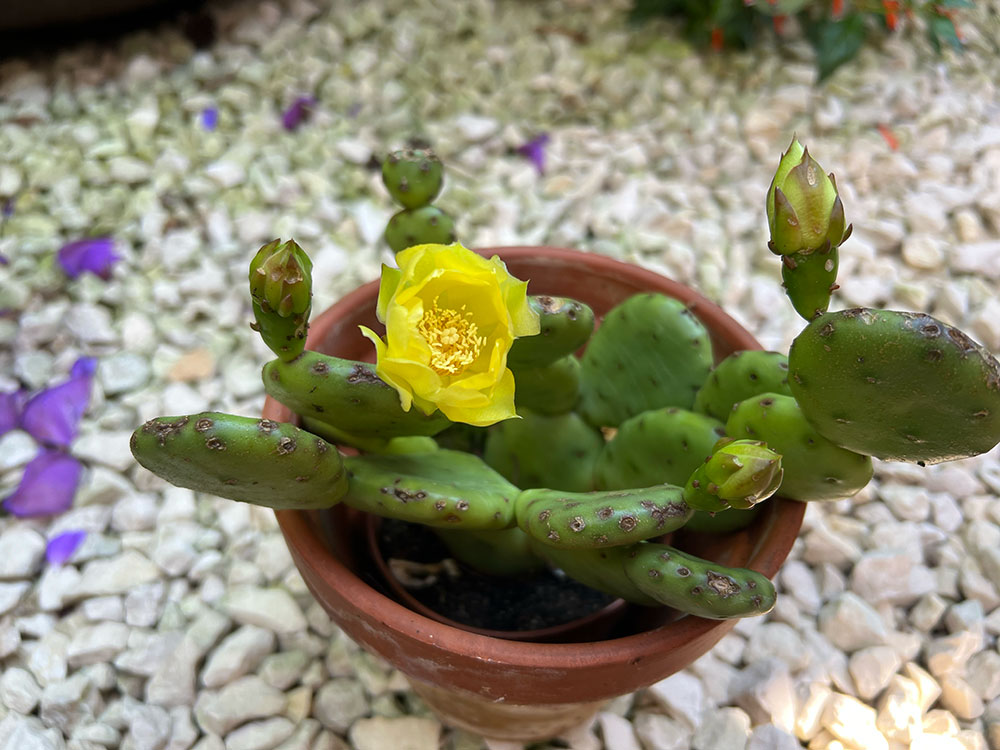
6. Opuntia humifusa (Hardy Prickly Pear)
It may seem surprising, but this cactus is fully hardy in many UK regions. Opuntia humifusa stores water inside pads called cladodes, which can shrink during winter as the plant dehydrates itself. This dehydration is a survival strategy: with less water inside cells, there’s less chance of lethal ice formation.
The result is an evergreen structure with a sculptural, desert-meets-tropics feel, perfect for exotic Mediterranean or arid-style borders.
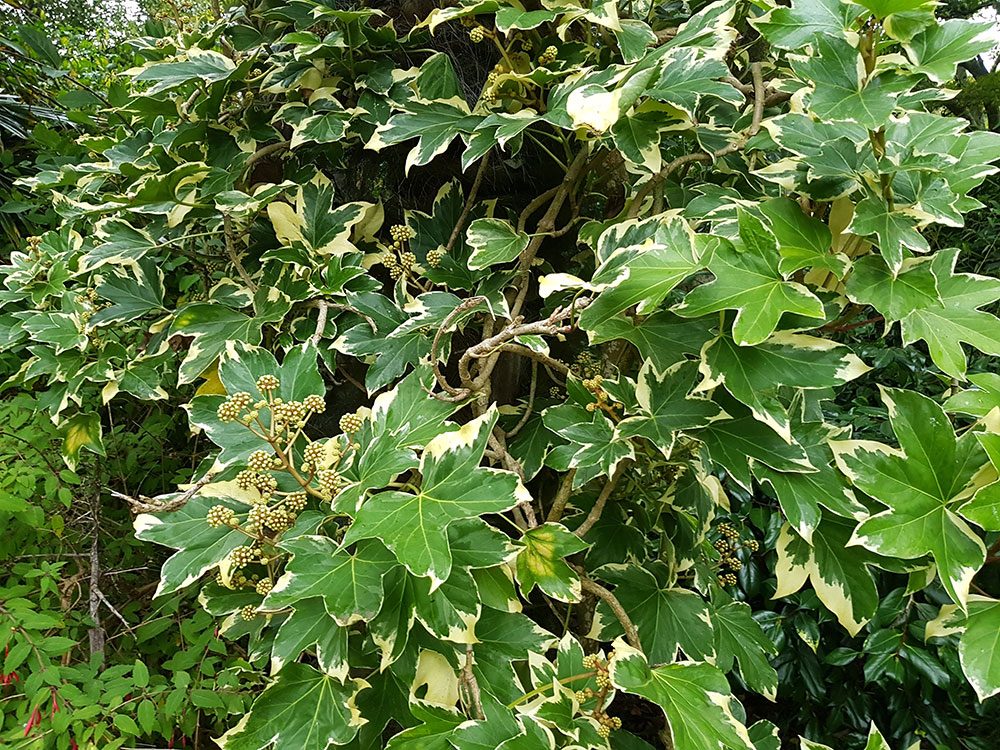
7. Fatshedera lizei ‘Variegata’
This hybrid between Fatsia japonica and ivy combines large, tropical-style leaves with climbing ability. Its variegated cream-and-green foliage brightens gloomy winter borders and walls. Evergreen thanks to thick, wax-coated leaves, it’s capable of photosynthesising at low light levels thanks to shade-adapted chloroplasts, which remain active even on short winter days.
It’s an ideal plant for vertical structure or filling difficult, shaded spaces.
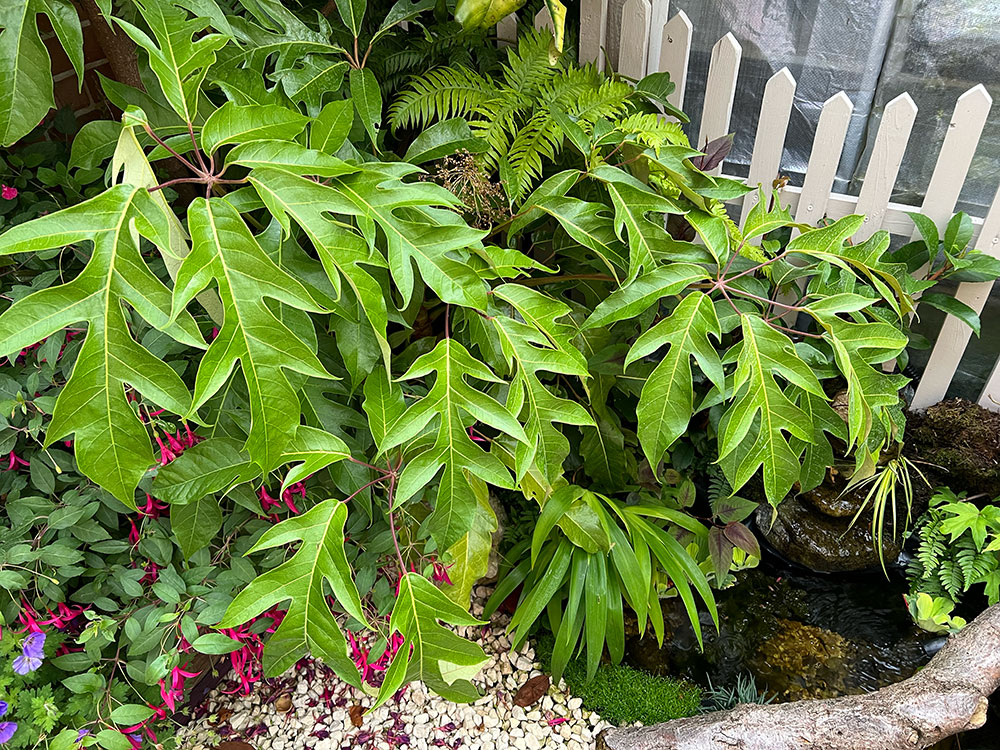
8. Schefflera delavayi
Schefflera delavayi has become a star of UK tropical gardens with its bold, deeply lobed leaves and impressive size. The foliage’s underside is covered in indumentum—a dense layer of tiny hairs that traps insulating air and protects the leaf from cold desiccation.
This micro-layer of trapped air acts like a natural winter duvet, giving Schefflera remarkable cold tolerance while remaining lush and dramatic.
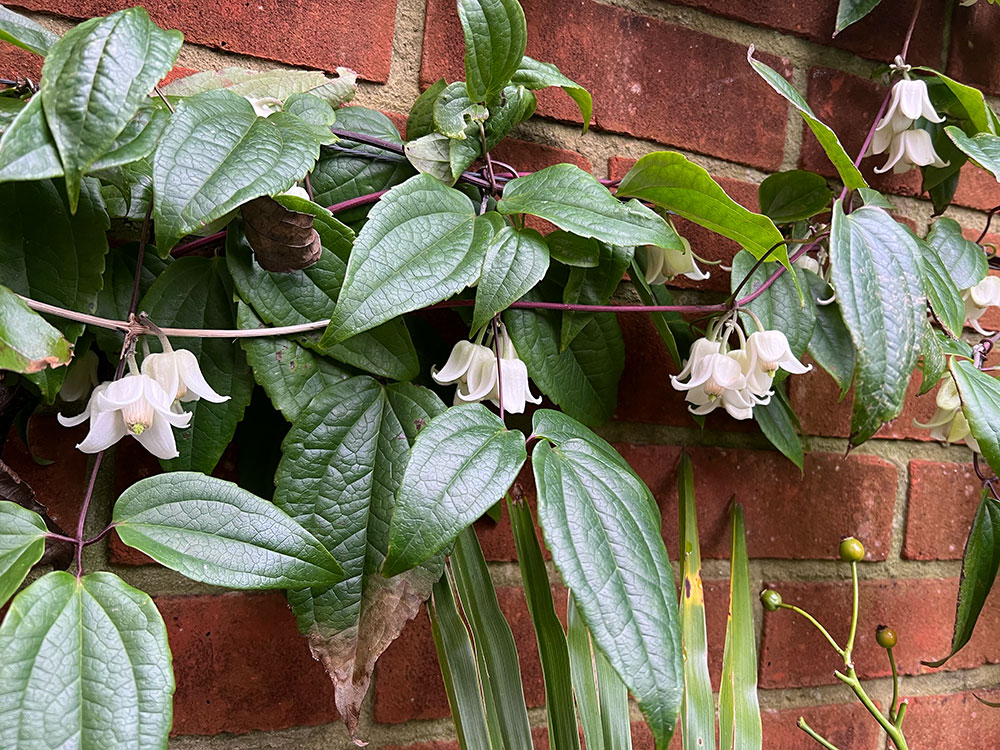
9. Clematis urophylla ‘Winter Beauty’
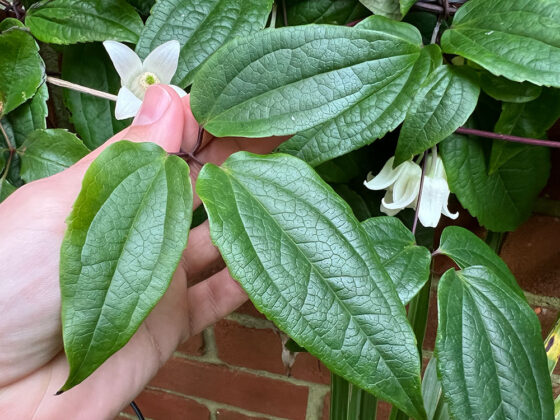
Unlike many clematis, ‘Winter Beauty’ is evergreen and flowers during winter. Its leaves contain suberin, a natural protective compound within cell walls that reduces water loss. This helps prevent winter desiccation at a time when roots may struggle to draw up frozen water from the soil.
Its delicate white bells appear when little else blooms, providing soft tropical charm on trellises, frames, or pergolas.
Digging Deeper: How Evergreen Plants Survive Winter
While deciduous plants drop leaves to avoid the challenges of winter, evergreens must protect living foliage from dehydration and freezing. The exotics above use a combination of these fascinating adaptations:
1. Waxy Cuticles
Many evergreen leaves are coated in a thick cuticle, a waterproof layer made of cutin. This reduces transpiration—water lost through leaves—during winter when water uptake is limited.
2. Antifreeze Compounds
Plants produce cryoprotectants such as sugars, amino acids, and solutes. These substances lower the freezing point of internal fluids, similar to antifreeze in a car radiator.
3. Controlled Dehydration
Some hardy succulents and cacti, like Opuntia, reduce water inside their cells before cold arrives. With less water available to freeze, cell membranes remain intact.
4. Sclerophylly (Leathery Leaves)
Tough, stiff leaves resist tearing, freezing, and wind damage. These leaves contain more lignin and cellulose, reinforcing their structure.
5. Protective Hairs and Indumentum
A hairy leaf surface traps a layer of insulating air that reduces heat loss and protects delicate tissues.
6. Evergreen Photosynthesis
Many evergreen species maintain slow but continuous photosynthesis through winter. This gives them a competitive advantage and helps them resume growth earlier in spring.
Final Thoughts
These nine evergreen exotics prove that a tropical-style garden doesn’t need to fade away in winter. Their striking forms, bold leaves, and impressive cold tolerance provide consistent structure and beauty—while their botanical adaptations reveal remarkable evolutionary ingenuity.
By mixing hardy evergreens with your more tender tropical plants, you can create a garden that feels immersive, lush, and inviting every month of the year.