

Shrub · Tree
Heptapleurum delavayi
Delavay’s umbrella tree
Also known as: Schefflera delavayi
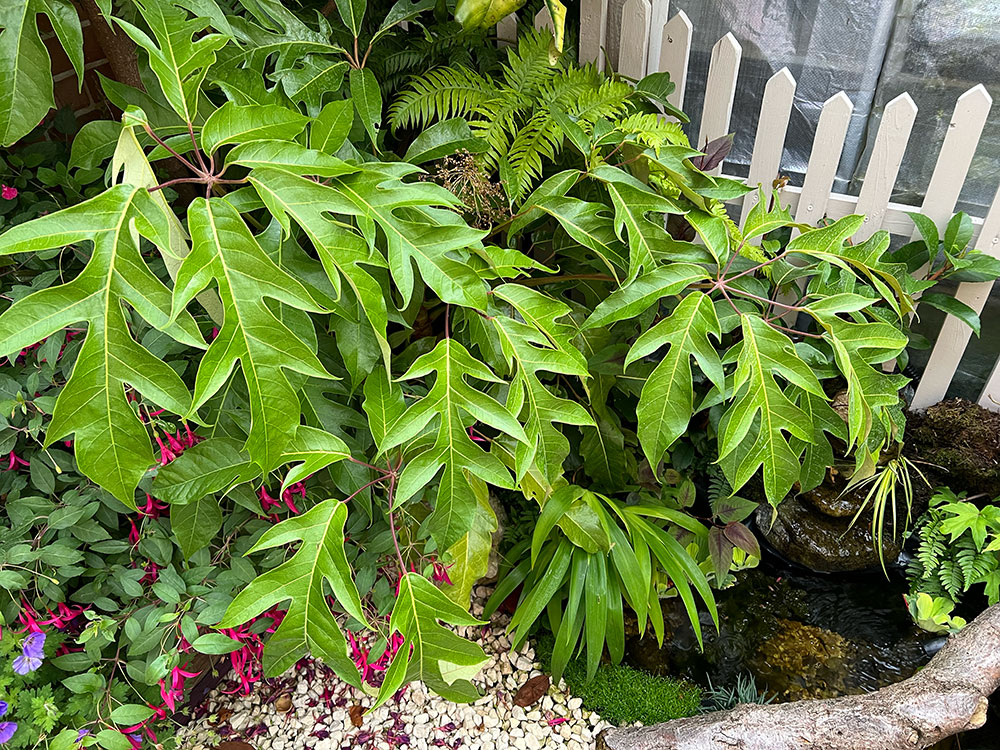
A bold evergreen shrub with large, leathery, fingered leaves and late cream flower sprays.
- Full sun, Partial shade
- 2.5–4 m (8–13 ft)
- 2.5–5 m (8–16 ft)
- H4 · Zone 8
- September–November
- Evergreen
Overview
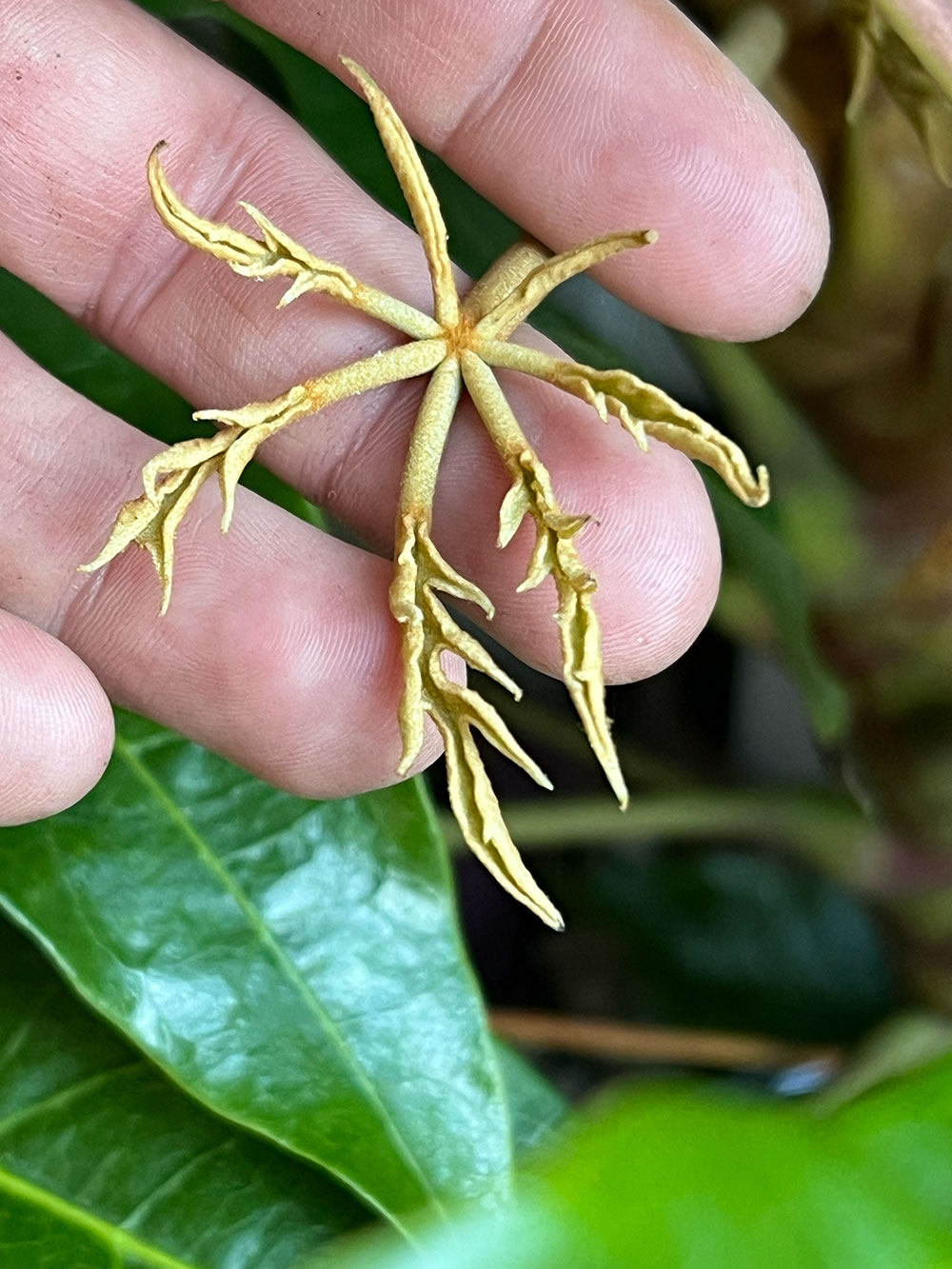
This Chinese evergreen forms a large shrub or small tree with several broad leaflets radiating from each leaf stalk. Established plants may produce cream flower panicles in autumn, followed by dark fruit. Provide shelter from drying wind, dependable moisture and room for a spreading mature canopy.
At a Glance
Growing Conditions
Aspect Suitability
- East-facing
- West-facing
Soil Tolerance
- Clay
- Sandy
- Loam
- Acid
- Neutral pH
Foliage
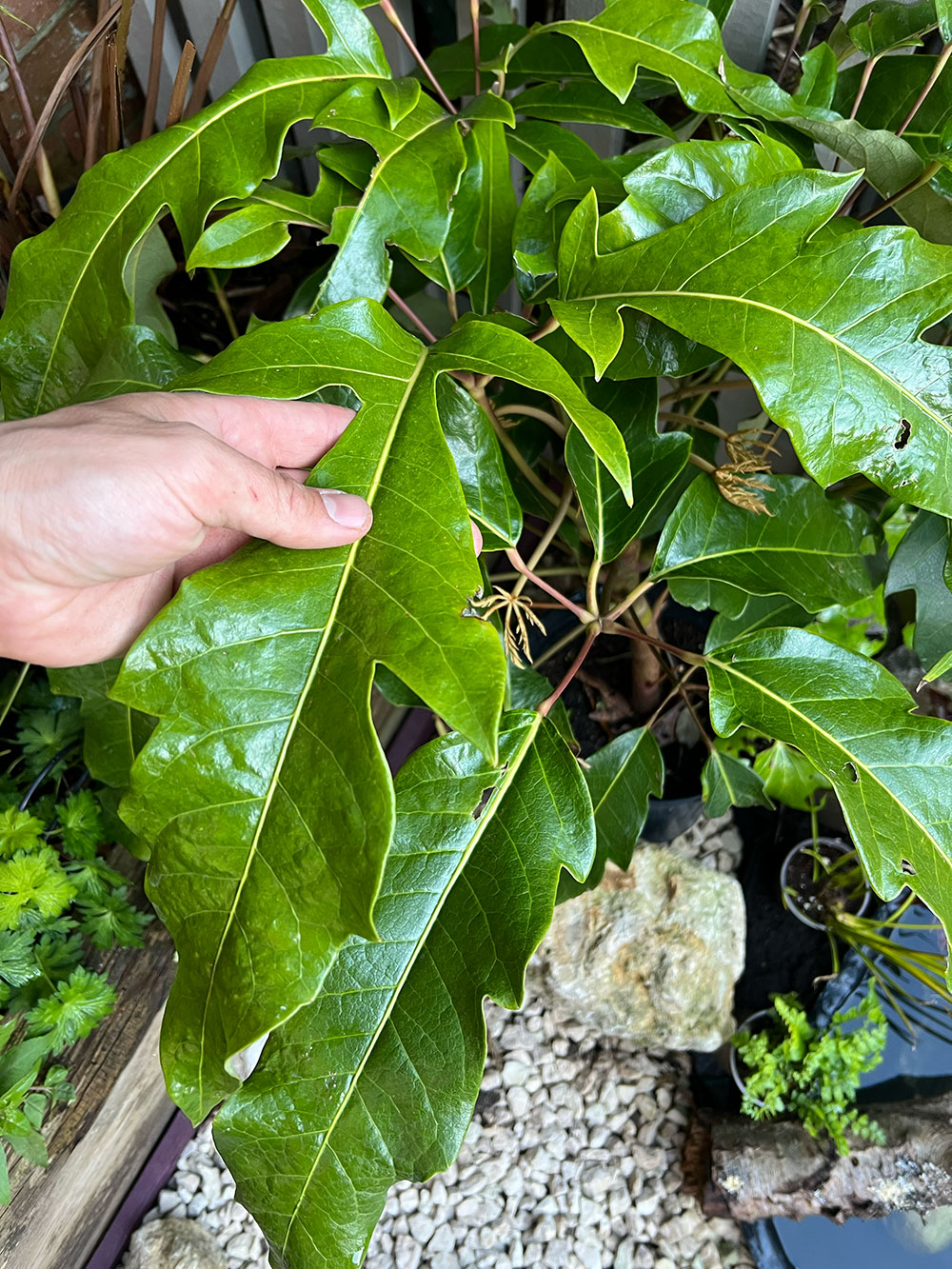
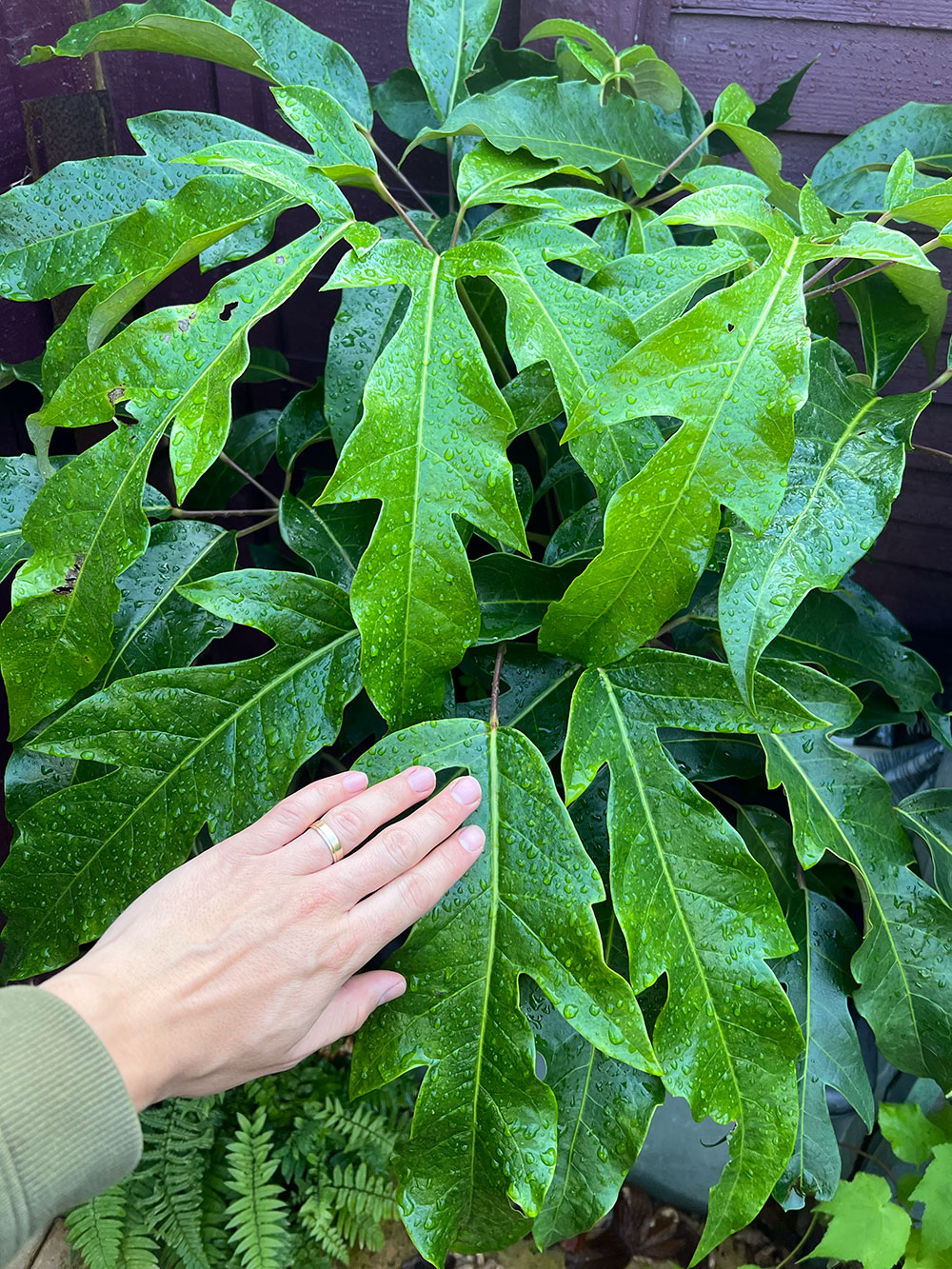
- Architectural foliage
Foliage interest: 12 months of the year
Seasonal Timeline
- Flowering Sep Oct Nov
- Foliage 12 months of the year
- Propagate Mar Apr Jul Aug Sep
Maintenance Calendar
- Apr Remove dead or damaged shoots after hard frost has passed
- May Add organic mulch around the root area
- Jun Water deeply during establishment and dry spells
- Aug Take semi-ripe cuttings under cover if required
- Nov Shelter young plants from frost and cold winds
Garden Design
Works well in: Contemporary, Tropical, Woodland
Use as an evergreen canopy or specimen in dappled light. Very old plants in mild gardens can spread beyond the typical dimensions.
Companion planting: Tree ferns, Hardy begonias, Low woodland perennials
Wildlife Value
- Bees
- Other pollinators
- Birds
- Shelter
- Food source
- Food
Safety
- Skin irritant
Sap may irritate skin. Do not eat foliage or berries; species-specific pet toxicity is not well documented.