

Cactus · Succulent
Opuntia humifusa
Eastern prickly pear
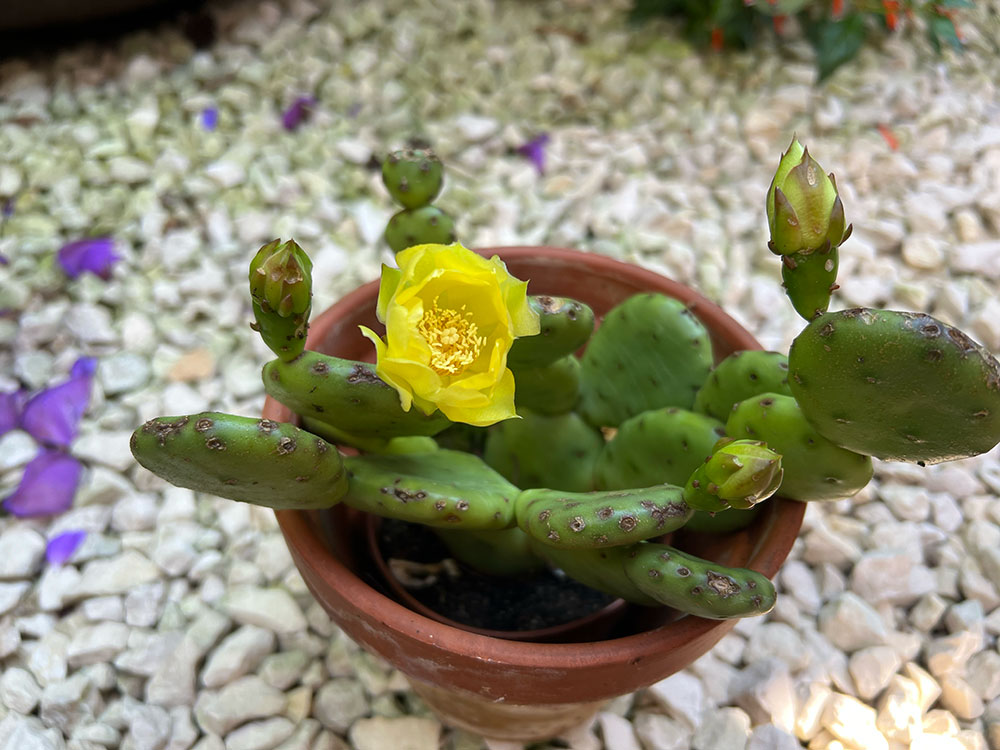
A low, cold-hardy cactus with flattened green pads, yellow flowers and reddish fruit.
- Full sun
- 10–30 cm (4–12 in)
- 30–60 cm (12–24 in)
- H7 · Zone 4
- June–July
- Evergreen
Overview
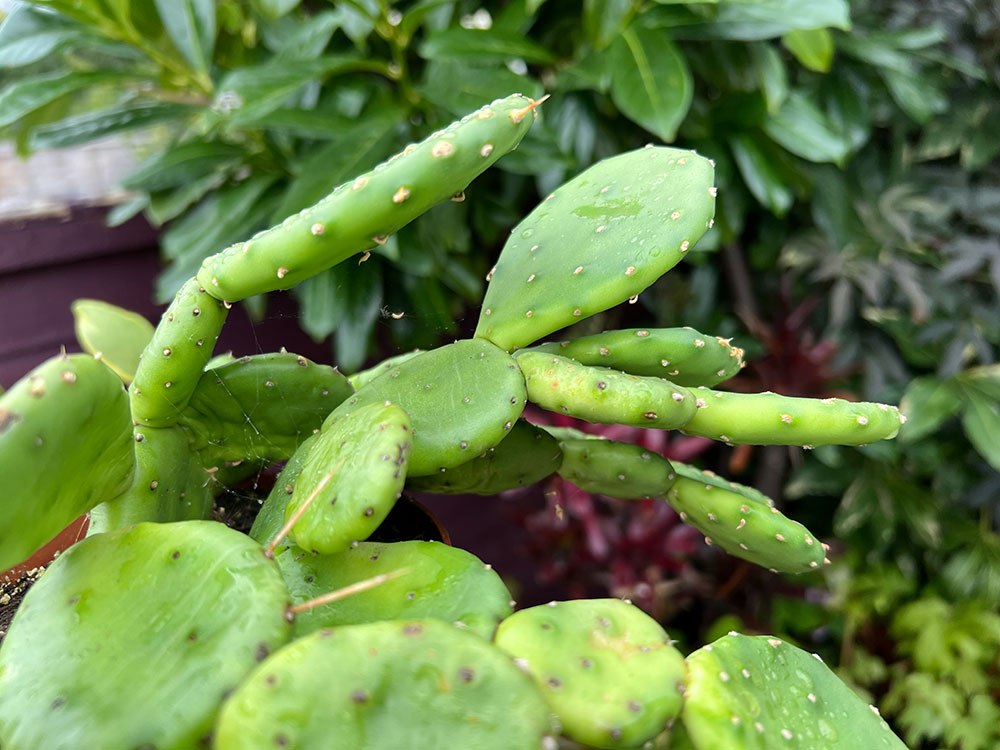
This North American cactus spreads into low clumps of flattened stem pads, which carry tiny barbed bristles called glochids. True leaves are small and short-lived; the pads remain green. Yellow flowers appear in summer, followed by reddish berries. Winter shrivelling is normal, but stagnant wet soil causes rot.
At a Glance
Growing Conditions
Aspect Suitability
- South-facing
- West-facing
Site Tolerance
- Exposed sites
- Wind
- Coastal
- Salt
- Drought
Soil Tolerance
- Sandy
- Loam
- Acid
- Neutral pH
- Alkaline
Foliage
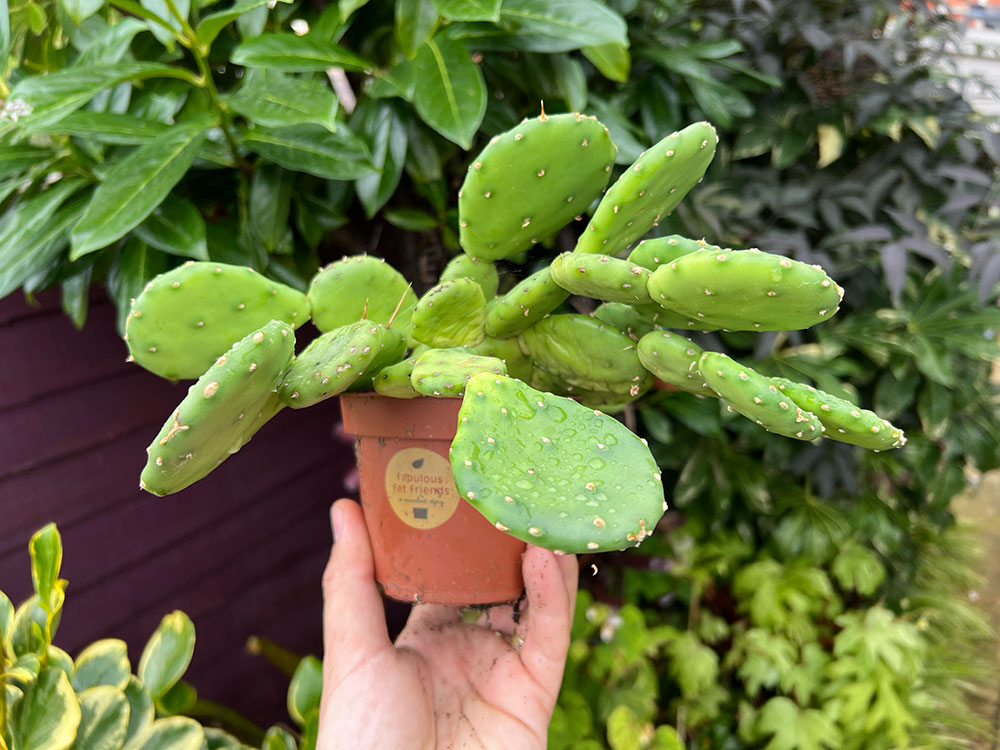
- Architectural foliage
Foliage interest: 12 months of the year
Seasonal Timeline
- Flowering Jun Jul
- Foliage 12 months of the year
- Fruiting Sep Oct Nov Dec
- Propagate Apr May Jun Jul Aug
Maintenance Calendar
- Apr Check pads recover as weather warms and remove soft rot
- May Take pad cuttings and let wounds callus before planting
- Jul Water sparingly only in prolonged dry weather or pots
- Oct Provide ventilated rain cover where winter drainage is inadequate
- Nov Clear fallen leaves with tongs to keep pads dry
Garden Design
Works well in: Coastal, Contemporary, Gravel, Mediterranean
Use a raised gravel bed or sunny slope with excellent winter drainage. Keep pads above wet soil and clear of pedestrian access.
Companion planting: Hardy succulents, Small dryland grasses, Rock-garden plants
Wildlife Value
- Bees
- Other pollinators
- Birds
- Food source
- Food
Safety
- Skin irritant
Spines and almost invisible barbed glochids lodge in skin and eyes. Handle with tongs and protective gloves; keep away from paths and pets.