

Perennial · Subshrub
Salvia macrophylla ‘Purple Leaf Form’
Purple-leaved large-leaved sage
A tender, large-leaved sage with purple-toned foliage and vivid blue flowers.
- Full sun, Partial shade
- 1–2 m (3–7 ft)
- 0.6–1 m (2–3 ft)
- H2 · Zone 9
- July–October
- Semi evergreen
Overview
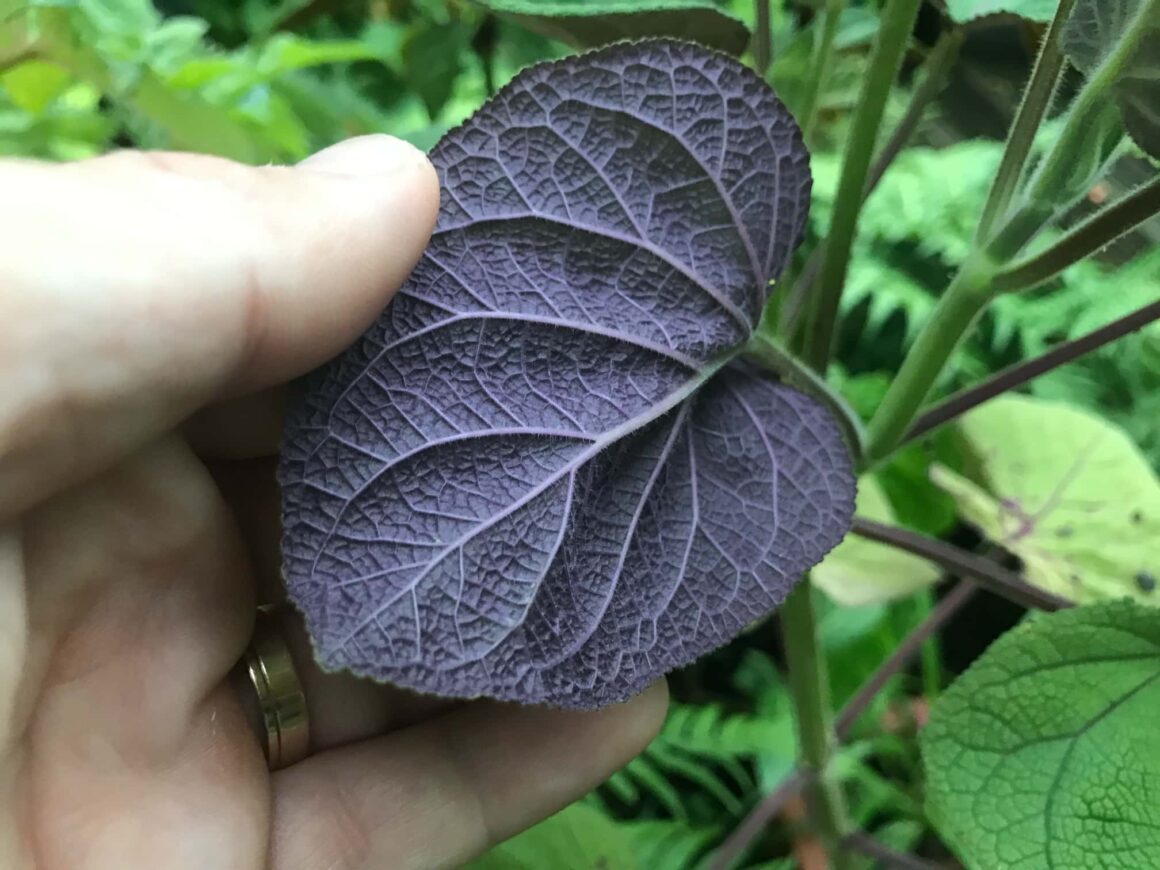
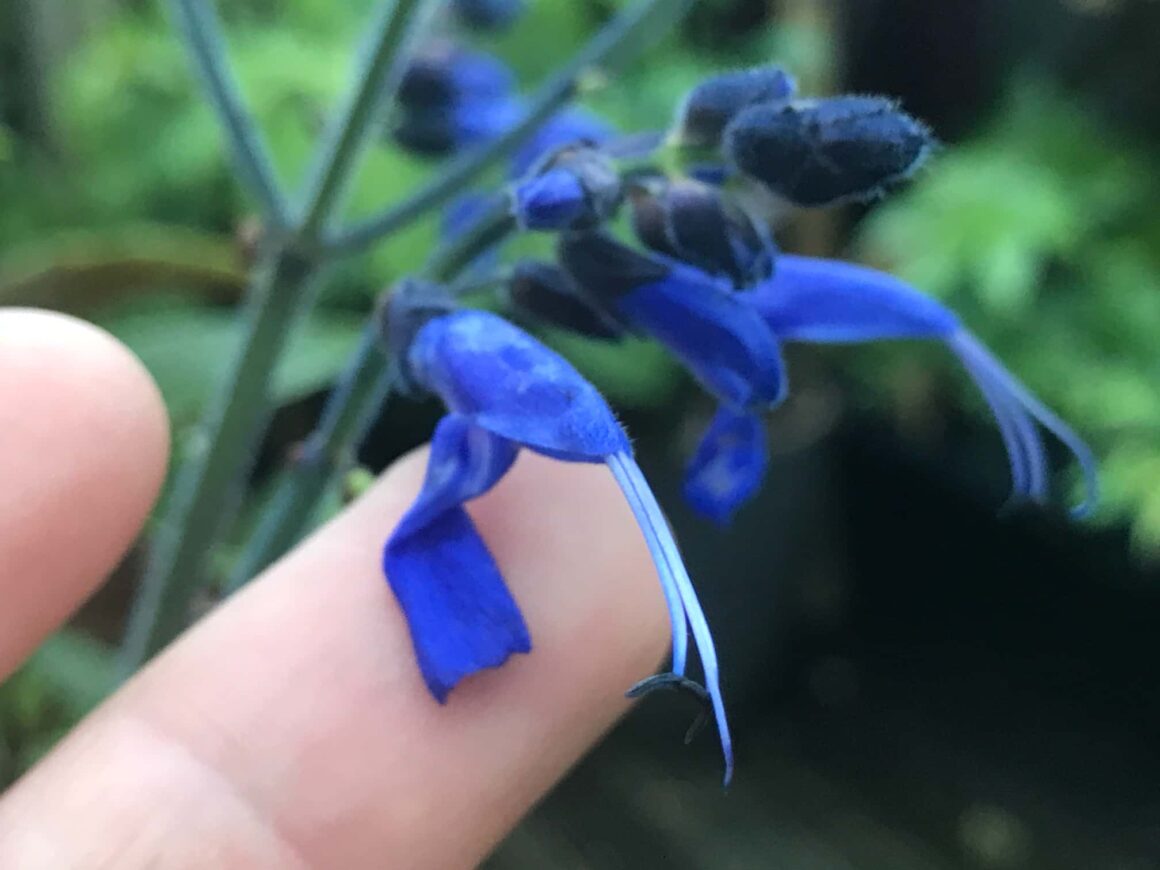
This Peruvian sage grows quickly into a leafy, upright plant with broad leaves, often purple beneath, and blue tubular flowers through late summer and autumn. It needs shelter, fertile soil and more moisture than dryland sages. Treat it as frost tender and overwinter cuttings or a container plant under cover.
At a Glance
Growing Conditions
Aspect Suitability
- East-facing
- South-facing
- West-facing
Soil Tolerance
- Sandy
- Loam
- Acid
- Neutral pH
- Alkaline
Foliage
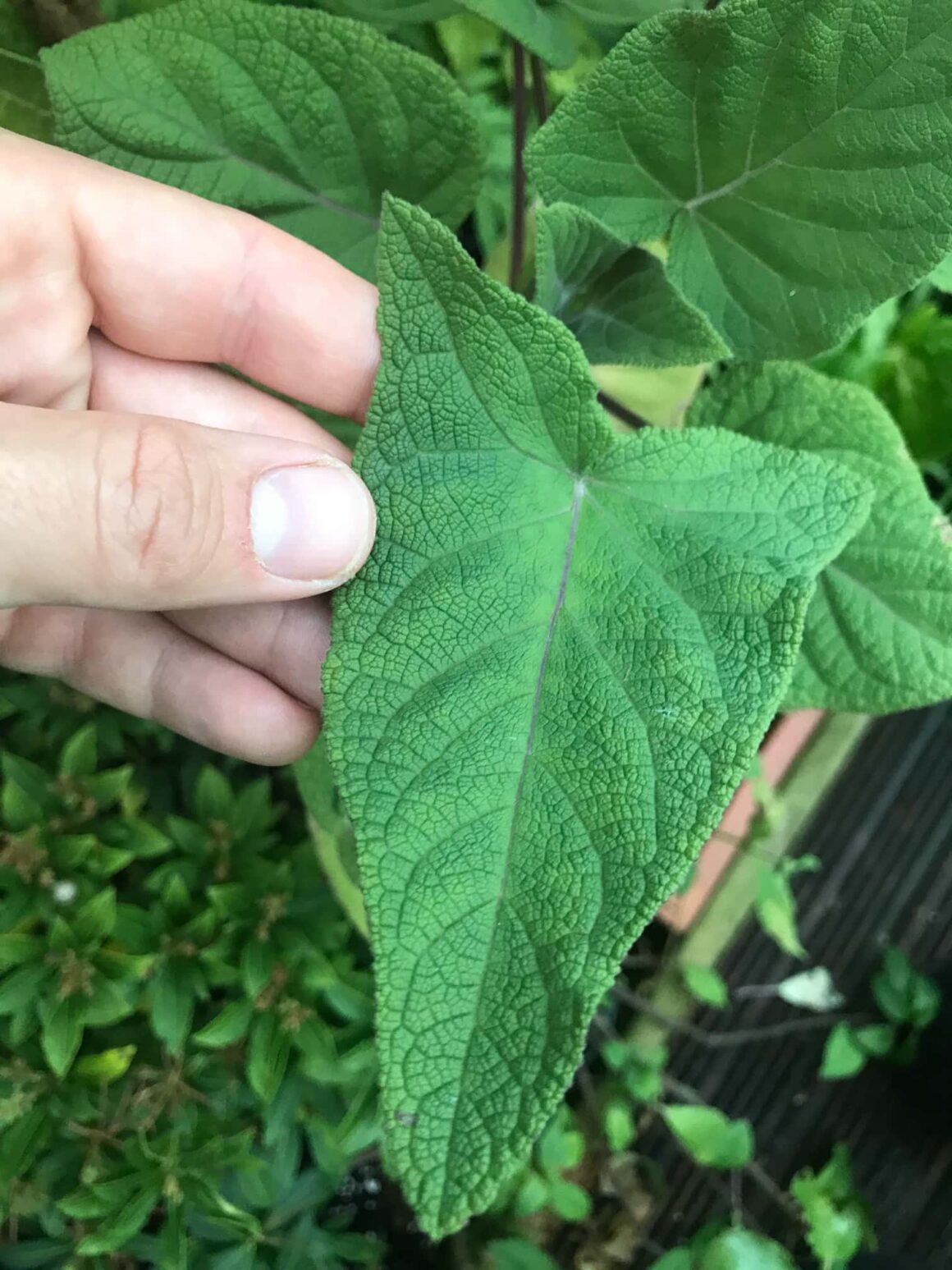
- Architectural foliage
Foliage interest: May–November
Seasonal Timeline
- Flowering Jul Aug Sep Oct
- Foliage May Jun Jul Aug Sep Oct Nov
- Fruiting Sep Oct Nov
- Propagate Mar Apr May Jun Jul Aug Sep
Maintenance Calendar
- Mar Trim overwintered plants under cover as growth starts
- May Harden off and plant out after frost
- Jun Keep soil moist during rapid growth and dry weather
- Jul Remove spent flower spikes to extend flowering
- Aug Take shoot cuttings for frost-free winter backup
- Oct Move plants and cuttings under cover above 5C
Garden Design
Works well in: Contemporary, Cottage, Tropical, Wildlife
Place blue flowers against orange blooms or lime foliage. Provide light shade during intense heat and shelter tall stems from wind.
Companion planting: Cannas, Gingers, Grasses, Other tender salvias
Wildlife Value
- Bees
- Other pollinators
- Food source
- Food
Safety
Not a culinary sage. Avoid eating foliage; species-specific pet toxicity information is limited.