

Biennial
Echium wildpretii
Tower of jewels
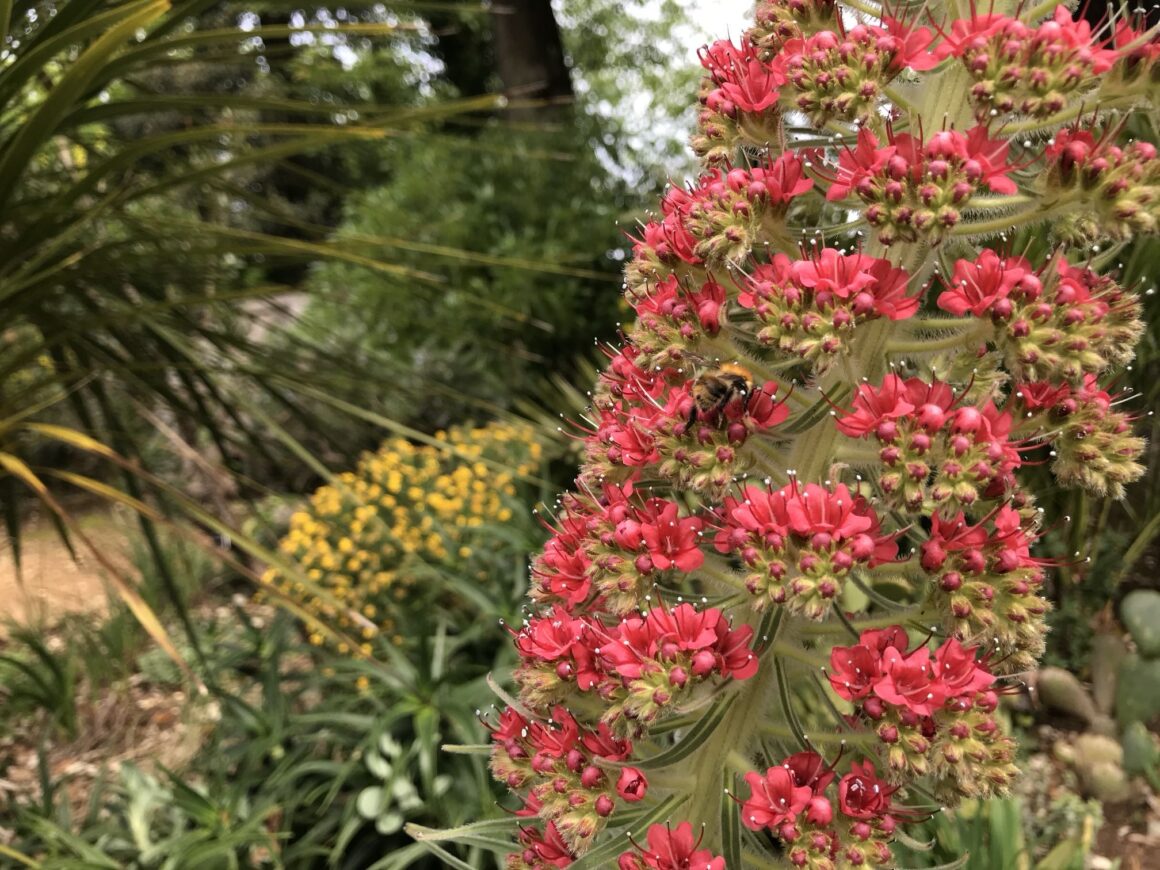
A dramatic biennial forming a rosette of silver foliage followed by a towering spire of red flowers.
- Full sun
- 1–3 m (3–10 ft)
- 40–60 cm (16–24 in)
- H2 · Zone 9
- June–July
- Evergreen
Overview
Native to the high slopes of Tenerife, this striking biennial spends its first year as a low rosette of narrow, silvery, hairy leaves before sending up a single towering flower spike densely packed with small red blooms, usually in its second summer. In most of the UK it needs winter protection as a rosette, as it rarely survives a wet, cold winter outdoors.
At a Glance
Growing Conditions
Aspect Suitability
- South-facing
Site Tolerance
- Wind
- Coastal
- Drought
Soil Tolerance
- Sandy
- Loam
- Acid
- Neutral pH
- Alkaline
Foliage
- Architectural foliage
Foliage interest: 12 months of the year
Seasonal Timeline
- Flowering Jun Jul
- Foliage 12 months of the year
- Propagate Apr May Aug Sep
Maintenance Calendar
- Mar Sow a fresh batch of seed to keep a succession of flowering plants
- May Plant out rosettes into free-draining soil
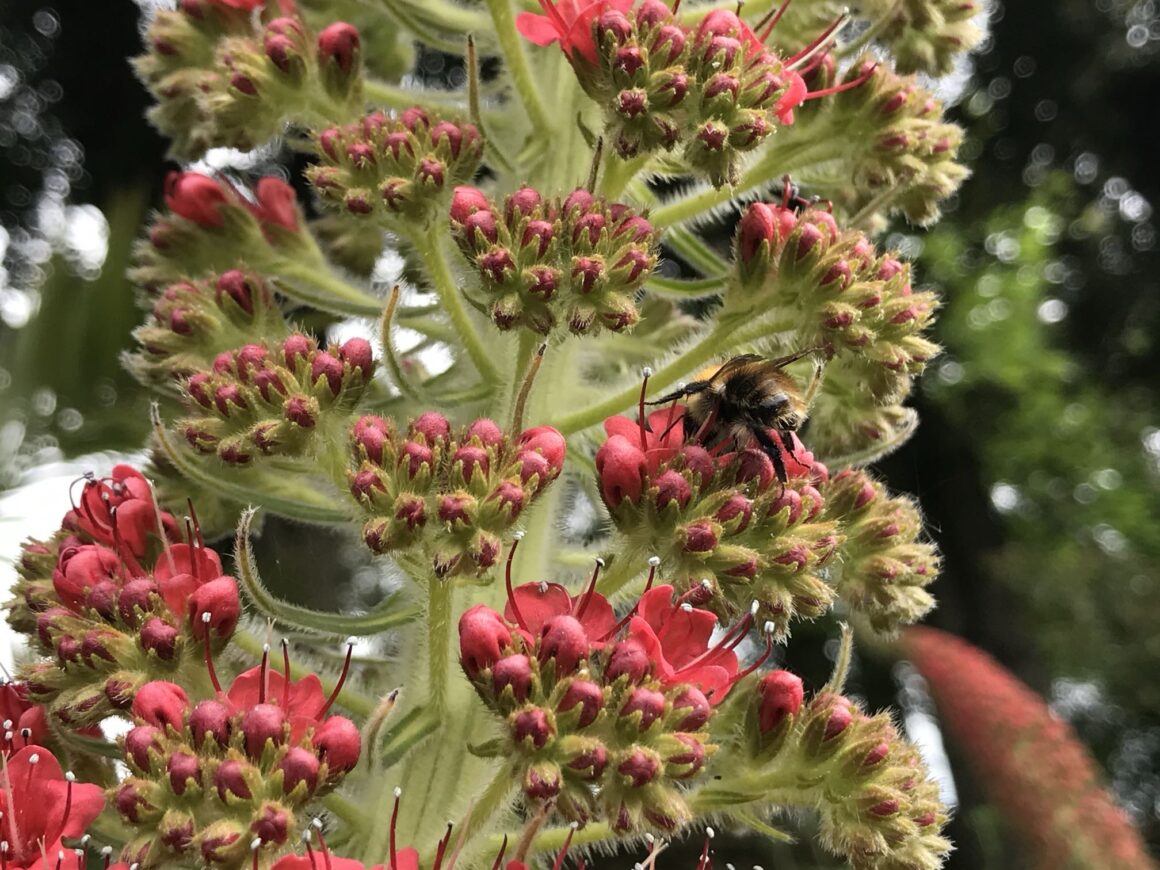
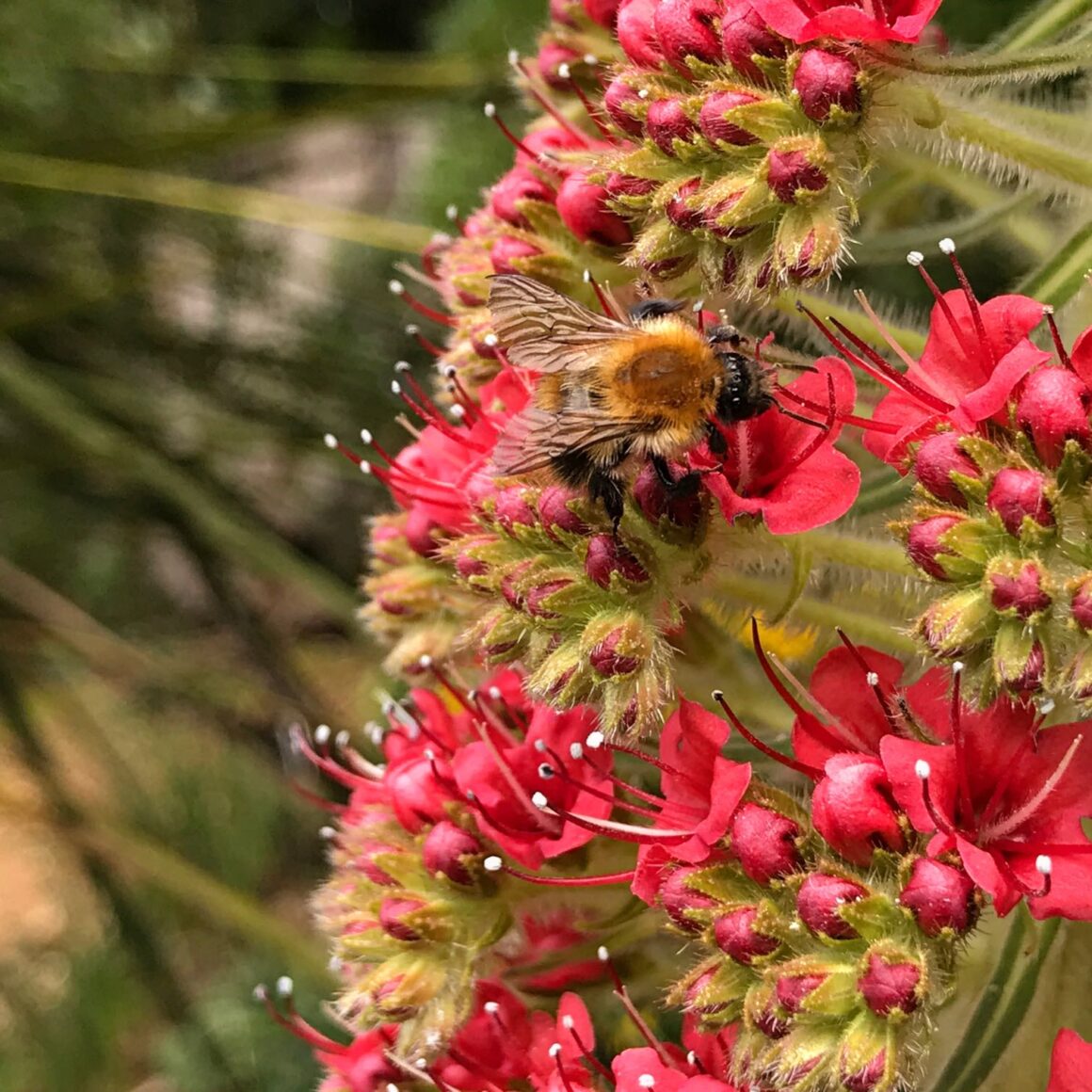
- Jul Watch the flower spike develop and attract bees
- Sep Protect first-year rosettes from winter wet under a cloche
- Oct Sow seed under cover for next year's display
Garden Design
Works well in: Coastal, Gravel, Mediterranean, Tropical, Tropical / Exotic
Grow as a striking focal point in a sunny, sharply drained gravel bed or large pot; protect the first-year rosette from winter wet.
Companion planting: Agaves, Aeoniums, Mediterranean gravel plants
Wildlife Value
- Bees
- Butterflies
- Other pollinators
Safety
- Skin irritant
Leaf hairs may irritate skin; wear gloves when handling.