

Perennial
Colocasia esculenta ‘Blue Hawaii’
Blue Hawaii elephant’s ear
Also known as: Colocasia ‘Blue Hawaii’
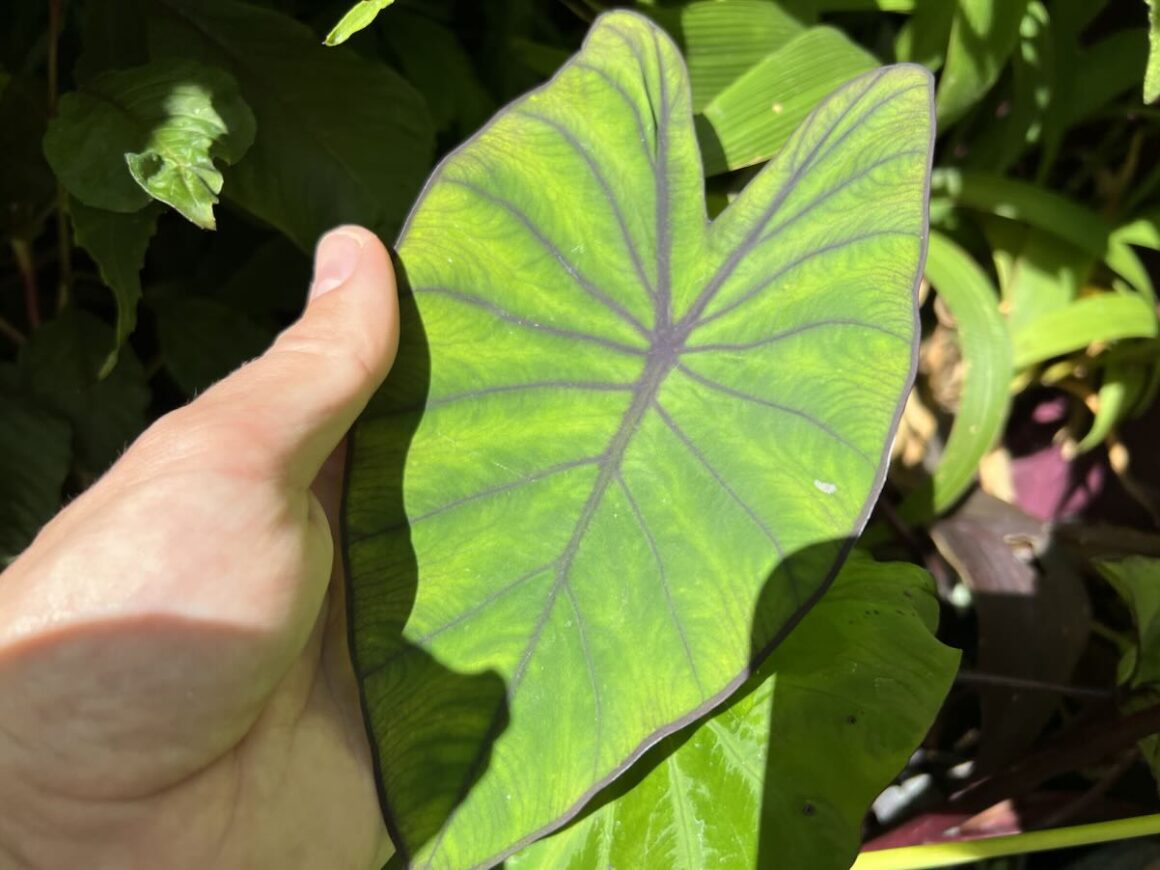
A vigorous elephant’s ear with large blue-green leaves marked by near-black veins.
- Full sun, Partial shade
- 1–1.8 m (3–6 ft)
- 0.8–1.2 m (3–4 ft)
- H2 · Zone 9
- July–August
- Deciduous
Where to Buy
Some of the links above may be affiliate links. If you make a purchase through one, Grow Paradise may earn a small commission — at no additional cost to you.
Overview
This eye-catching Colocasia esculenta selection produces broad, arrow-shaped leaves in a striking blue-green with contrasting dark, almost black venation, on sturdy upright stems. It shares the same tropical needs as other elephant’s ears: warmth, rich moist soil and generous summer watering give the boldest leaves, and the whole plant collapses at the first frost. Treat the tubers as tender in all but the mildest UK gardens - lift and store them frost-free over winter, or keep a container plant somewhere cool but frost-free until spring.
At a Glance
Growing Conditions
Aspect Suitability
- East-facing
- South-facing
- West-facing
Site Tolerance
- Wet soil
Soil Tolerance
- Clay
- Loam
- Acid
- Neutral pH
Foliage
- Architectural foliage
Foliage interest: May–October
Seasonal Timeline
- Flowering Jul Aug
- Foliage May Jun Jul Aug Sep Oct
- Propagate Apr May Jun
Maintenance Calendar
- Apr Divide offsets under cover as fresh roots form
- May Plant outside after frost and once soil is warm
- Jun Feed regularly and maintain abundant summer moisture
- Aug Check leaf undersides for mites in dry weather
- Oct Lift in cold or wet gardens or deeply mulch a well-drained crown
- Dec Check stored tubers for rot and avoid saturated compost
Garden Design
Works well in: Bog, Container, Contemporary, Tropical
The blue-toned leaves and dark veining show best in good light beside water; combine with dark-leaved cannas or purple-black Colocasia cultivars for a jungle-style planting.
Companion planting: Cannas, Gingers, Moisture-loving ferns
Wildlife Value
- Shelter
Safety
- Toxic to humans
- Toxic to dogs
- Toxic to cats
- Skin irritant
Raw tissues contain irritating calcium oxalate crystals. Harmful if eaten; sap can irritate skin and eyes. Keep away from pets.