

Herbaceous perennial
Dahlia imperialis
Tree dahlia
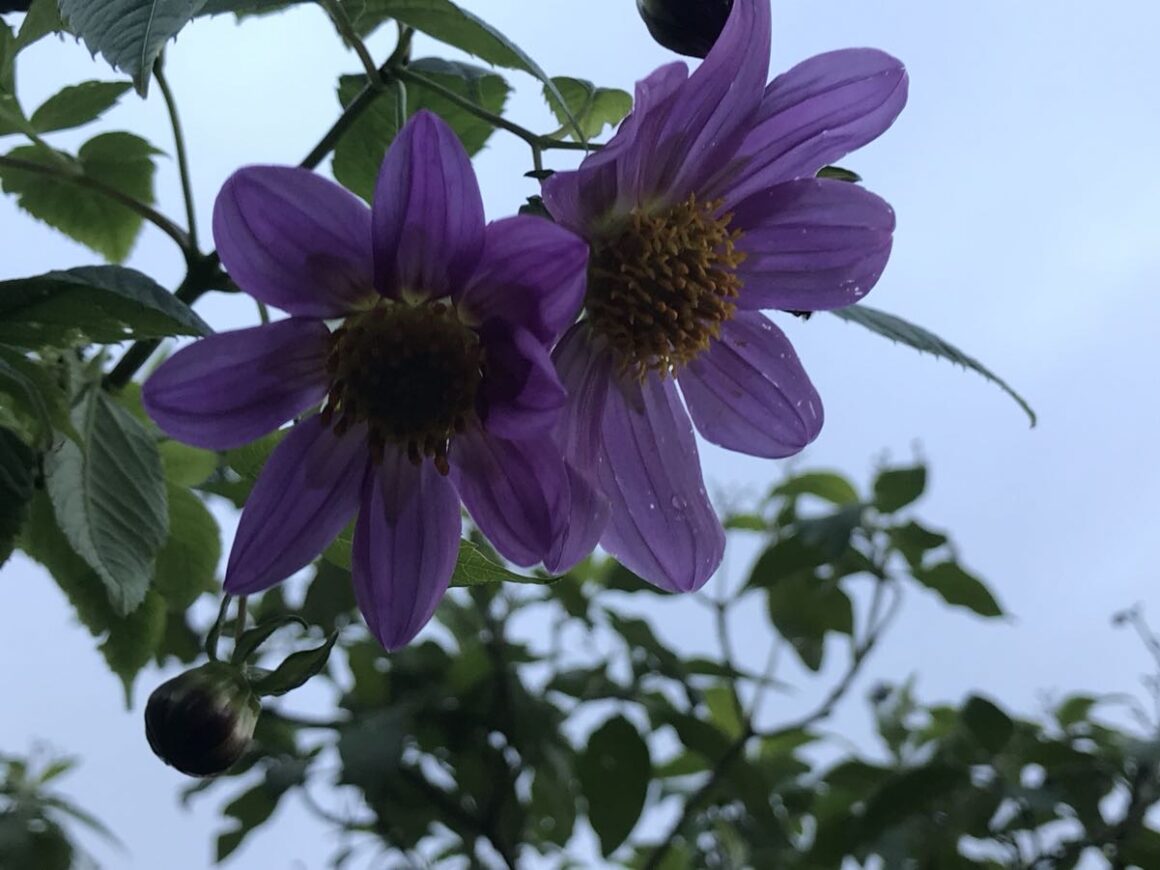
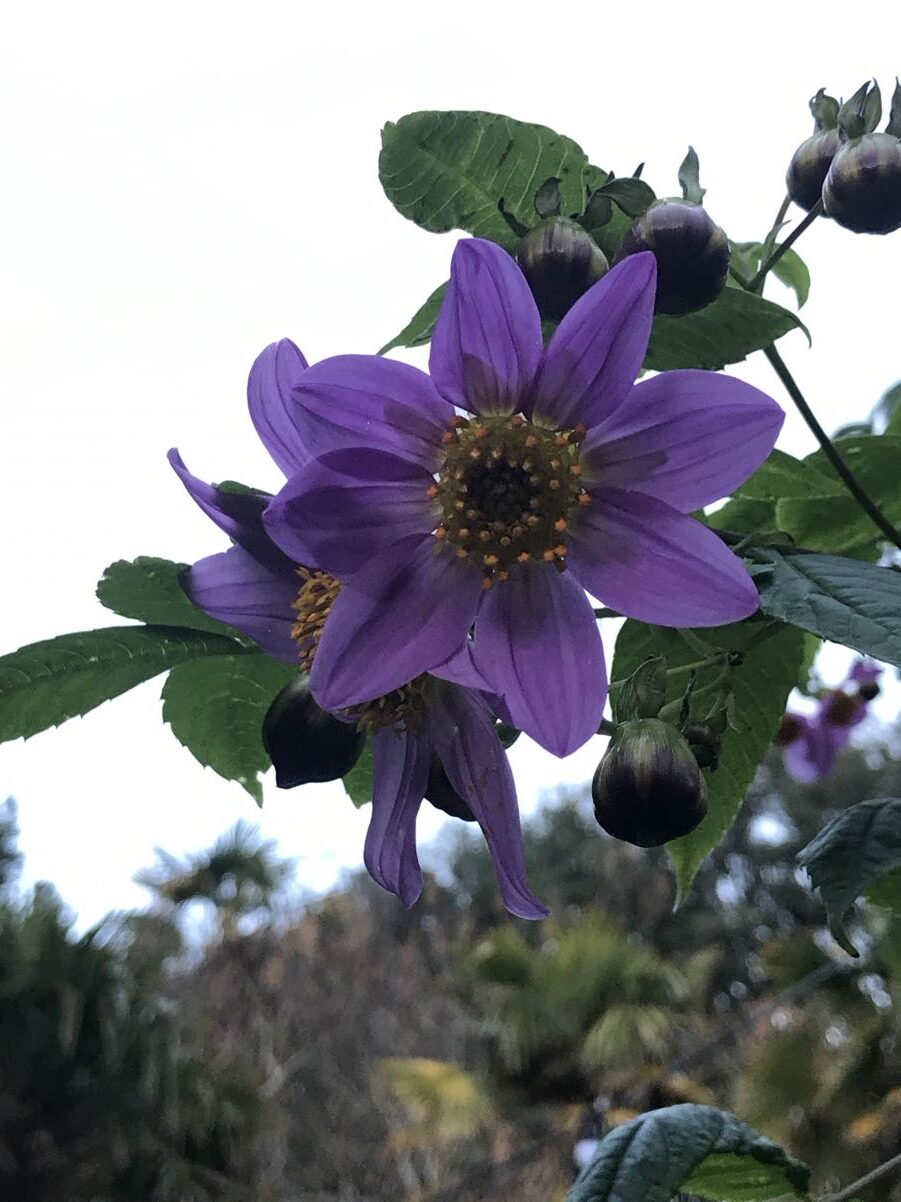
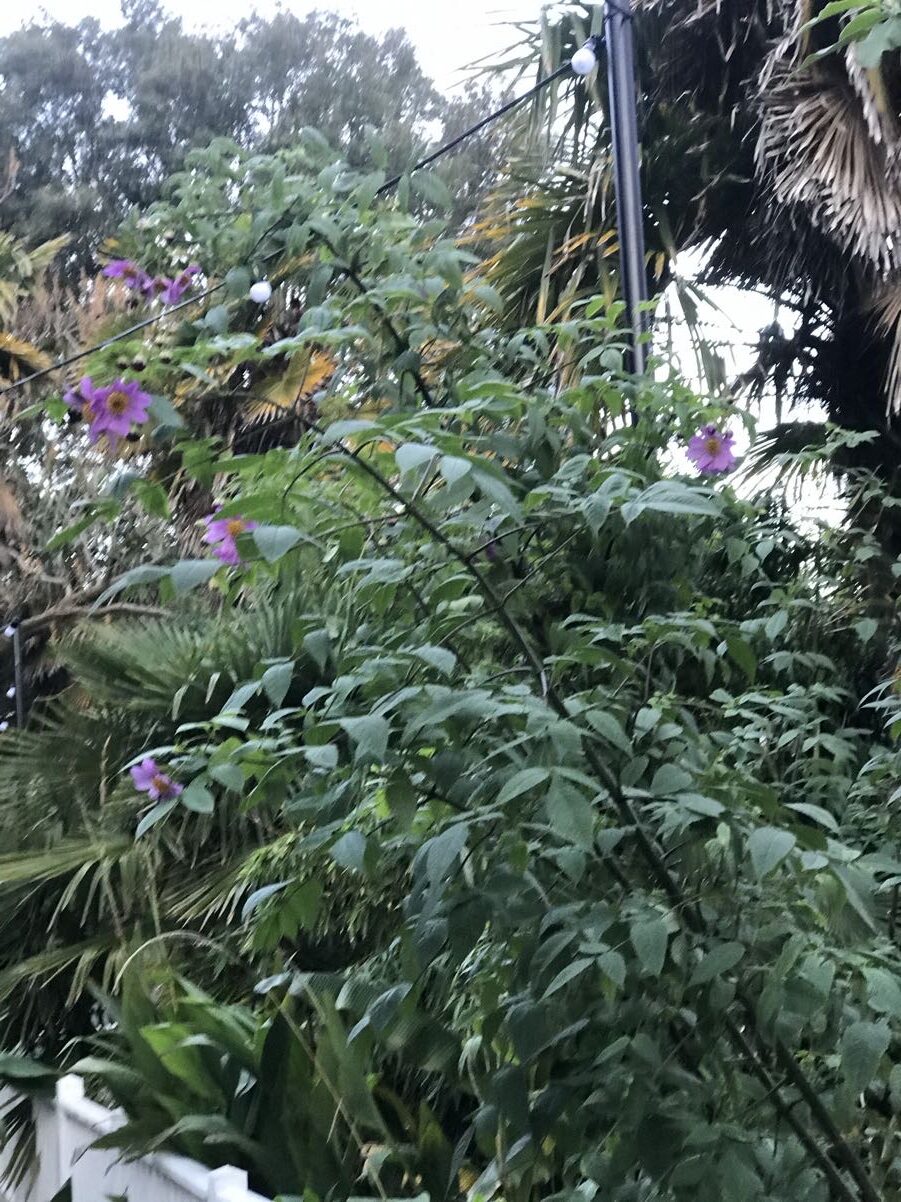
A giant tree dahlia with bamboo-like stems reaching several metres and, in a long warm autumn, nodding pink flowers.
- Full sun
- 2.5–4 m (8–13 ft)
- 1–1.5 m (3–5 ft)
- H3 · Zone 9
- October–November
- Deciduous
Overview
This wild species dahlia is grown chiefly as a dramatic foliage plant: thick, hollow, cane-like stems shoot up rapidly each summer to several metres, clothed in large, divided mid-green leaves. Nodding, pale pink, single flowers can appear from October, but in most UK summers frost arrives before they open fully, so treat any bloom as a bonus rather than the main event. Tubers can be left in the ground over a mild winter with a very thick mulch in sheltered gardens, but the safest approach almost everywhere in the UK is to cut the collapsed stems down after the first hard frost and lift and store the tubers frost-free.
At a Glance
Growing Conditions
Aspect Suitability
- South-facing
- West-facing
Soil Tolerance
- Clay
- Sandy
- Loam
- Acid
- Neutral pH
- Alkaline
Foliage
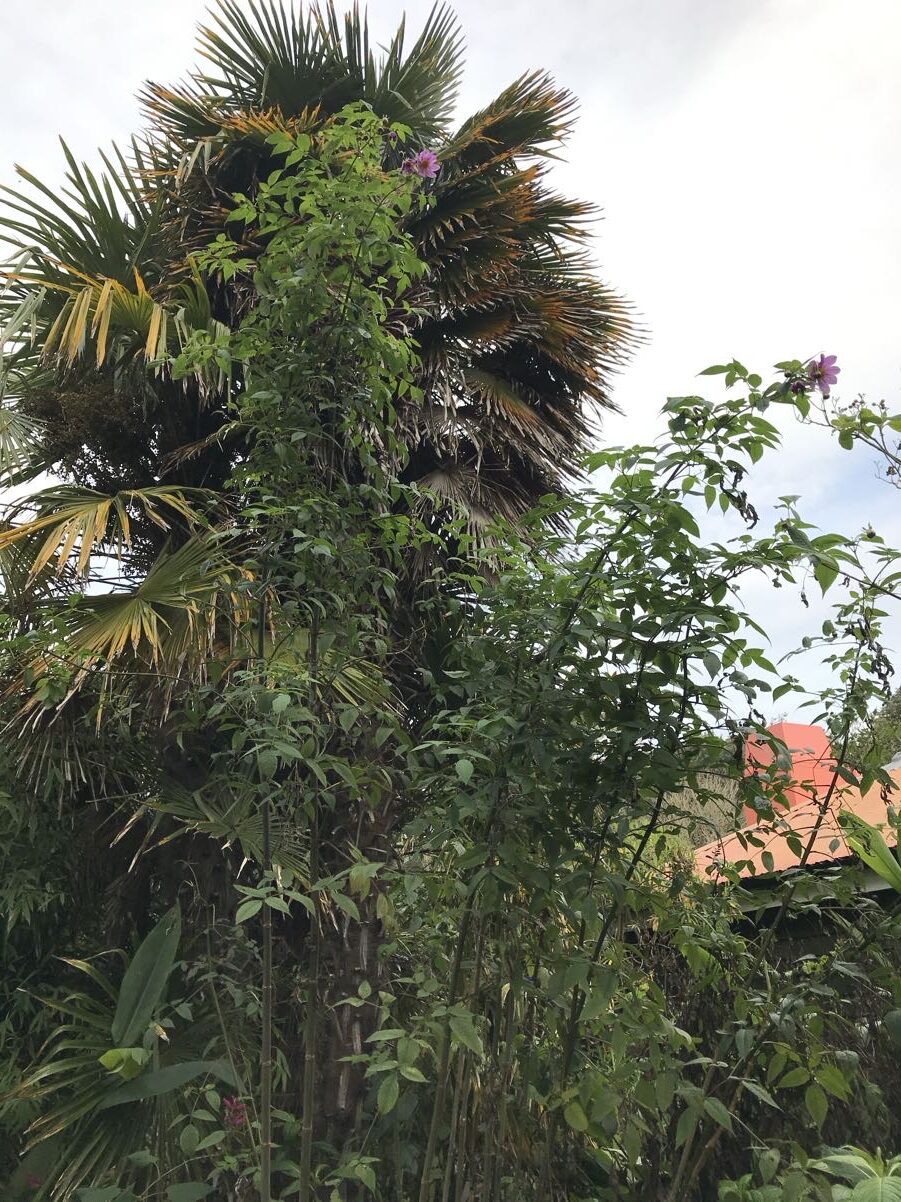
- Architectural foliage
Foliage interest: June–October
Seasonal Timeline
- Flowering Oct Nov
- Foliage Jun Jul Aug Sep Oct
- Propagate Mar Apr
Maintenance Calendar
- Mar Start tubers into growth under cover or plant out after frost
- May Stake tall canes as they grow
- Jun Feed and water freely through summer growth
- Oct Watch for late flowers before the first frost
- Nov Cut back after frost and lift and store tubers, or mulch deeply where left in situ
Garden Design
Works well in: Contemporary, Cottage, Tropical
Give it a warm, sheltered spot with room to reach full height, and treat any autumn flowers as a bonus rather than plan around them, since a long warm season is needed for buds to open before frost.
Companion planting: Cannas, Bananas, Ornamental grasses
Wildlife Value
- Bees
Safety
Tubers may cause mild stomach upset if eaten; keep away from pets prone to digging and chewing tubers.