

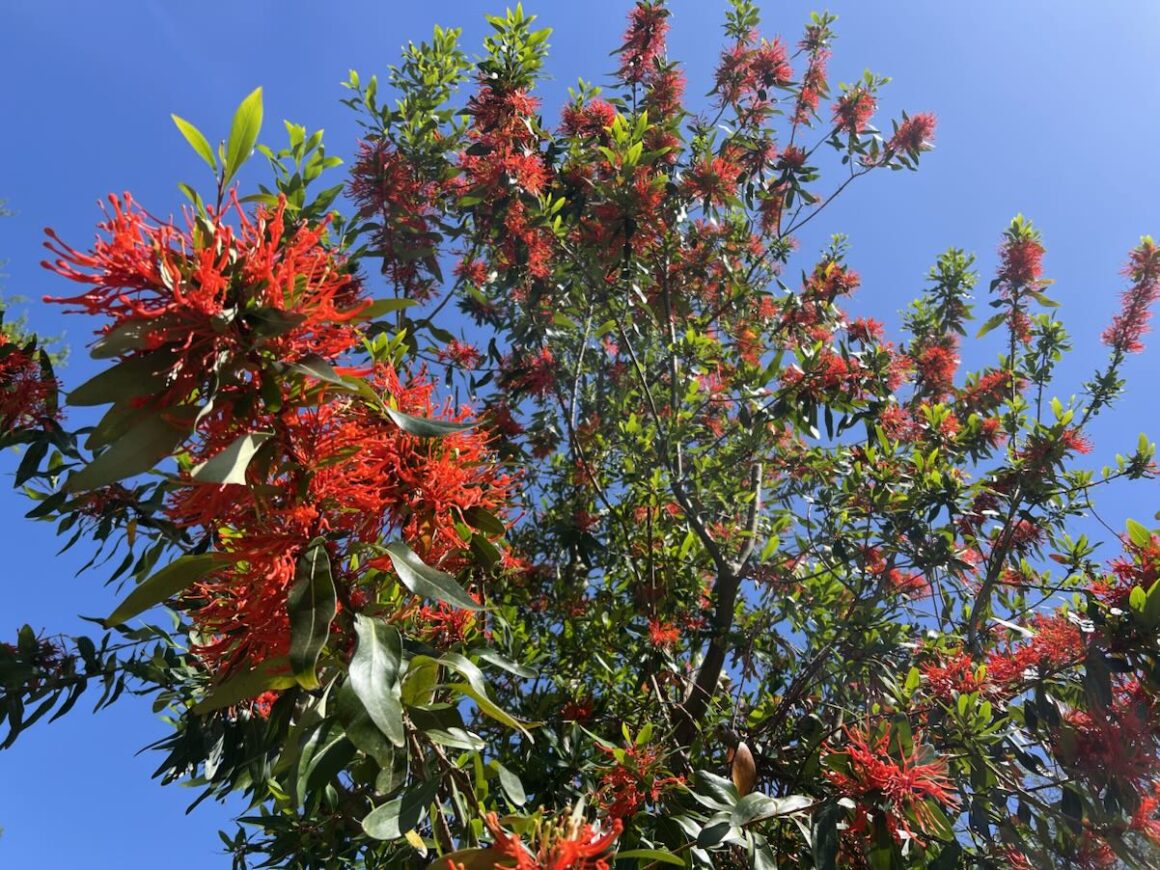
Shrub · Tree
Embothrium coccineum
Chilean fire bush
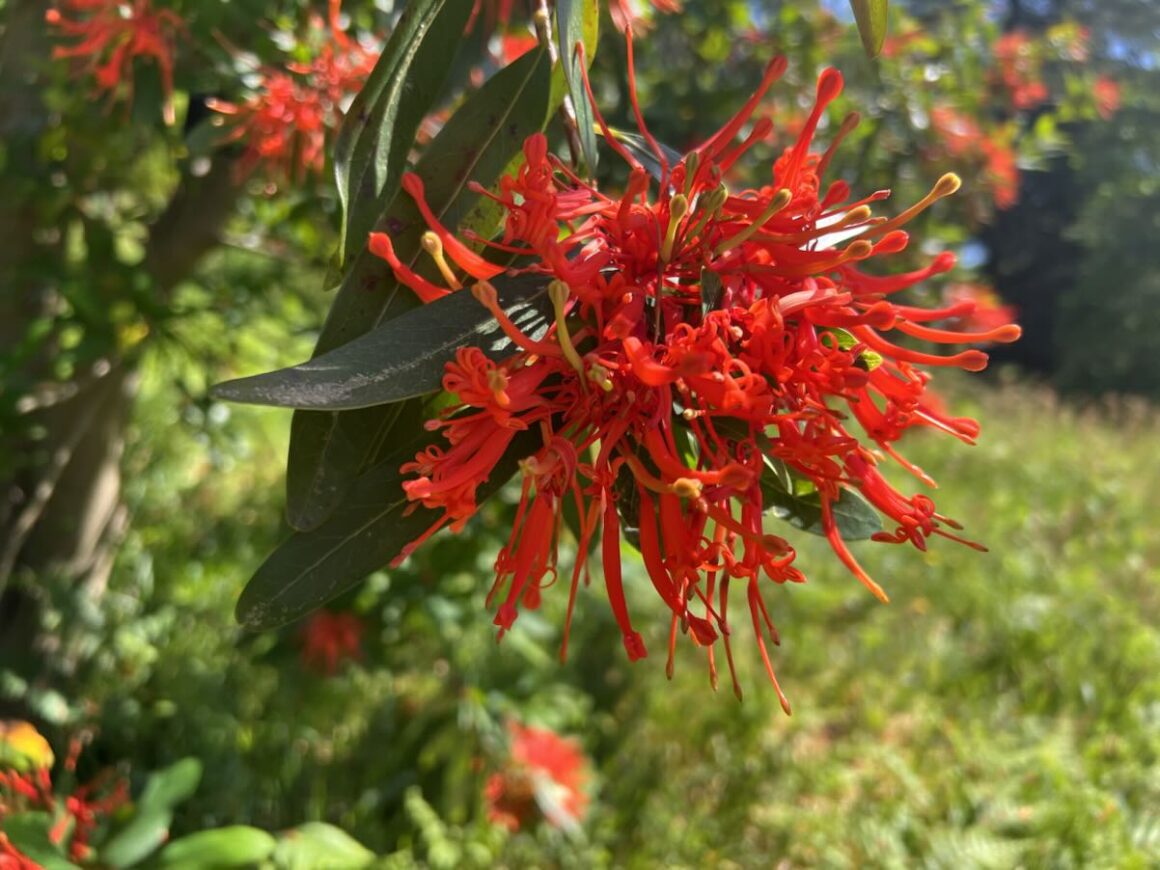
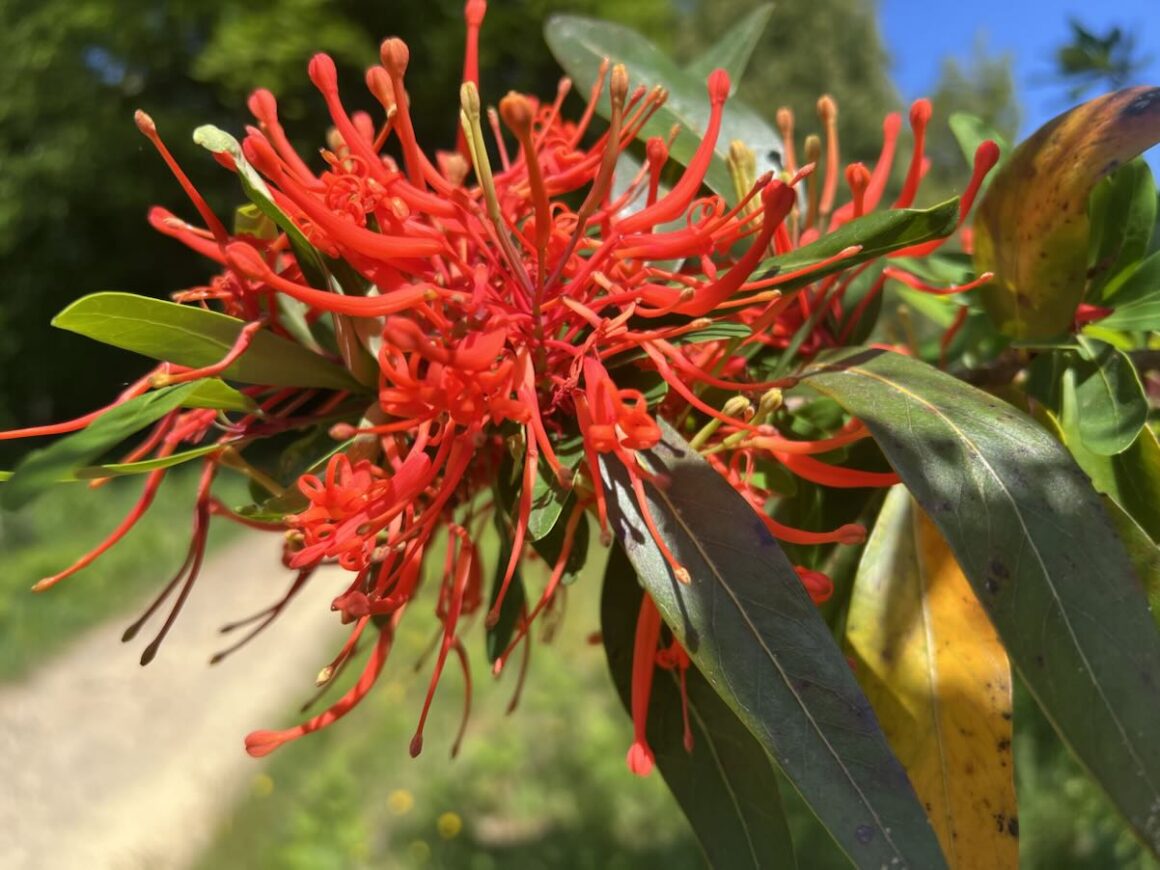
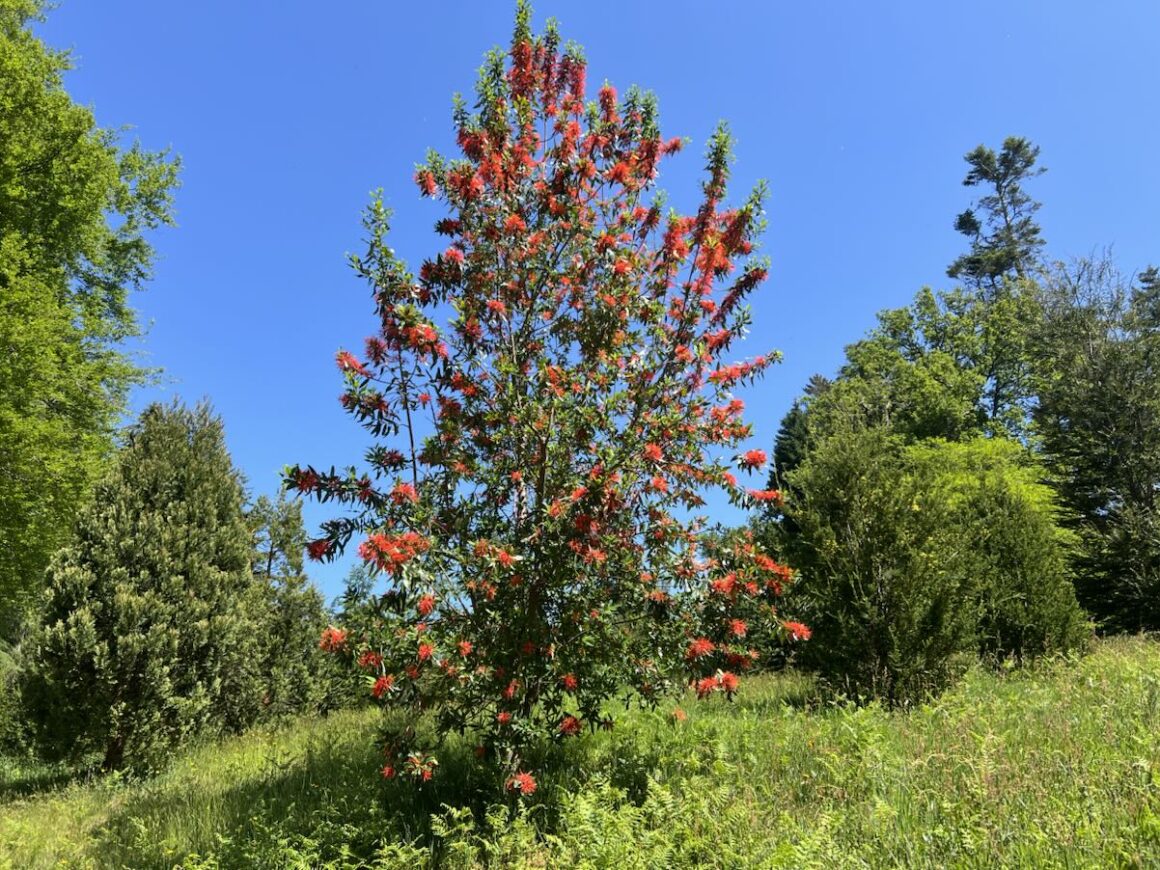
An upright evergreen shrub or small tree smothered in narrow, tubular scarlet flowers in late spring.
- Full sun, Partial shade
- 4–8 m (13–26 ft)
- 2.5–4 m (8–13 ft)
- H4 · Zone 8
- May–June
- Evergreen
Overview
The Chilean fire bush earns its name from the vivid clusters of narrow, tubular scarlet flowers that light up its evergreen branches in late spring and early summer, drawing bees from a distance. It needs a humus-rich, moisture-retentive, neutral-to-acid soil and shelter from cold, drying winds, and performs best in the milder, wetter west and south-west of the UK; a sheltered woodland-edge position with reliable summer moisture gives it the best chance of establishing well through harder winters elsewhere.
At a Glance
Growing Conditions
Aspect Suitability
- East-facing
- South-facing
- West-facing
Soil Tolerance
- Clay
- Sandy
- Loam
- Acid
- Neutral pH
Foliage
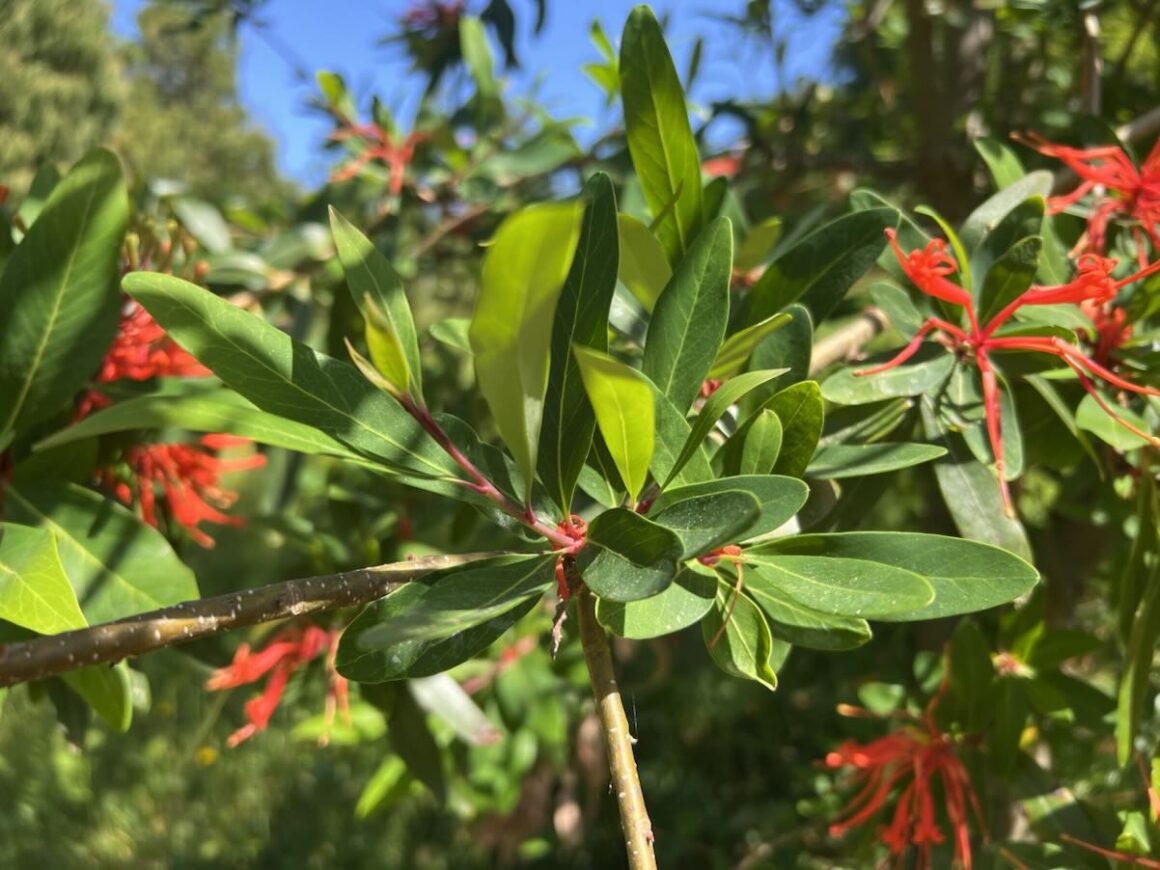
Foliage interest: 12 months of the year
Seasonal Timeline
- Flowering May Jun
- Foliage 12 months of the year
- Fruiting Sep Oct
- Propagate Mar Apr Jul Aug
Maintenance Calendar
- Mar Mulch with leaf mould to keep roots cool and moist
- Apr Plant out once frost risk passes, in acid, humus-rich soil
- Jun Water during dry spells to prevent root stress
- Aug Enjoy the scarlet flowers and their pollinators
- Nov Shelter young plants from cold, drying winds
Garden Design
Works well in: Coastal, Cottage, Woodland
Plant on the woodland edge where its roots stay cool and moist but its flowering branches reach the light; it dislikes chalky soils, so an ericaceous bed or container suits it on alkaline ground.
Companion planting: Rhododendrons, Camellias, Ferns
Wildlife Value
- Bees
Safety
No well-established toxicity; species-specific data is limited, so treat as ornamental only.