

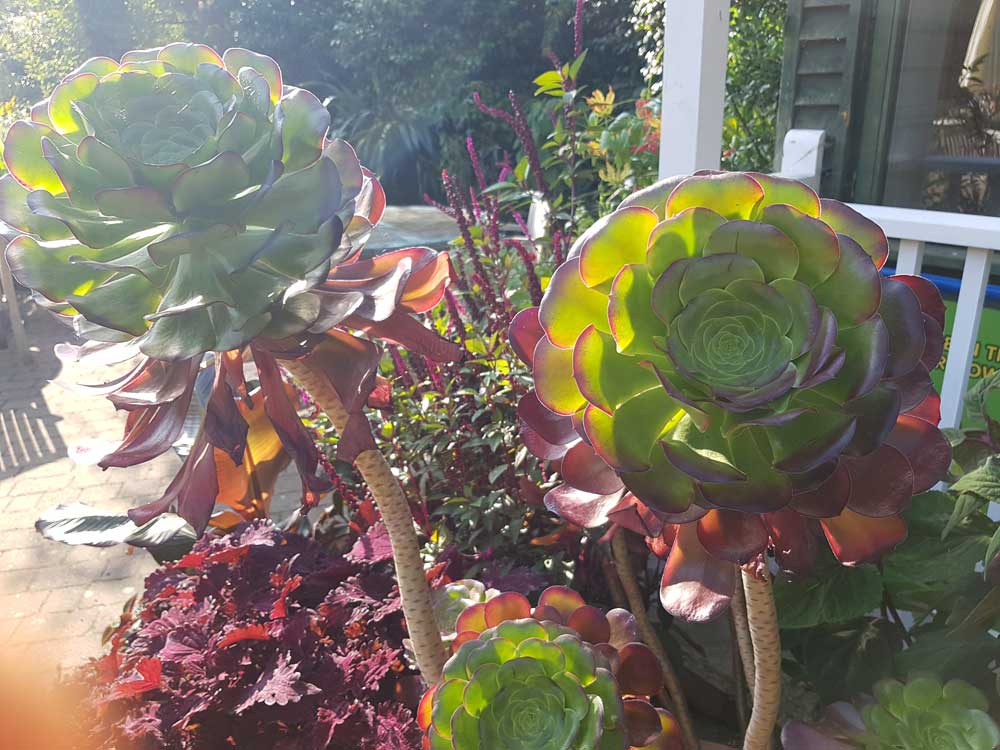
Shrub · Succulent
Aeonium ‘Cyclops’
Cyclops tree aeonium
A branching succulent with large burgundy rosettes and bright green centres.
- Full sun, Partial shade
- 0.5–1 m (2–3 ft)
- 0.5–1 m (2–3 ft)
- H1c · Zone 10
- June–August
- Evergreen
Where to Buy
Some of the links above may be affiliate links. If you make a purchase through one, Grow Paradise may earn a small commission — at no additional cost to you.
Overview
This evergreen hybrid forms bold rosettes on woody stems. Mature rosettes may produce yellow flowers and then die, while other branches continue growing. Grow in gritty compost with bright light and frost-free winter shelter; reduce watering when growth slows in summer or winter.
At a Glance
Growing Conditions
Aspect Suitability
- South-facing
- West-facing
Site Tolerance
- Drought
Soil Tolerance
- Sandy
- Loam
- Acid
- Neutral pH
- Alkaline
Foliage
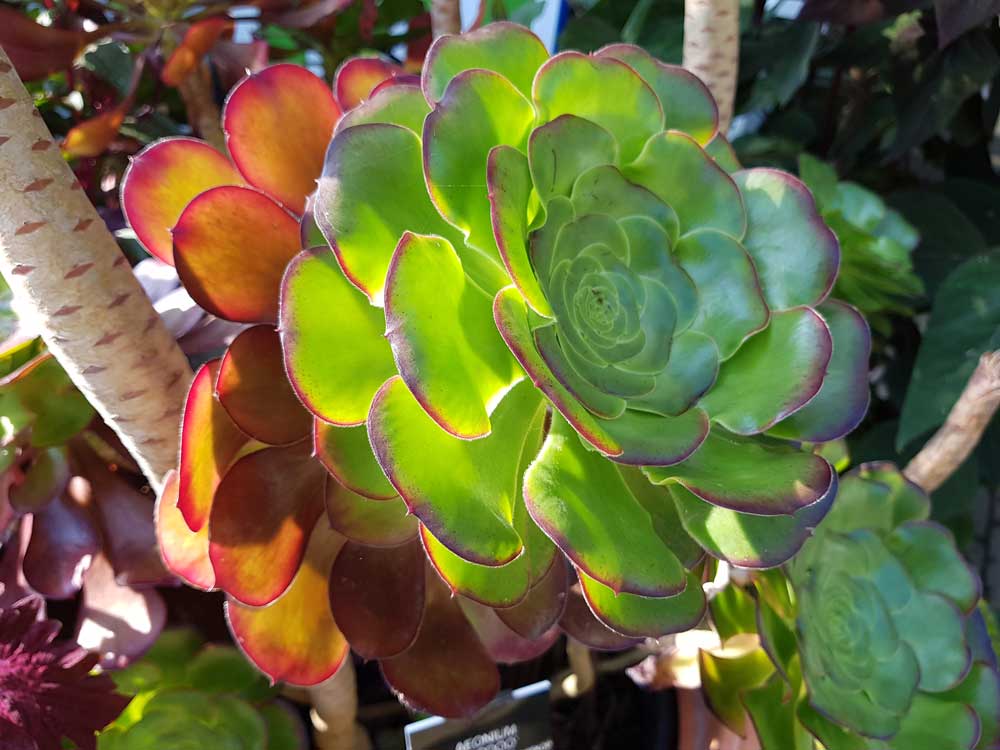
- Architectural foliage
Foliage interest: 12 months of the year
Seasonal Timeline
- Flowering Jun Jul Aug
- Foliage 12 months of the year
- Propagate Apr May Jun Sep
Maintenance Calendar
- Mar Repot into gritty compost if roots are crowded
- May Move outside after frost and acclimatise to sun
- Jun Water when compost dries and growth is active
- Sep Take a spare rosette cutting
- Oct Move into bright frost-free shelter above 5C
- Dec Check rosettes for mealybugs and keep nearly dry
Garden Design
Works well in: Desert / Dry, Mediterranean, Modern / Contemporary, Tropical / Exotic
Use a movable pot as a dark focal point. Shelter from prolonged rain and acclimatise to strong sun.
Companion planting: Succulents, Dryland grasses, Mediterranean shrubs
Wildlife Value
- Bees
Safety
No well-established major toxicity; ornamental plants should not be eaten.