

Shrub · Succulent
Aloiampelos striatula
Hardy aloe
Also known as: Aloe striatula
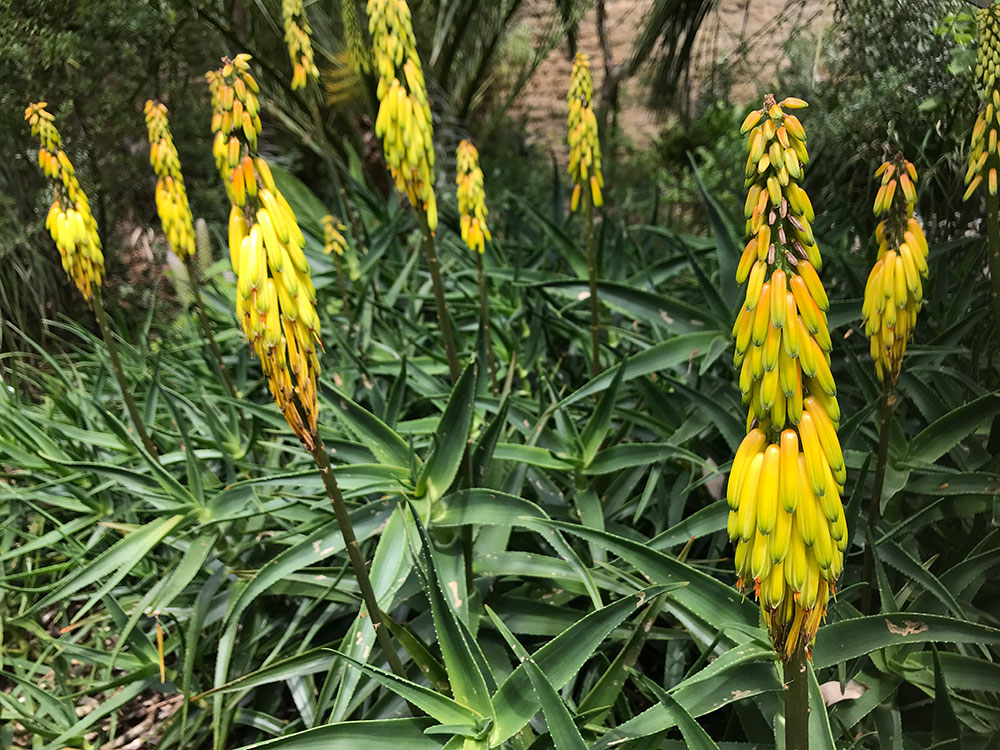
A scrambling evergreen aloe with narrow leaves and tall spikes of yellow tubular flowers.
- Full sun
- 1.5–2.5 m (5–8 ft)
- 1.5–2.5 m (5–8 ft)
- H3 · Zone 9
- June–August
- Evergreen
- RHS Award of Garden Merit
Overview
Native to southern Africa, this woody succulent makes a loose, branching shrub with finely toothed leaves and striped leaf sheaths. Yellow flower spikes rise above the foliage in summer. It tolerates brief light frost in dry soil, but winter wet and prolonged freezing can kill stems or roots.
At a Glance
Growing Conditions
Aspect Suitability
- East-facing
- South-facing
- West-facing
Site Tolerance
- Coastal
- Drought
Soil Tolerance
- Sandy
- Loam
- Acid
- Neutral pH
- Alkaline
Foliage
- Architectural foliage
Foliage interest: 12 months of the year
Seasonal Timeline
- Flowering Jun Jul Aug
- Foliage 12 months of the year
- Fruiting Aug Sep Oct
- Propagate Apr May Jun Jul Aug
Maintenance Calendar
- Apr Remove frost-damaged stems once new growth appears
- May Plant into sharply drained soil after frost
- Jun Take stem cuttings and let cuts dry before potting
- Aug Remove spent flower stalks if seed is not needed
- Oct Protect from winter rain and move pots under cover
Garden Design
Works well in: Desert / Dry, Mediterranean, Modern / Contemporary, Tropical / Exotic
Best against a warm wall or on a raised, freely draining bank. Provide extra support if stems become top-heavy.
Companion planting: Succulents, Dryland grasses, Mediterranean shrubs
Wildlife Value
- Bees
- Food source
- Food
Safety
Leaf teeth can scratch. Do not use this ornamental species as edible or medicinal aloe.