

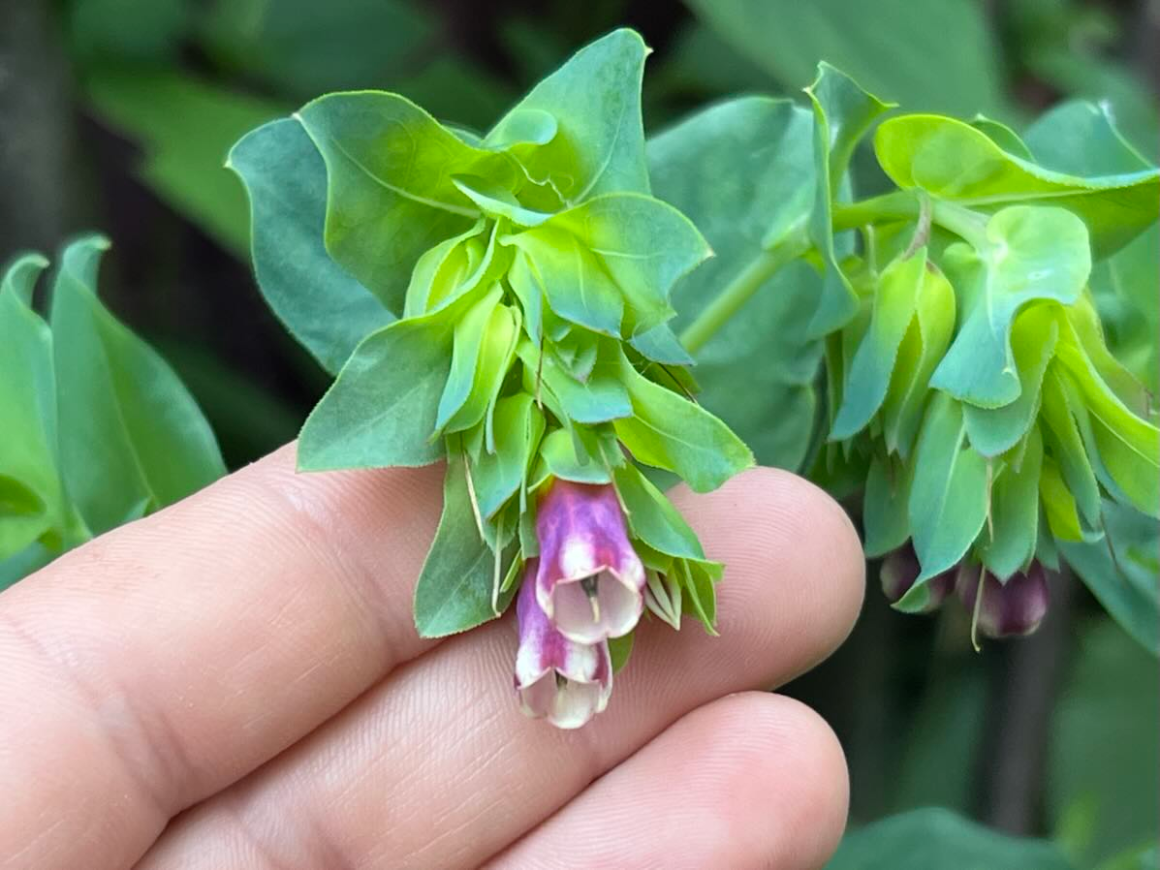
Annual
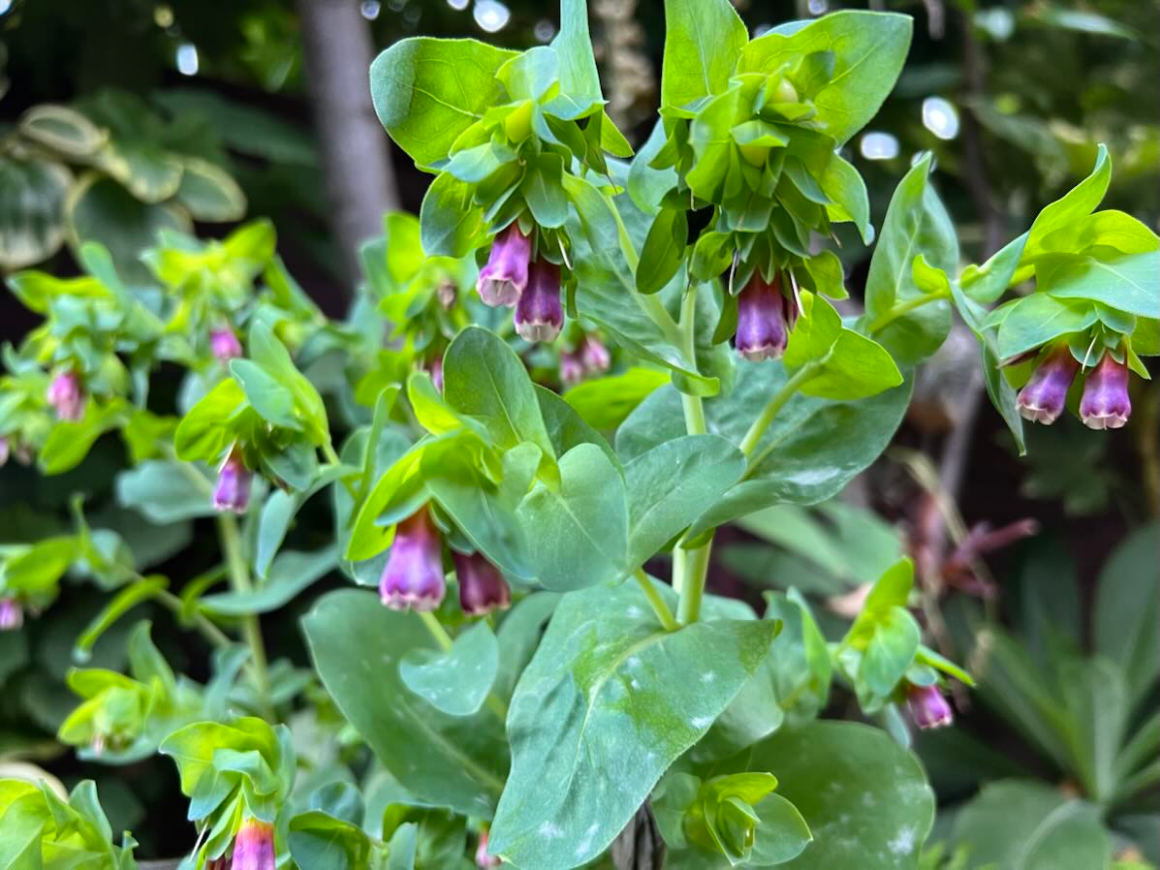
Cerinthe major var. purpurascens
Honeywort
A quick, self-seeding hardy annual with blue-grey waxy foliage and nodding purple-blue tubular flowers.
- Full sun
- 30–45 cm (12–18 in)
- 25–30 cm (10–12 in)
- H3 · Zone 8
- May–August
- Deciduous
Overview
This easy hardy annual produces smooth, glaucous blue-green leaves flushed purple towards the shoot tips, with clusters of nodding, tubular purple-blue flowers from late spring into summer. Bees find it irresistible, and it self-seeds readily once established, making it a low-effort filler for borders, gravel gardens and containers.
At a Glance
Growing Conditions
Aspect Suitability
- South-facing
- West-facing
Site Tolerance
- Wind
- Coastal
- Drought
Soil Tolerance
- Chalk
- Sandy
- Loam
- Neutral pH
- Alkaline
Foliage
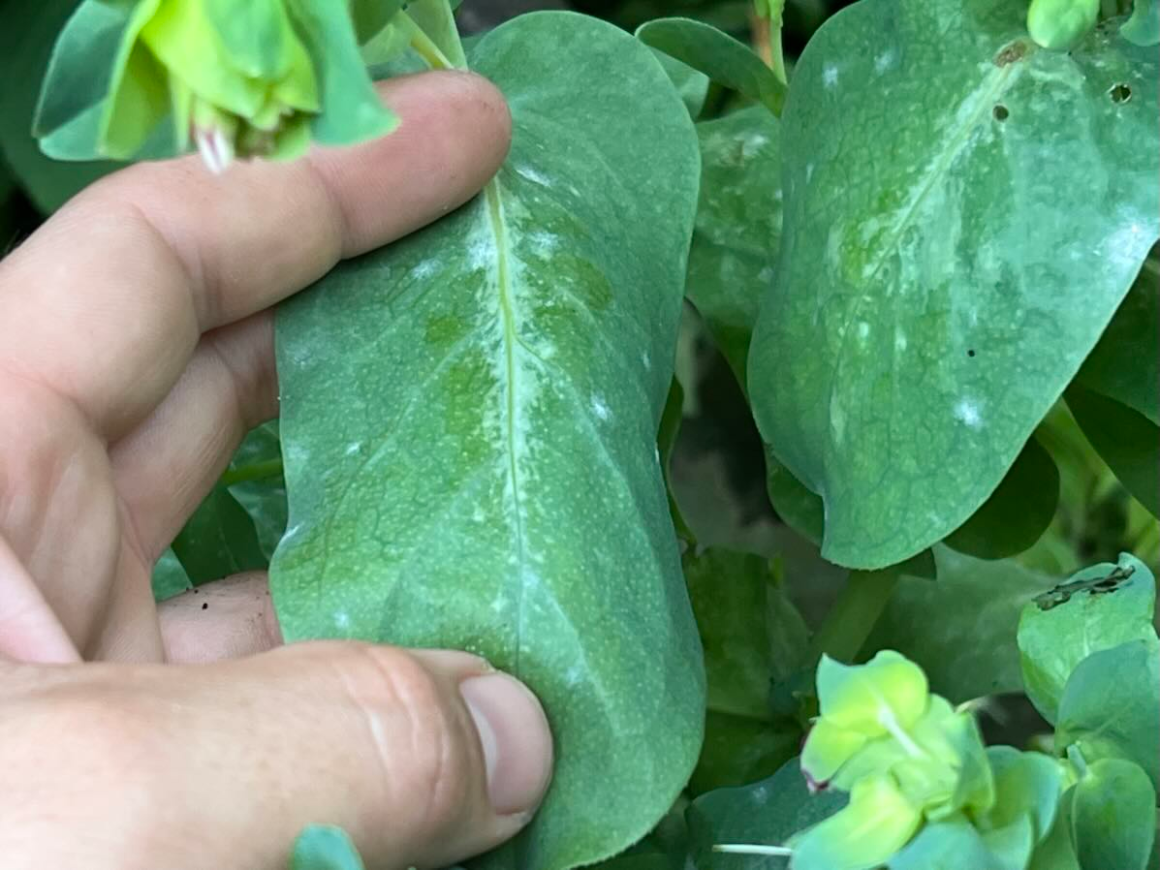
Foliage interest: April–August
Seasonal Timeline
- Flowering May Jun Jul Aug
- Foliage Apr May Jun Jul Aug
- Fruiting Aug Sep
- Propagate Mar Apr Sep
How to propagate
One way to grow more Honeywort: the usual steps for each method.
From seed Mar–Apr, Sep Easy
You'll need: Seed compost, a seed tray or small pots, labels, and a clear lid or plastic bag.
- Fill a tray or pots with seed compost, level it and firm it gently.
- Water the compost and let it drain.
- Sow the seeds thinly on top. Cover them with a fine layer of compost or vermiculite about as deep as the seed is big; leave tiny seeds uncovered.
- Label them, cover with a clear lid or bag, and keep them somewhere bright but out of hot sun.
- Keep the compost just moist, and take the cover off once seedlings appear.
- How long
- Usually comes up in 1 to 3 weeks.
- It's worked when
- Seedlings with their first pair of leaves.
- Then
- When each has its first true leaves, prick them out into their own small pots, holding them by a leaf, never the stem. Harden them off for a week or two before planting out.
Sow seed direct where it is to flower, or start under cover in early spring; it resents root disturbance so avoid transplanting large seedlings.
Maintenance Calendar
- Mar Sow seed under cover or direct once soil has warmed
- May Plant out or thin direct-sown seedlings
- Jun Water young plants until established
- Jul Leave flowers for bees and allow seed to set
- Sep Pull up spent plants, leaving some seed to self-sow
Garden Design
Works well in: Cottage, Mediterranean, Modern / Contemporary, Wildlife-friendly
Let it self-seed through gravel or a sunny border; the waxy blue foliage and purple flowers pair well with tulips and euphorbias.
Companion planting: Tulips, Alliums, Euphorbias
Wildlife Value
- Bees
- Other pollinators
- RHS Plants for Pollinators
Spreads or self-seeds freely: keep it in check.
Safety
No well-established major toxicity; ornamental plant not for eating.