

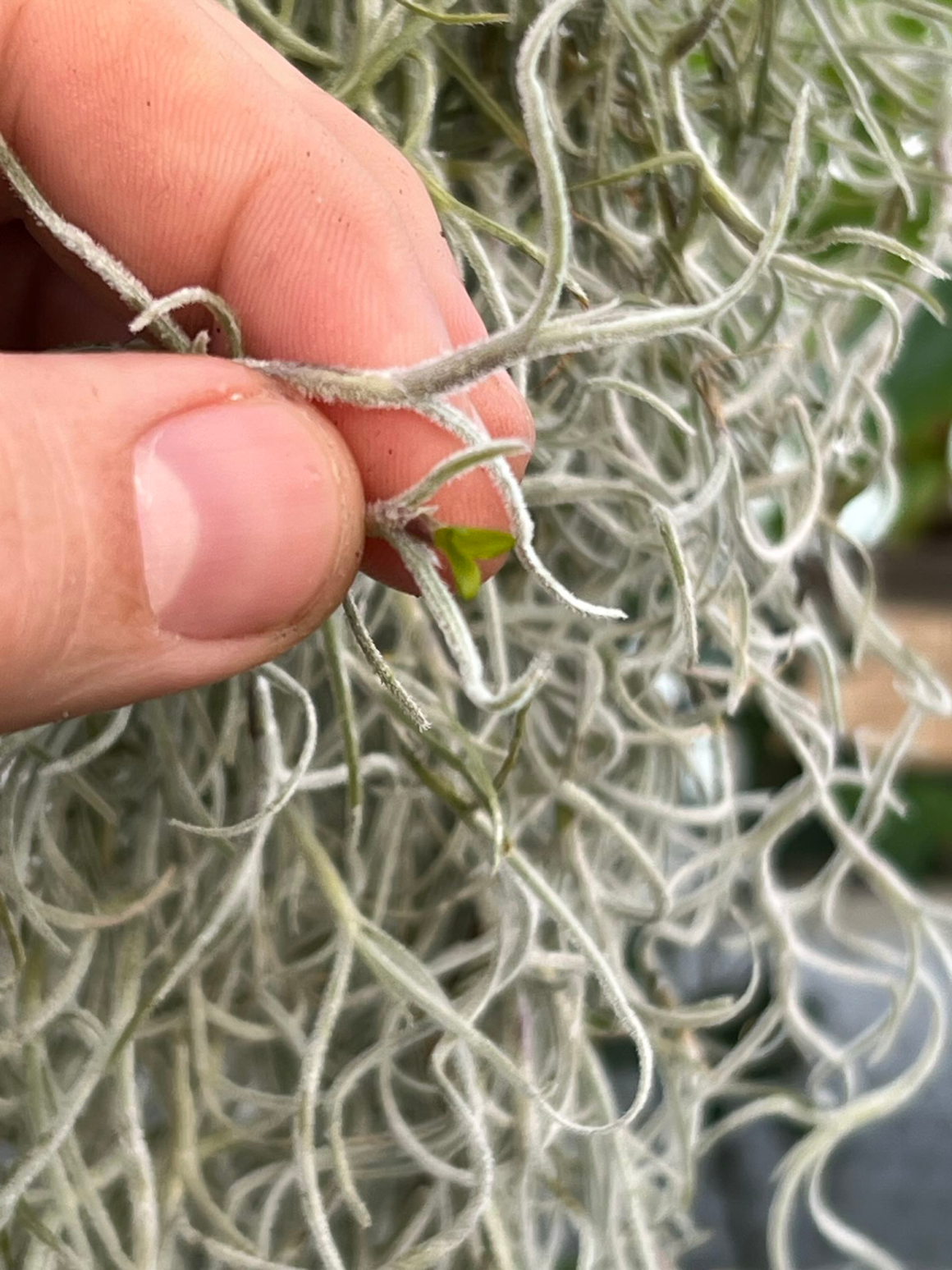
Epiphyte · Perennial
Tillandsia usneoides
Spanish moss
Also known as: Renealmia usneoides
A rootless, silvery-grey air plant that drapes in long trailing strands without any soil at all.
- Full sun, Partial shade
- 0.3–2 m (1–7 ft)
- H1c · Zone 9
- May, June, October, November
- Evergreen
Overview
This epiphytic bromeliad grows as thin, branching, wiry stems covered in tiny silver scales that absorb moisture and nutrients directly from the air rather than from roots or soil. In its native range it drapes from tree branches in humid, frost-free woodland; across the UK and similar temperate climates it is grown as a houseplant or under glass, hung where air can move freely around it. Regular misting or soaking keeps the strands supple, and bright, indirect light brings out its best silvery colour.
At a Glance
Growing Conditions
Aspect Suitability
- East-facing
- South-facing
- West-facing
Site Tolerance
- Exposed sites
- Wind
- Drought
Foliage
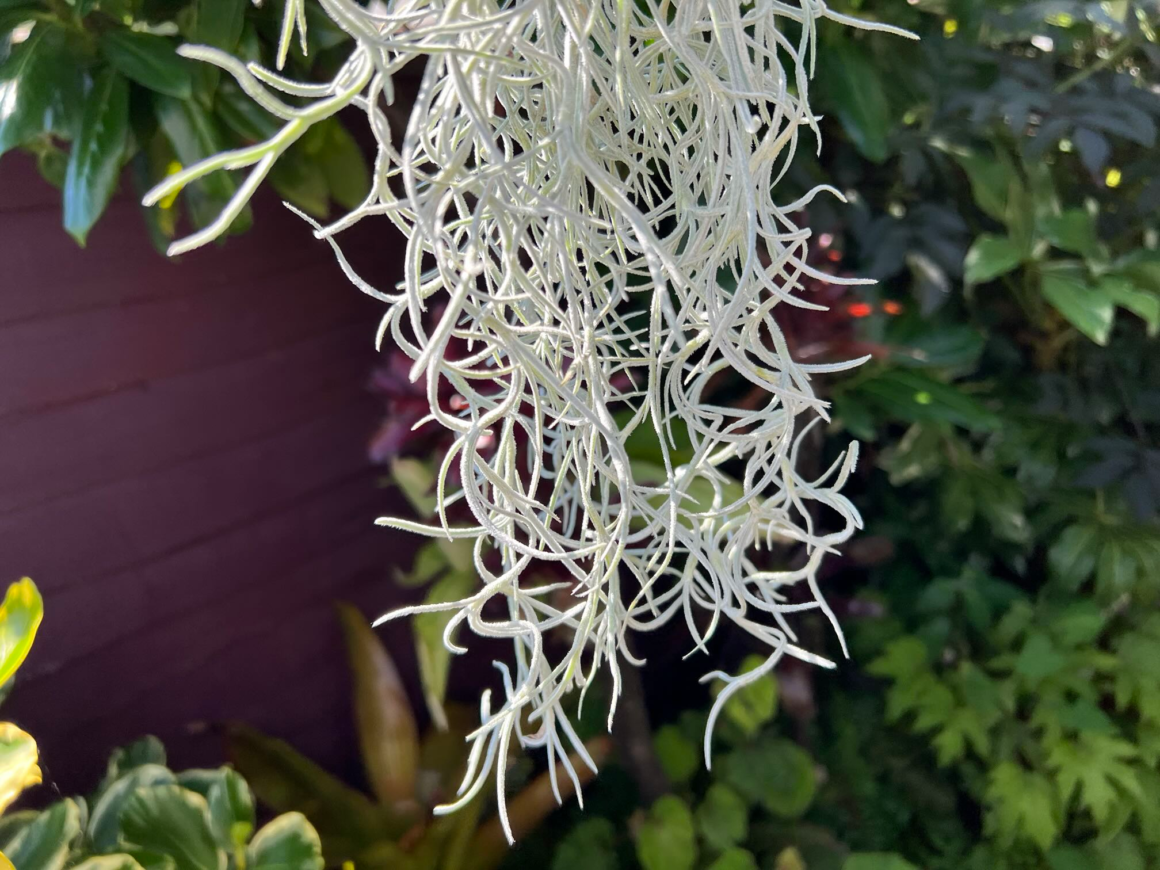
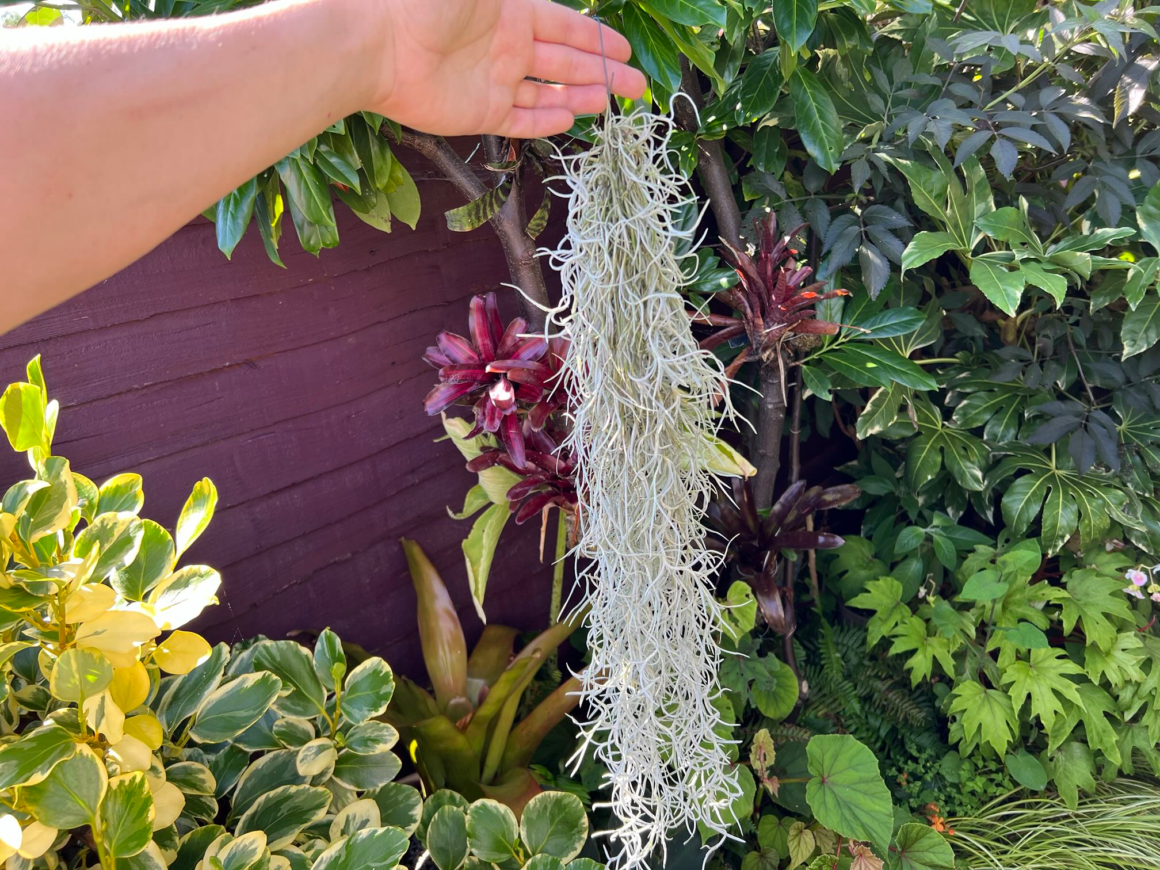
Foliage interest: 12 months of the year
Seasonal Timeline
- Flowering May Jun Oct Nov
- Foliage 12 months of the year
- Propagate Apr May Jun Jul Aug
Maintenance Calendar
- Mar Increase misting frequency as light levels rise
- Jun Soak in rainwater for 20 minutes every one to two weeks
- Sep Check strands are drying fully between waterings to avoid rot
- Nov Move to the brightest, most humid spot indoors for winter
Garden Design
Works well in: Container, Contemporary, Tropical
Hang from driftwood, a wire frame or a bright bathroom rail rather than planting into soil or compost; it is a houseplant or conservatory plant across the UK and similar temperate climates, only growing outdoors through summer in the mildest, most humid gardens.
Companion planting: Other tillandsias, Bromeliads, Orchids
Wildlife Value
- Night-scented for moths
- Shelter
Safety
Generally regarded as non-toxic, though ornamental plants should not be eaten; keep away from pets that like to chew trailing foliage.