

Perennial
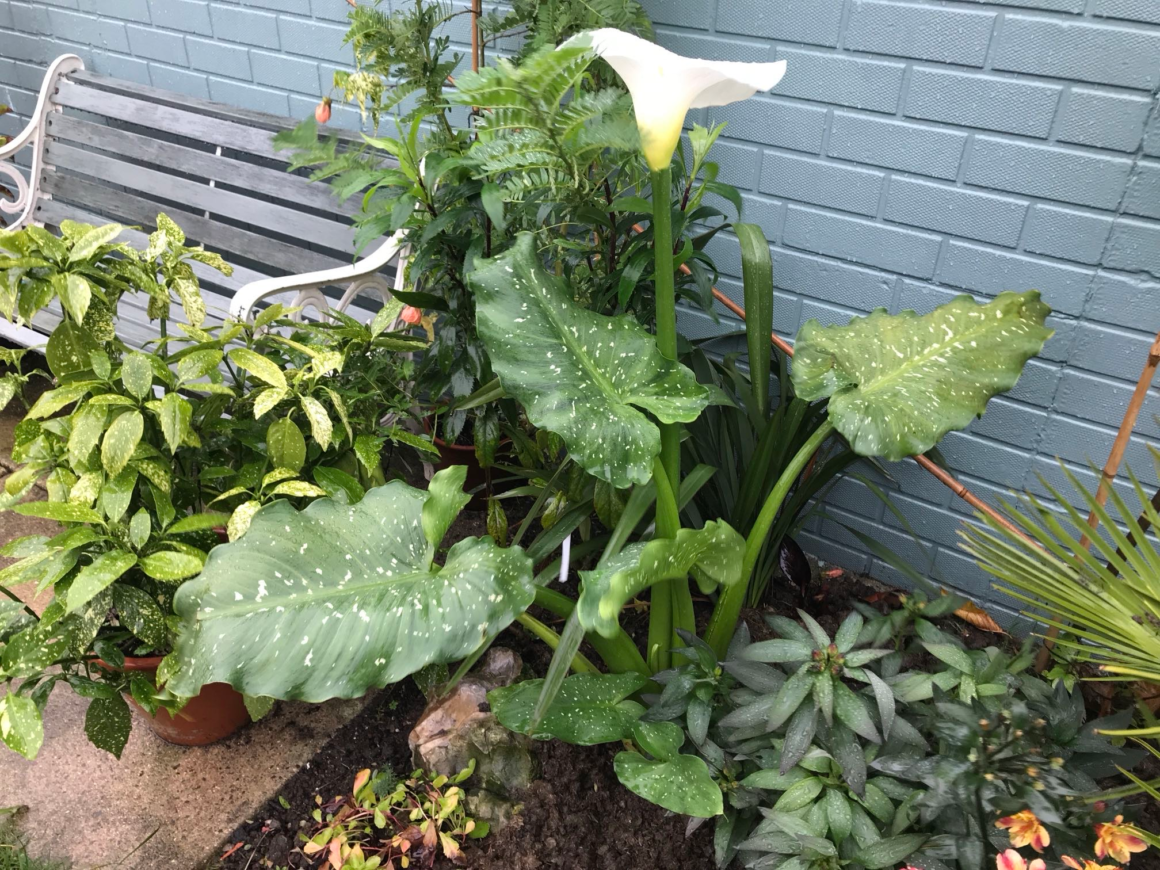
Zantedeschia aethiopica 'White Giant'
White Giant arum lily
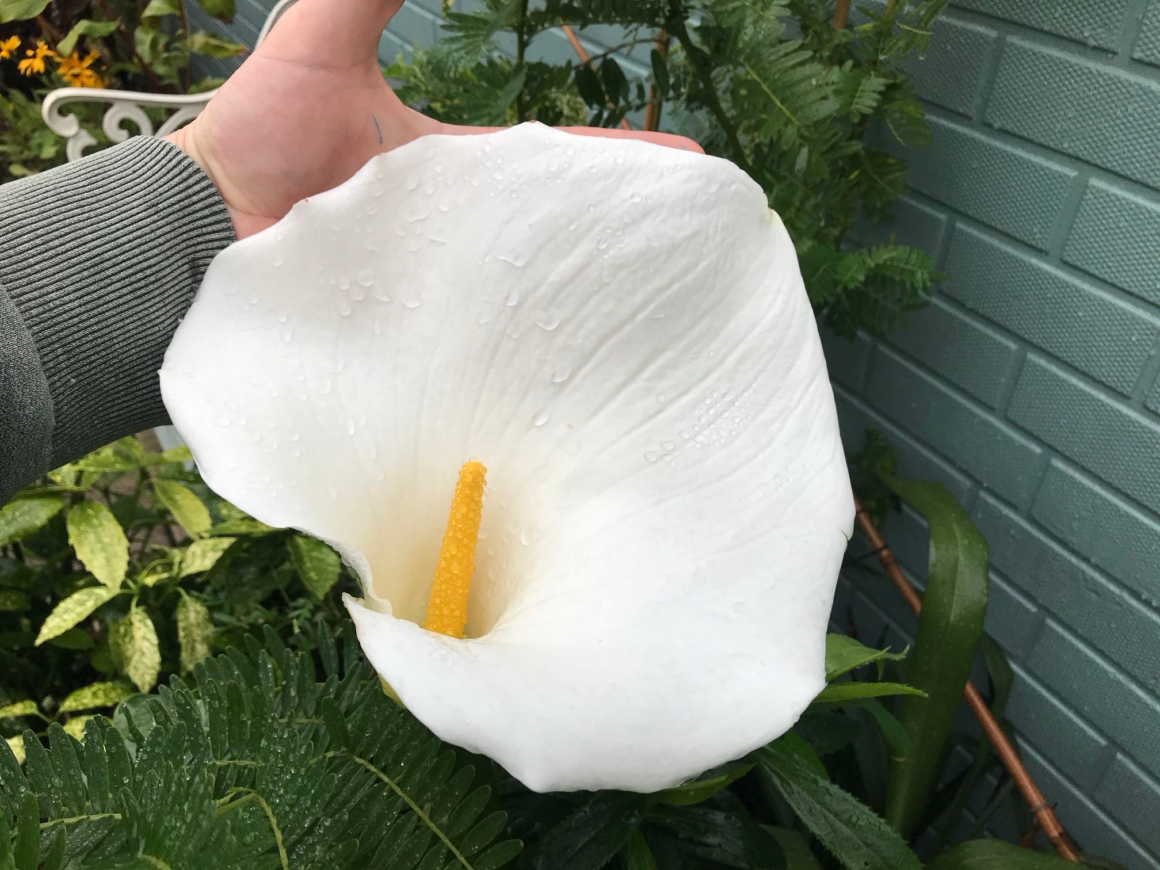
An outsized arum lily with huge white-speckled leaves and tall, funnel-shaped white spathes.
- Full sun
- 1.5–2.5 m (5–8 ft)
- 1–1.5 m (3–5 ft)
- H4 · Zone 7
- June–September
- Semi evergreen
Overview
This dramatic selection of the hardy arum lily dwarfs the species, producing large, glossy, white-flecked leaves and correspondingly big white spathes held well above the foliage from summer into early autumn. It thrives with constantly moist to wet roots, making it ideal beside a pond or in a bog garden, and can even be grown as a marginal aquatic in a planting basket. Established clumps are hardy through most winters, though a thick mulch helps in colder gardens.
At a Glance
Growing Conditions
Aspect Suitability
- South-facing
- West-facing
Site Tolerance
- Exposed sites
- Wet soil
Soil Tolerance
- Clay
- Loam
- Acid
- Neutral pH
- Alkaline
Foliage
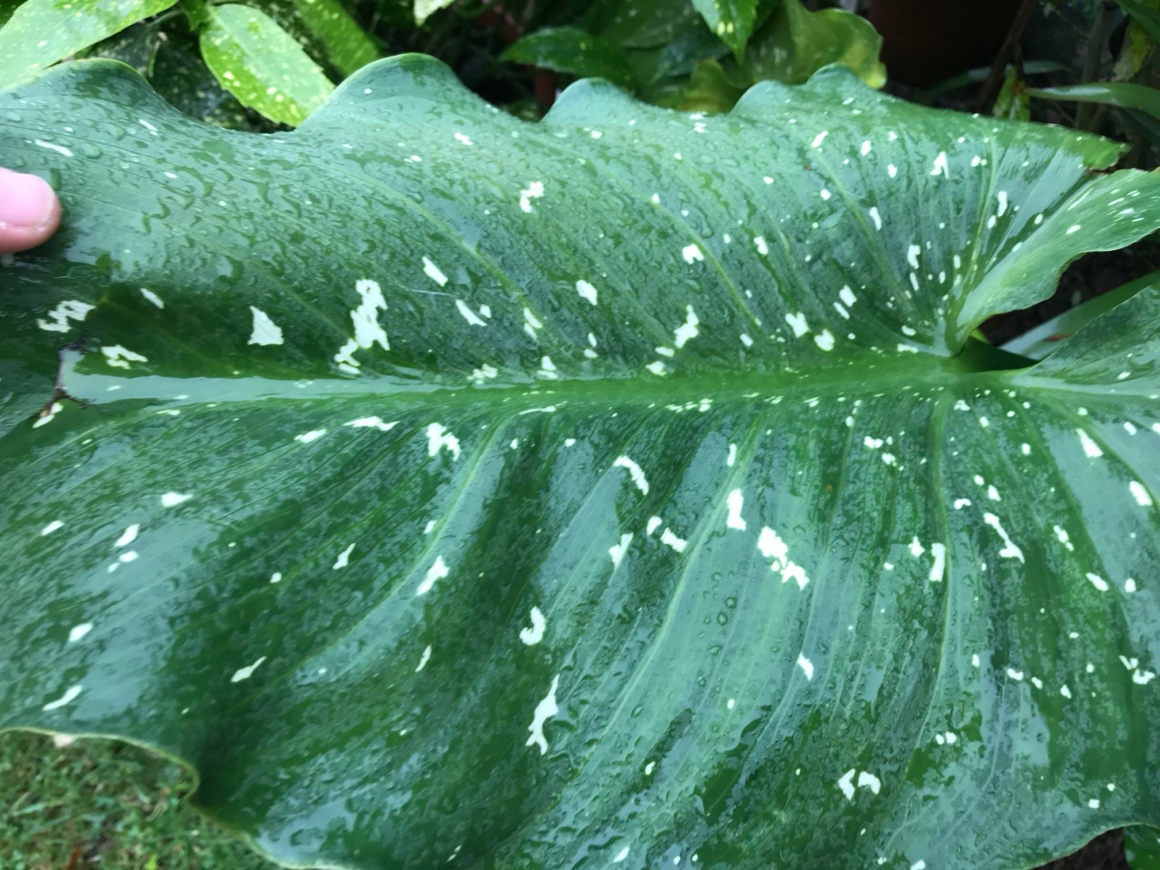
- Variegated
- Architectural foliage
Foliage interest: April–October
Seasonal Timeline
- Flowering Jun Jul Aug Sep
- Foliage Apr May Jun Jul Aug Sep Oct
- Fruiting Sep Oct
- Propagate Mar Apr
Maintenance Calendar
- Mar Mulch generously as new growth emerges
- May Divide or plant new clumps into permanently moist soil
- Jun Keep the root area consistently wet through the growing season
- Aug Remove faded spathes to tidy the display
- Nov Mulch deeply or move basket-grown plants to frost-free water
Garden Design
Works well in: Bog, Contemporary, Cottage, Pondside
Site where its size can be appreciated at a pond margin or in a permanently damp border; the speckled leaves are as much of a feature as the outsized flowers.
Companion planting: Irises, Ligularias, Moisture-loving ferns
Wildlife Value
- Other pollinators
Safety
- Toxic to humans
- Toxic to dogs
- Toxic to cats
- Toxic to horses
- Skin irritant
Harmful if eaten and a skin and eye irritant; wear gloves and protective equipment when handling and dividing.