

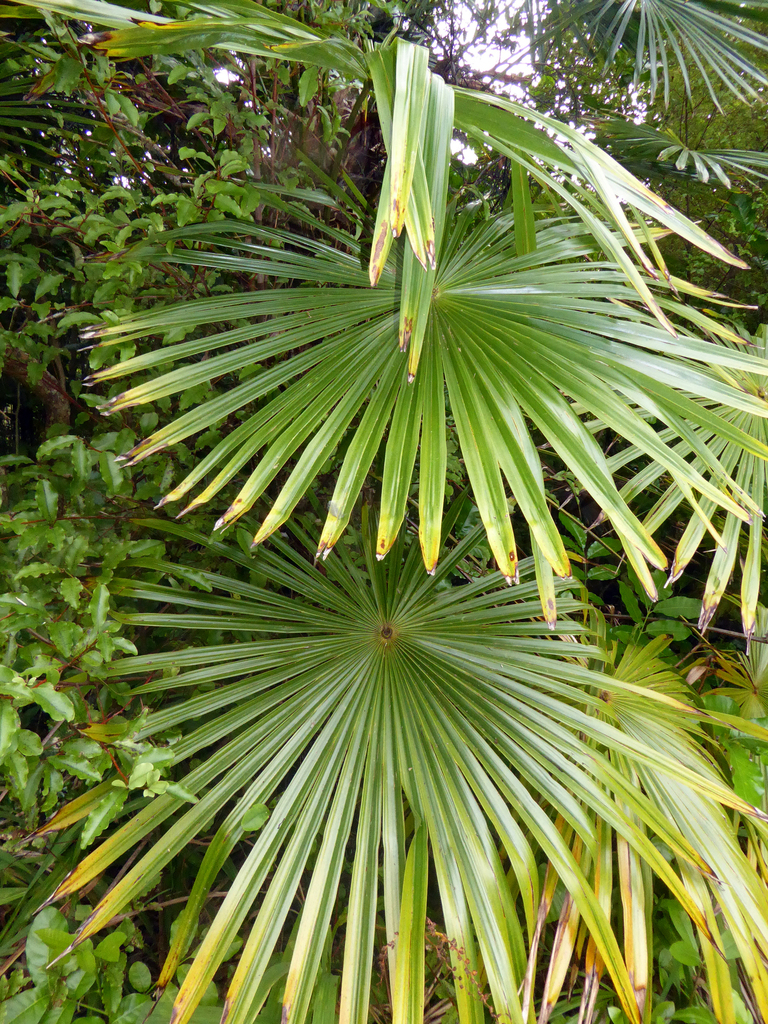
Photo: no rights reserved, CC0, via iNaturalist
Palm · Tree
Trachycarpus fortunei
Chusan palm
Also known as: Chamaerops fortunei, Trachycarpus excelsus
The hardiest widely grown palm, with a hairy brown trunk topped by a crown of large, fan-shaped leaves.
- Full sun, Partial shade
- 6–12 m (20–39 ft)
- 1.5–2.5 m (5–8 ft)
- H5 · Zone 7
- May–June
- Evergreen
- RHS Award of Garden Merit
Overview
Native to the mountains of central and southern China, the Chusan or windmill palm slowly builds a single trunk wrapped in coarse brown fibre, crowned by stiff, pleated, fan-shaped leaves up to a metre across. Sprays of small yellow flowers appear in early summer, and female plants can follow them with blue-black fruit. It shrugs off most winters in the UK and similar cool temperate climates once established, coping with roughly -15°C for short spells. Its main weakness is wind: big leaves shred and tear in exposed spots, so a sheltered position keeps it looking its best.
At a Glance
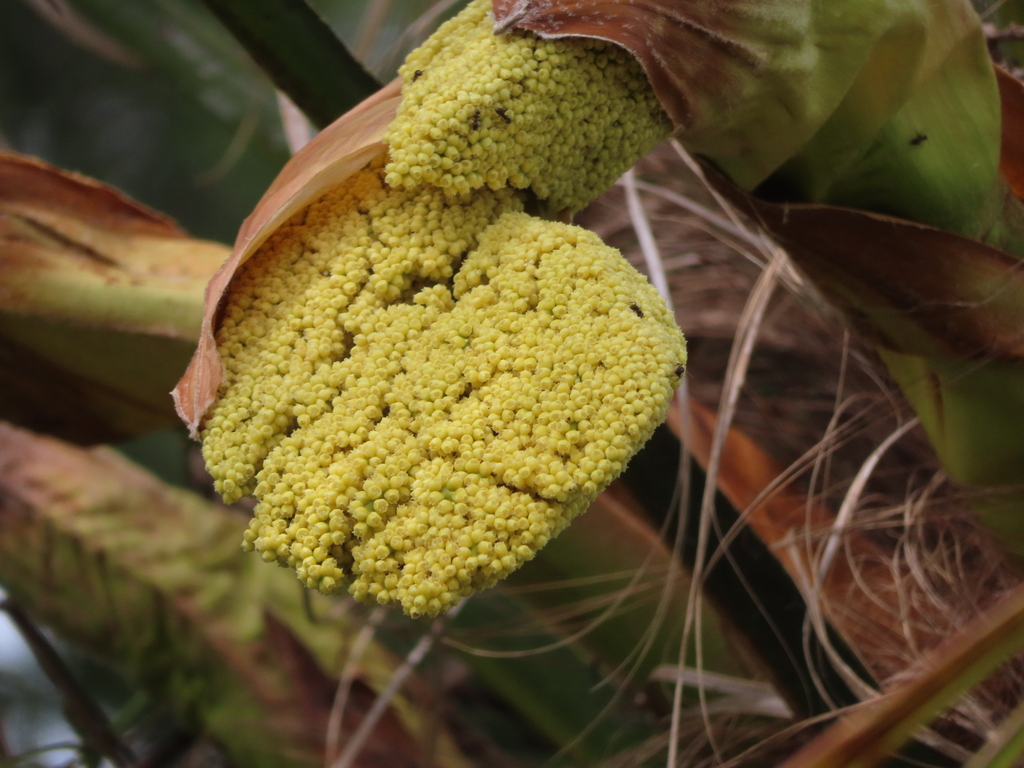
Photo: Timur Kalininsky, CC BY 4.0, via iNaturalist
Growing Conditions
Aspect Suitability
- East-facing
- South-facing
- West-facing
Site Tolerance
- Coastal
Soil Tolerance
- Clay
- Chalk
- Sandy
- Loam
- Acid
- Neutral pH
- Alkaline
Foliage
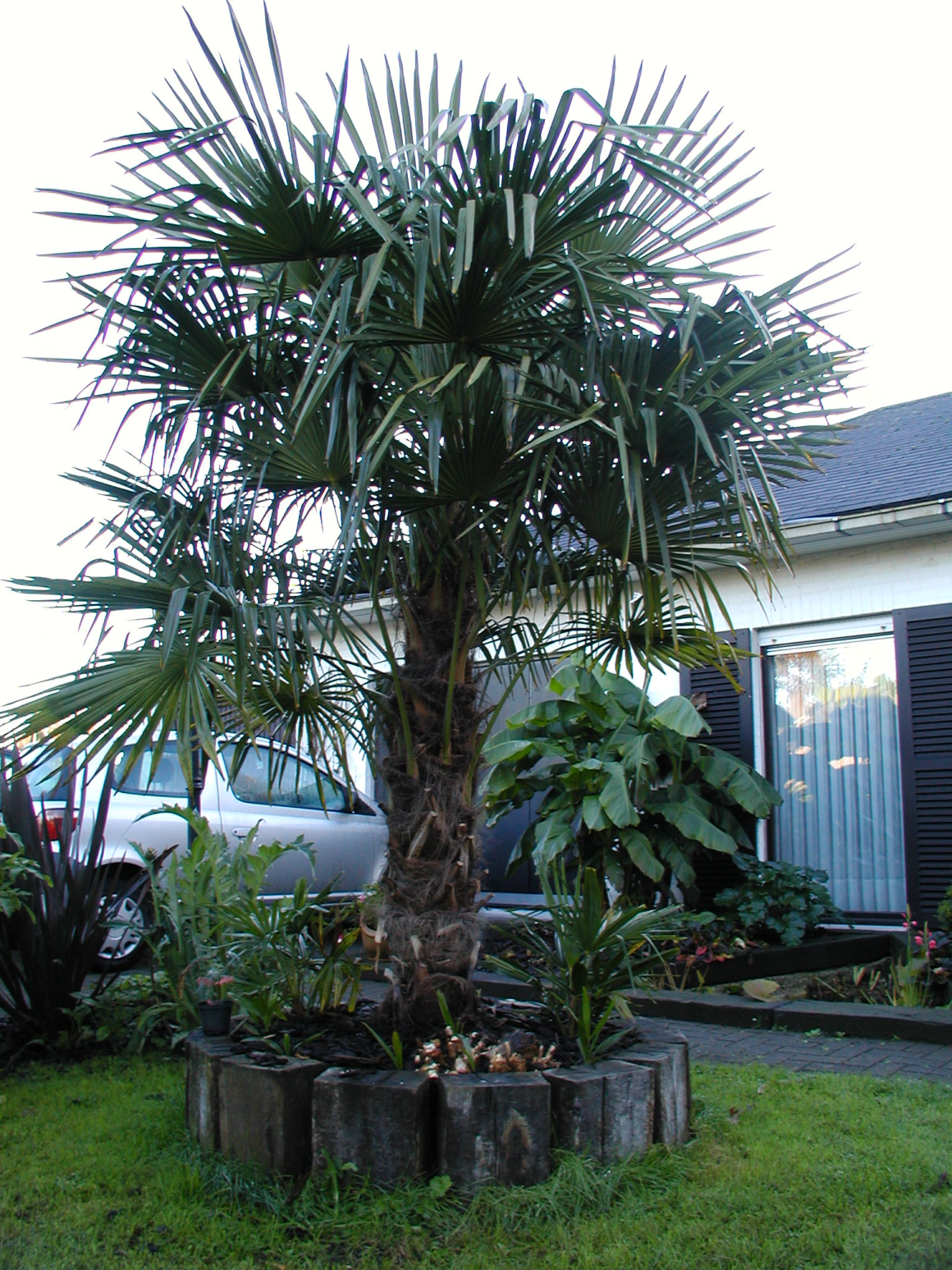
Photo: Geert De Maerschalck at Dutch Wikipedia, Public domain, via Wikimedia Commons
- Architectural foliage
Foliage interest: 12 months of the year
Seasonal Timeline
- Flowering May Jun
- Foliage 12 months of the year
- Fruiting Sep Oct Nov
- Propagate Mar Apr May
How to propagate
One way to grow more Chusan palm: the usual steps for each method.
From seed Mar–May Easy
You'll need: Seed compost, a seed tray or small pots, labels, and a clear lid or plastic bag.
- Fill a tray or pots with seed compost, level it and firm it gently.
- Water the compost and let it drain.
- Sow the seeds thinly on top. Cover them with a fine layer of compost or vermiculite about as deep as the seed is big; leave tiny seeds uncovered.
- Label them, cover with a clear lid or bag, and keep them somewhere bright but out of hot sun.
- Keep the compost just moist, and take the cover off once seedlings appear.
- How long
- Usually comes up in 1 to 3 weeks.
- It's worked when
- Seedlings with their first pair of leaves.
- Then
- When each has its first true leaves, prick them out into their own small pots, holding them by a leaf, never the stem. Harden them off for a week or two before planting out.
Sow fresh seed in warmth (about 25°C); it germinates in one to three months. Plants cannot be divided because each palm has a single growing point.
Maintenance Calendar
- Apr Give a slow-release palm or general feed as growth starts, because palms make nearly all their new leaves in the warm months
- May Cut off only fully brown lower leaves close to the trunk, as every green leaf is still feeding the plant
- Jul Water young palms deeply in dry spells for their first two summers, so roots grow down and the plant becomes self-sufficient
- Nov In cold or exposed gardens loosely tie up the leaves of young palms to keep winter wet out of the central bud, the one part that cannot regrow
Garden Design
Works well in: Japanese / Zen, Mediterranean, Modern / Contemporary, Tropical / Exotic
Plant where its silhouette stands out against sky or a plain wall, and out of strong wind so the fan leaves stay intact. Smaller trunked plants grow well in large pots for years.
Companion planting: Phormiums, Fatsias, Ornamental grasses, Bamboos
Wildlife Value
- Bees
- Shelter
Safety
Not known to be toxic. Leaf stalks carry small, sharp teeth along their edges, so wear gloves when removing old leaves.