

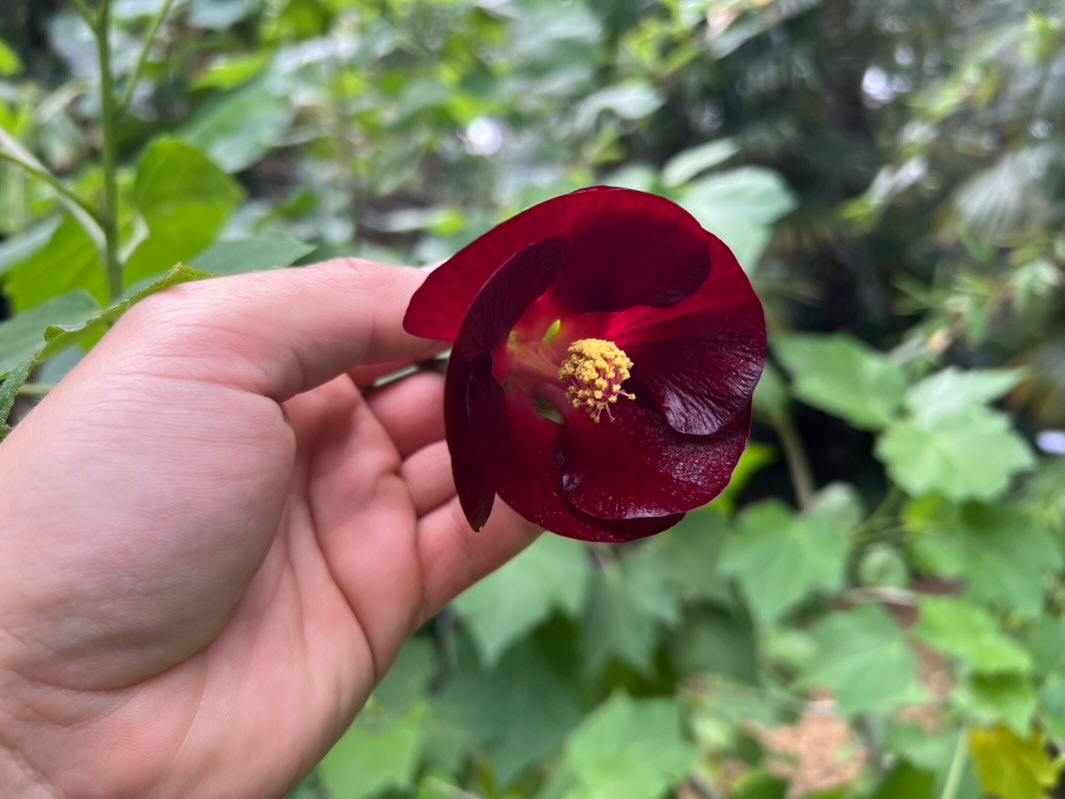
Shrub
Phymosia umbellata ‘Blood of Pan’
Mexican bush mallow ‘Blood of Pan’
Also known as: Phymosia umbellata dark-flowered, Phymosa umbellata (misspelling)
A dark-flowered Mexican mallow shrub with soft, grey-green lobed leaves and deep blood-red funnel flowers.
- Full sun
- 2–4 m (7–13 ft)
- 1.5–2.5 m (5–8 ft)
- H3 · Zone 9
- June–October
- Semi evergreen
Overview
Phymosia umbellata is a medium-sized, semi-evergreen shrub from Mexico related to abutilons, with large, softly hairy, maple-like leaves. 'Blood of Pan' is an exceptionally dark selection whose clusters of open, funnel-shaped flowers are deep blood red with slightly paler insides, produced from summer into autumn and almost year-round in a warm, sheltered spot. The species is rated hardy in coastal and relatively mild parts of the UK (about -5°C), and a plant in a sheltered spot at RHS Wisley came through the severe cold of 2018 unscathed. A warm wall gives the best results.
At a Glance
Growing Conditions
Aspect Suitability
- South-facing
- West-facing
Soil Tolerance
- Chalk
- Sandy
- Loam
- Acid
- Neutral pH
- Alkaline
Foliage
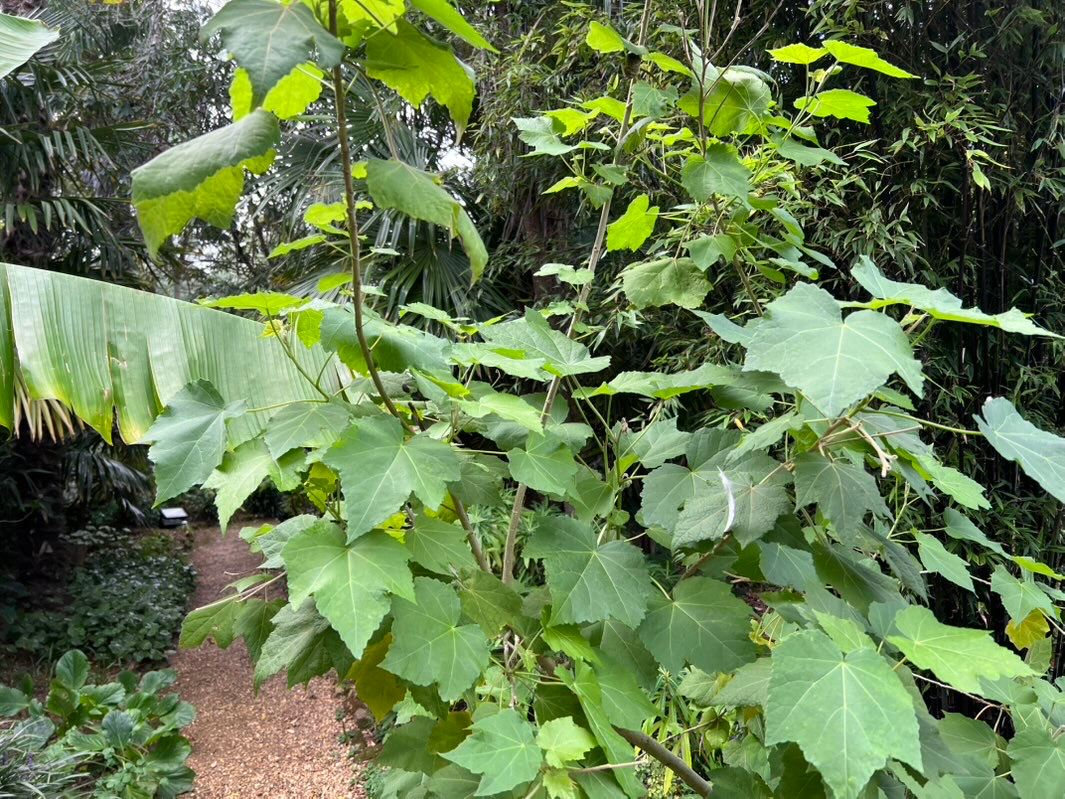
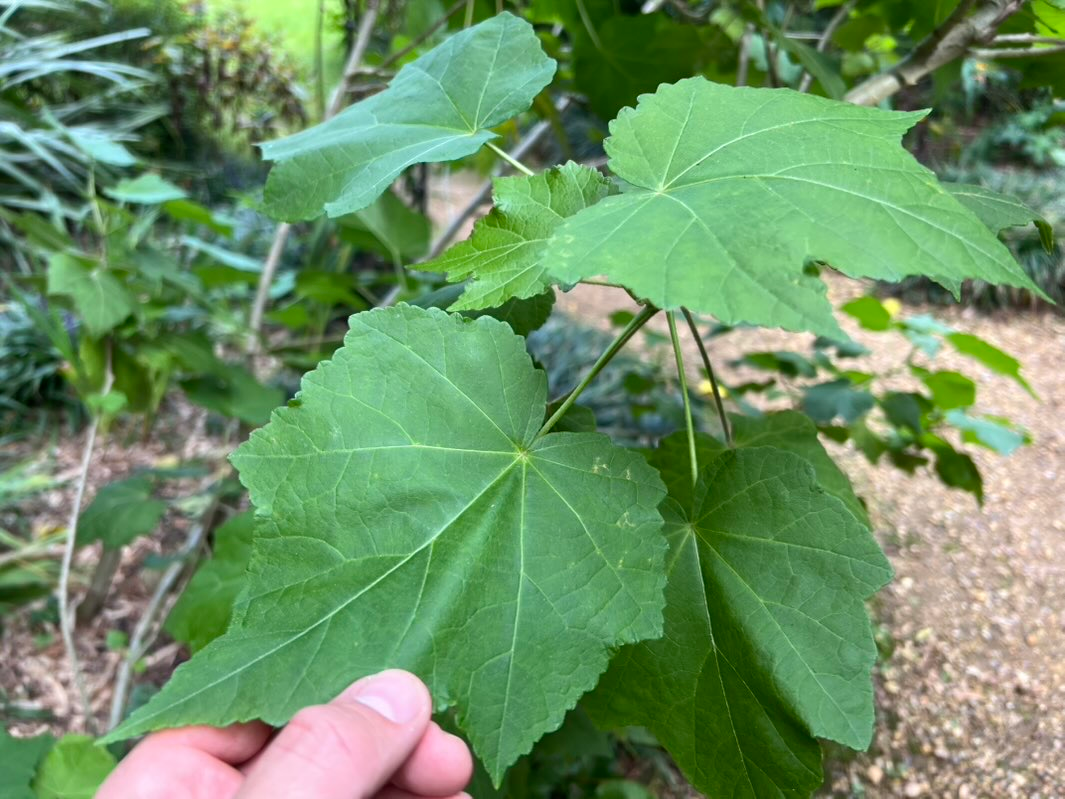
- Architectural foliage
Foliage interest: 12 months of the year
Seasonal Timeline
- Flowering Jun Jul Aug Sep Oct
- Foliage 12 months of the year
- Propagate May Jun Jul Aug
Maintenance Calendar
- Apr Cut out frost-damaged growth and shorten long shoots by a third to keep it bushy, as it flowers on new growth
- Jun Give a balanced feed once a month in pots to support the long flowering season
- Jul Take a few cuttings as insurance in case a hard winter kills the parent plant
- Nov Mulch the root area and fleece the plant in hard frosts, because a protected base can reshoot even if top growth is lost
Garden Design
Works well in: Cottage, Mediterranean, Modern / Contemporary, Tropical / Exotic
Grow against a sunny, sheltered wall or fence where the reflected warmth helps it flower over a long season. Dark flowers look best against pale stone or silver foliage.
Companion planting: Abutilons, Salvias, Cannas, Grasses
Wildlife Value
- Bees
- Other pollinators
- Shelter
Safety
No known toxicity; treat as an ornamental plant only.