

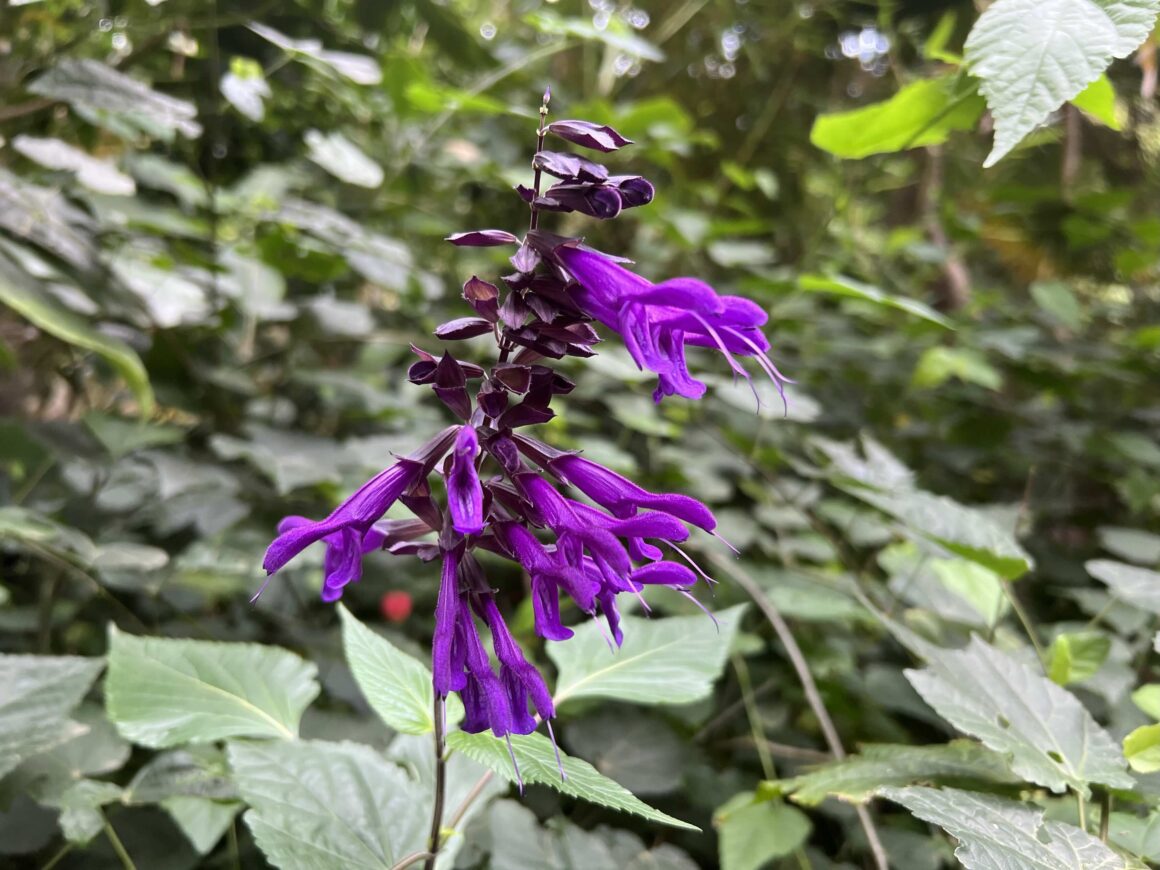
Perennial · Subshrub
Salvia ‘Amistad’
Amistad sage
Also known as: Salvia guaranitica 'Amistad' (misapplied)
An award-winning sage with large, deep purple flowers held in near-black calyces from early summer to the frosts.
- Full sun, Partial shade
- 1–1.5 m (3–5 ft)
- 50–90 cm (20–35 in)
- H3 · Zone 9
- June–November
- Deciduous
- RHS Award of Garden Merit
Overview
Raised in Argentina (its name means 'friendship'), this vigorous, upright sage produces a remarkable non-stop display of large, velvety, deep purple tubular flowers set in dark, almost black calyces, from early summer until the first frosts. Bees and butterflies visit constantly, and in the Americas so do hummingbirds. It survives about -5°C in a sheltered, well-drained spot, especially if mulched, but taking cuttings in late summer is a wise insurance in colder gardens.
At a Glance
Growing Conditions
Aspect Suitability
- East-facing
- South-facing
- West-facing
Soil Tolerance
- Chalk
- Sandy
- Loam
- Acid
- Neutral pH
- Alkaline
Foliage
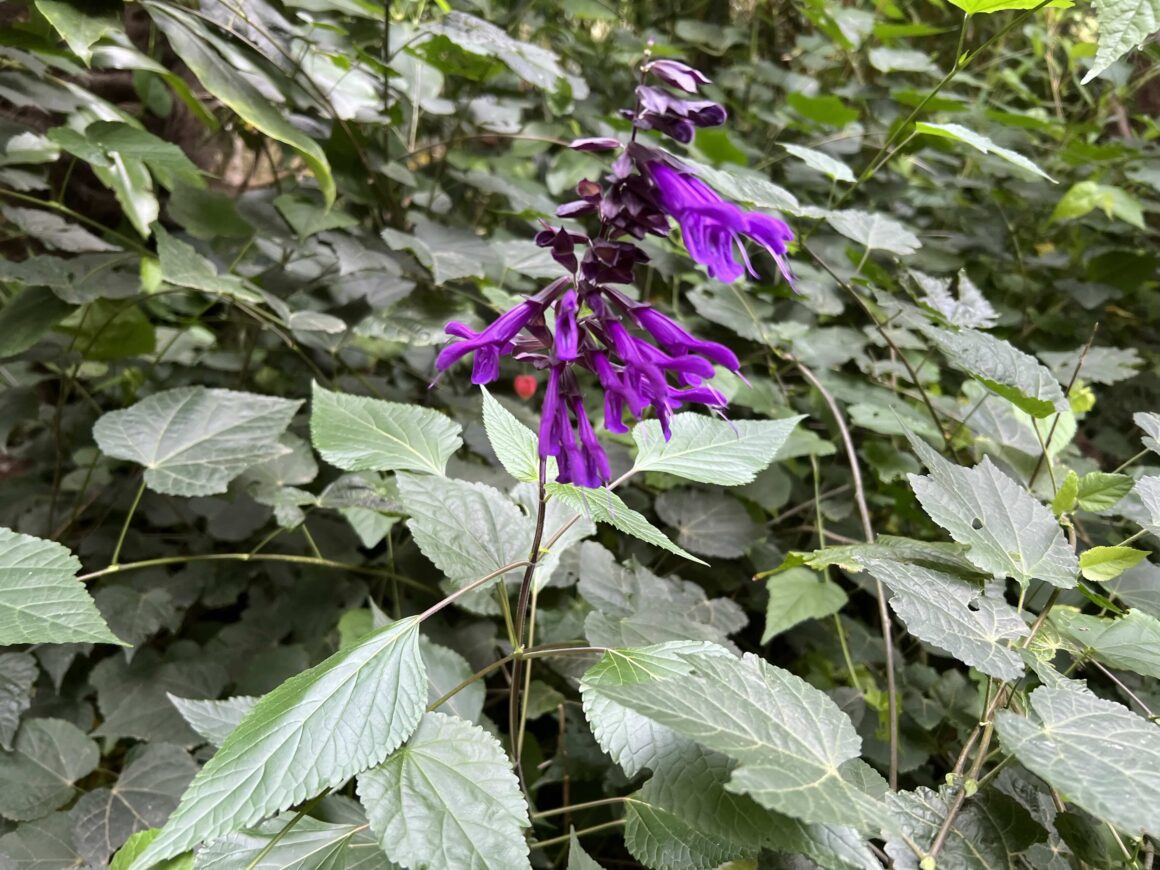
- Autumn colour
Foliage interest: April–November
Seasonal Timeline
- Flowering Jun Jul Aug Sep Oct Nov
- Foliage Apr May Jun Jul Aug Sep Oct Nov
- Propagate Apr May Aug Sep
Maintenance Calendar
- Apr Cut the old stems down to new shoots at the base once growth appears, because last year's stems shelter the crown through winter
- Jun Give a light balanced feed and water in dry spells to keep it flowering
- Aug Take cuttings of non-flowering shoots as a back-up against a cold winter
- Nov Leave the stems standing and mulch the crown thickly with dry compost or bark, insulating the roots from frost
Garden Design
Works well in: Cottage, Modern / Contemporary, Wildlife-friendly
Plant in groups near the middle of a sunny border; the dark purple glows next to orange dahlias, lime-green foliage or silver grasses.
Companion planting: Dahlias, Grasses, Cannas, Orange or lime flowers
Wildlife Value
- Bees
- Butterflies
- Other pollinators
- Birds
- RHS Plants for Pollinators
Safety
Not known to be toxic, but this is an ornamental sage, not a culinary herb.