

Palm · Shrub
Chamaerops humilis var. argentea
Blue Mediterranean fan palm
Also known as: Chamaerops humilis 'Cerifera', Chamaerops humilis var. cerifera, Chamaerops humilis silver back, Phoenix humilis var. argentea
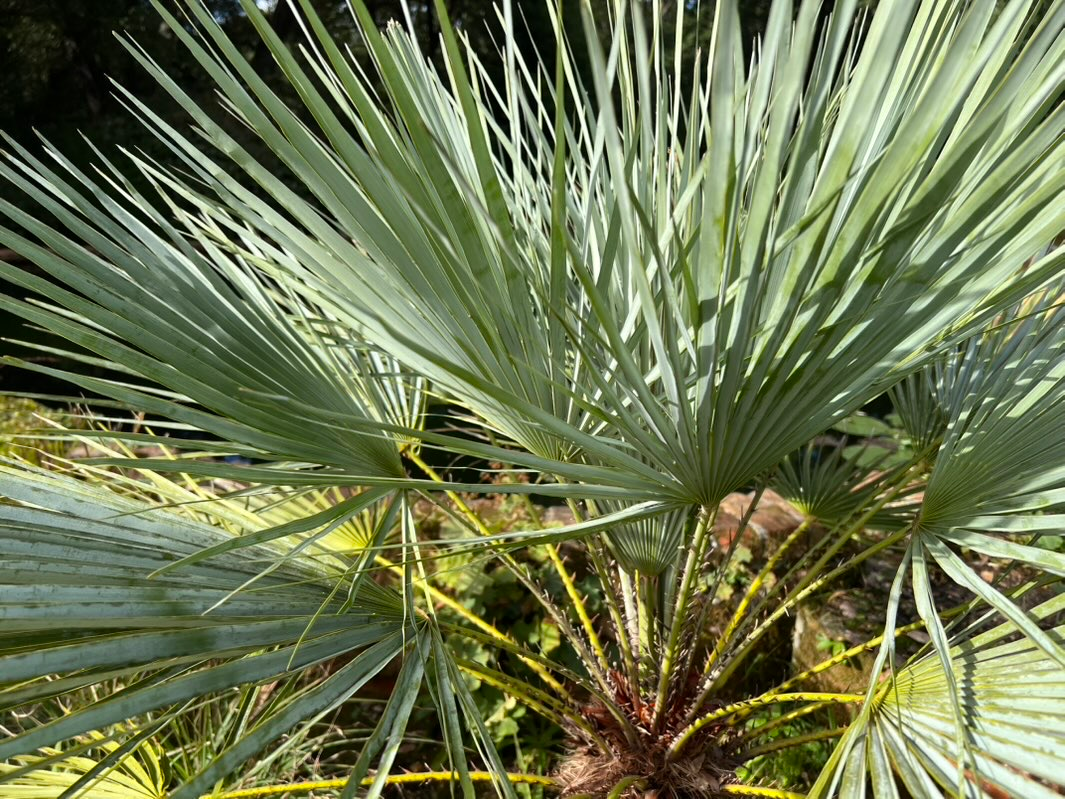
A slow-growing, clumping fan palm with stiff, silvery-blue leaves - the Atlas Mountains form of the Mediterranean fan palm.
- Full sun
- 1.5–2.5 m (5–8 ft)
- 1.5–2.5 m (5–8 ft)
- H3 · Zone 9
- May–June
- Evergreen
Overview
Listed by many nurseries as Chamaerops humilis 'Cerifera', the accepted name for this plant is Chamaerops humilis var. argentea. From the Atlas Mountains of Morocco, it forms one or several short trunks topped by stiff, deeply divided fan leaves coated in a waxy, silver-blue bloom, much paler than the common green form. Leaf stalks are armed with sharp spines. It is slow growing and rated hardy in coastal and relatively mild parts of the UK (about -5°C); a sunny, sheltered spot with excellent drainage, or a large pot moved under cover in severe weather, suits it best.
At a Glance
Growing Conditions
Aspect Suitability
- South-facing
- West-facing
Site Tolerance
- Exposed sites
- Wind
- Coastal
- Salt
- Drought
Soil Tolerance
- Chalk
- Sandy
- Loam
- Acid
- Neutral pH
- Alkaline
Foliage
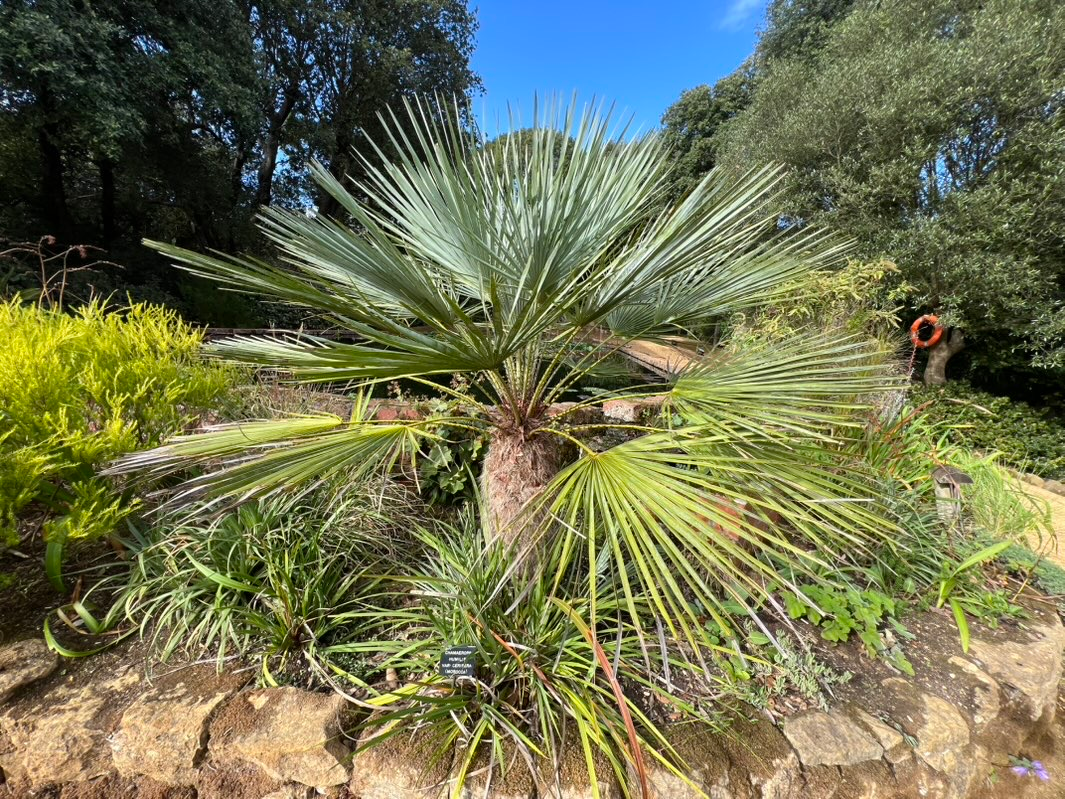
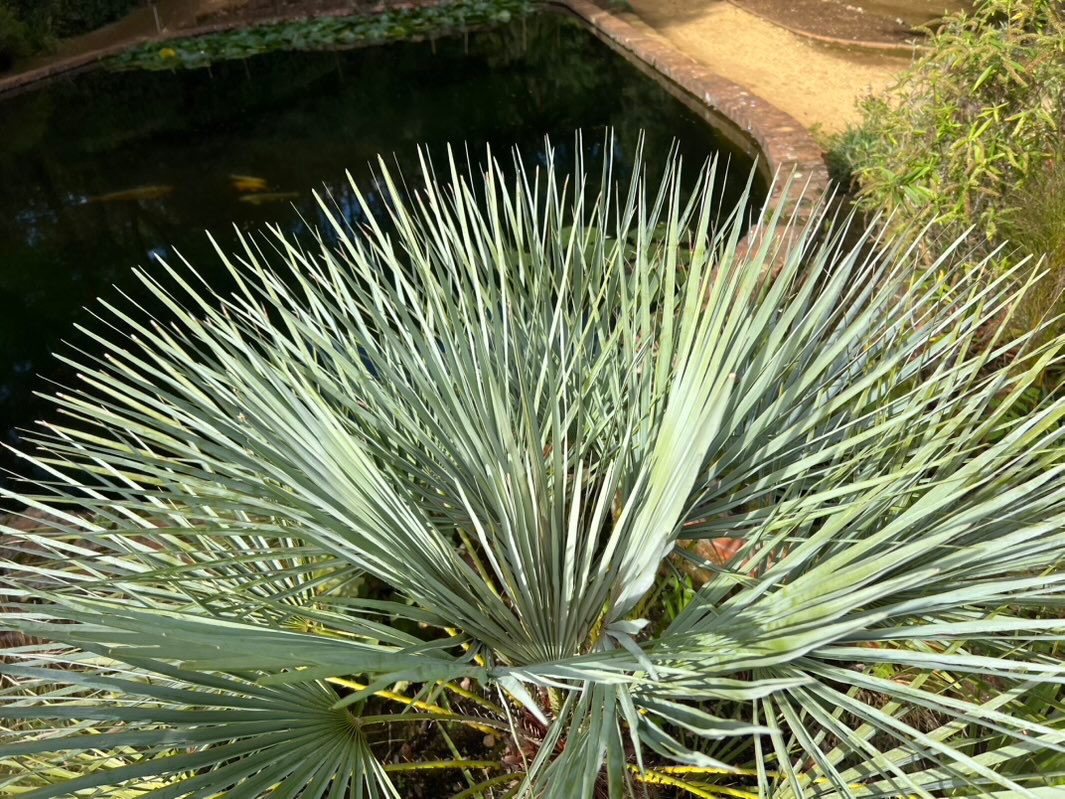
- Architectural foliage
Foliage interest: 12 months of the year
Seasonal Timeline
- Flowering May Jun
- Foliage 12 months of the year
- Fruiting Sep Oct Nov
- Propagate Apr May Jun
Maintenance Calendar
- Apr Cut off dead lower leaves close to the trunk using long-handled loppers and thick gloves, as the leaf stalks are very spiny
- May Feed pot-grown palms with a slow-release fertiliser, since nutrients drain out of containers
- Jul Water young plants deeply but infrequently in dry spells, letting the soil dry between waterings
- Nov Fleece the crown in severe cold and keep pots dry and sheltered, because wet cold roots are the main cause of loss
Garden Design
Works well in: Desert / Dry, Mediterranean, Modern / Contemporary, Tropical / Exotic
The silver leaves glow in a gravel or Mediterranean garden and look striking against dark walls. Good drainage matters more than shelter.
Companion planting: Agaves, Yuccas, Lavenders, Gravel plants
Wildlife Value
- Bees
- Shelter
Safety
- Skin irritant
Not known to be toxic, but leaf stalks carry sharp, hooked spines; wear thick gloves and site away from paths and play areas.