

Shrub · Succulent
Yucca rostrata
Beaked yucca
Also known as: Yucca linearis
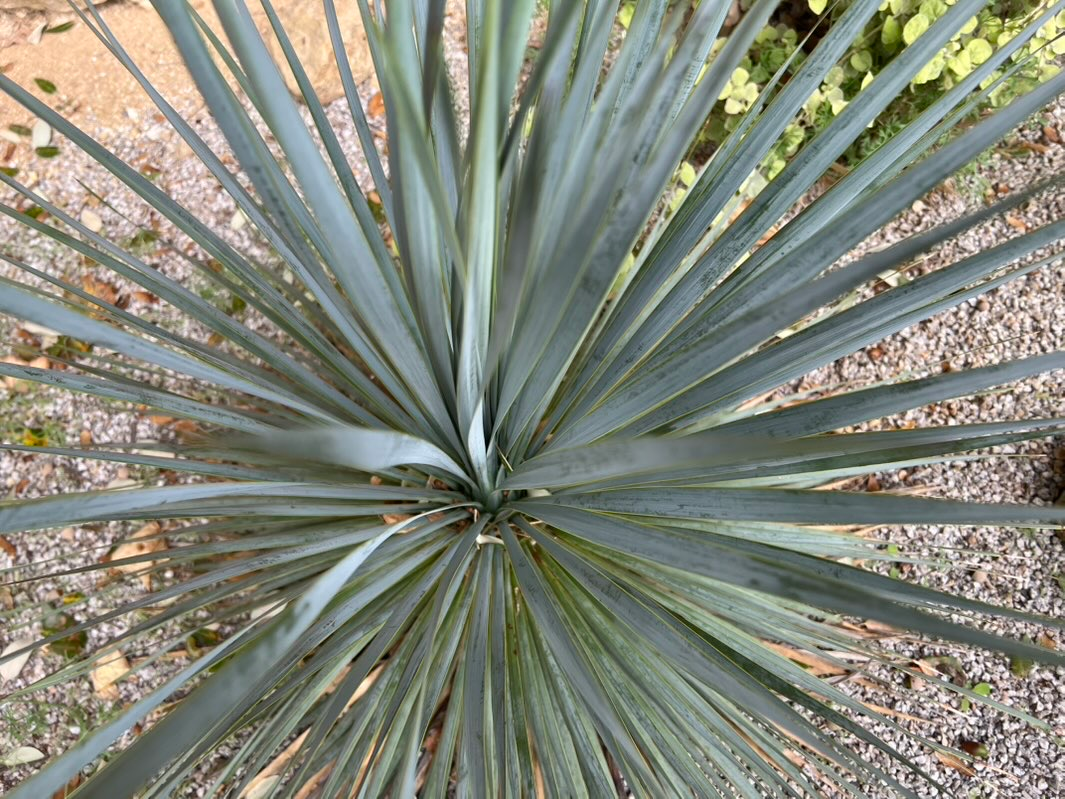
A sculptural, trunk-forming yucca with a perfect sphere of fine, silver-blue leaves.
- Full sun
- 2.5–4 m (8–13 ft)
- 1.5–2.5 m (5–8 ft)
- H5 · Zone 7
- June–August
- Evergreen
Overview
From the deserts of northern Mexico and Texas, the beaked yucca slowly forms a single trunk topped by a dense, spherical head of hundreds of narrow, flexible, powder-blue leaves with fine yellow edges. Mature plants send up tall spikes of white bell-shaped flowers in summer. Old leaves fold down to form a shaggy skirt around the trunk. It is surprisingly cold-hardy (RHS H5, about -15°C) as long as the roots never sit wet, so sharp drainage and full sun are essential.
At a Glance
Growing Conditions
Aspect Suitability
- South-facing
- West-facing
Site Tolerance
- Exposed sites
- Wind
- Coastal
- Salt
- Drought
Soil Tolerance
- Chalk
- Sandy
- Acid
- Neutral pH
- Alkaline
Foliage
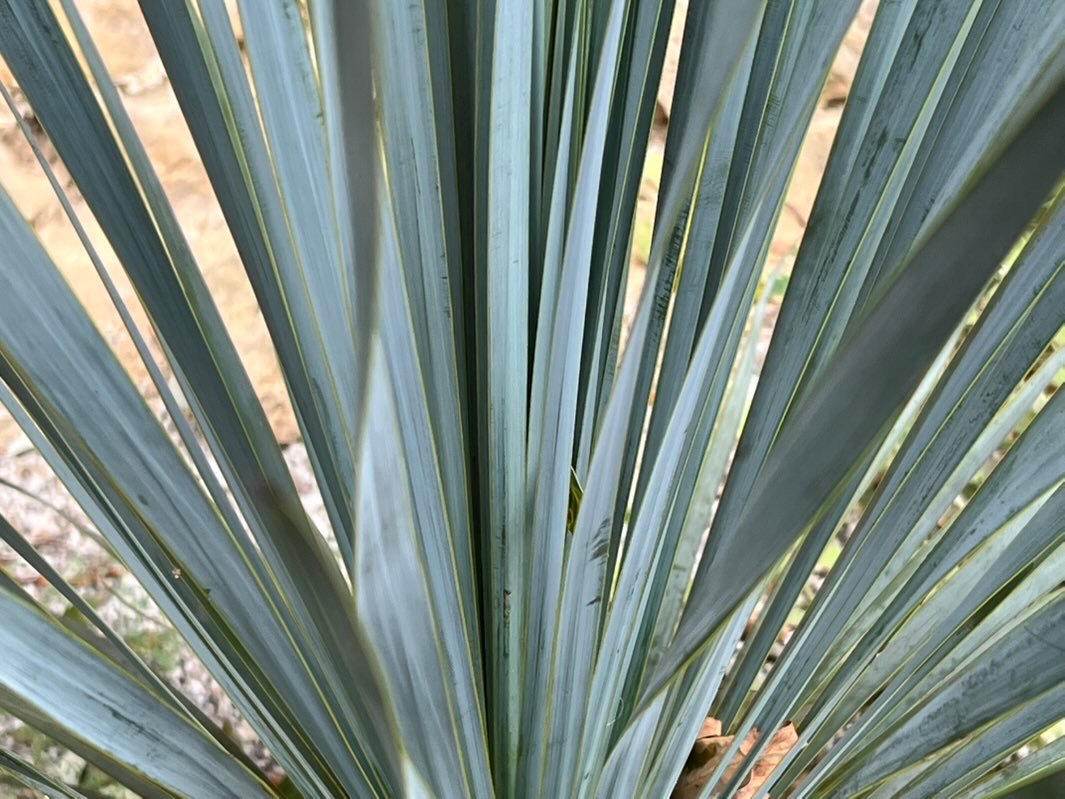
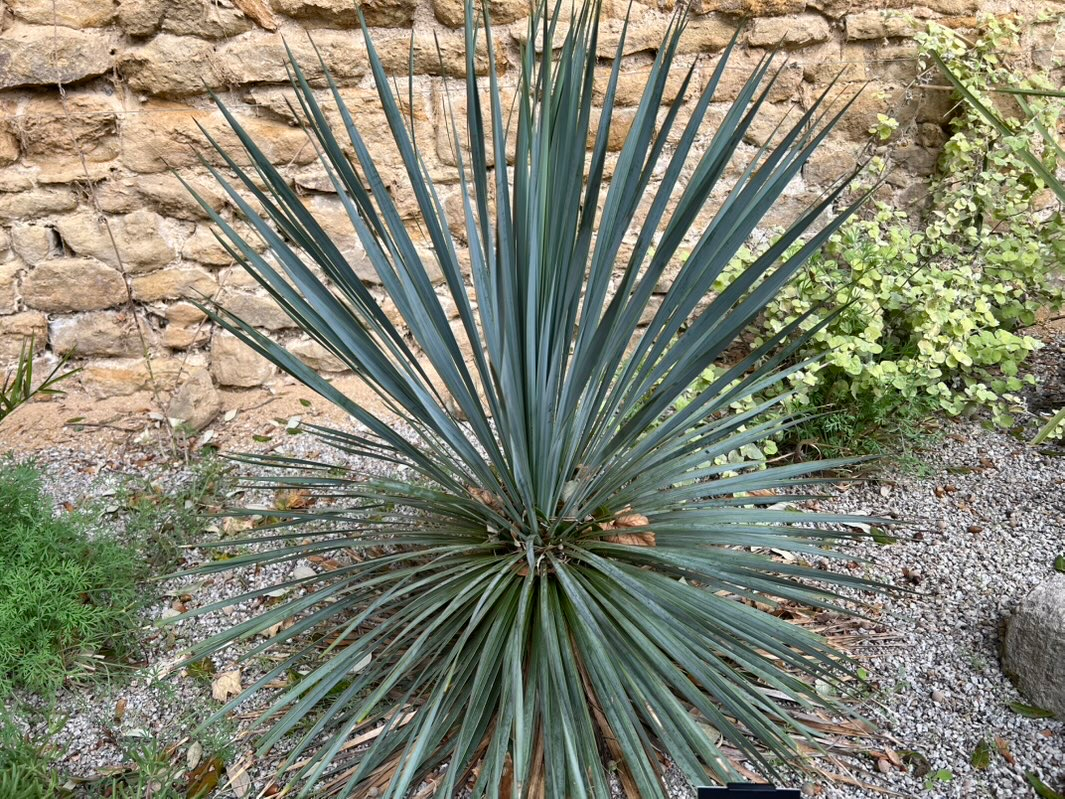
- Architectural foliage
Foliage interest: 12 months of the year
Seasonal Timeline
- Flowering Jun Jul Aug
- Foliage 12 months of the year
- Propagate Mar Apr May
Maintenance Calendar
- Apr Plant in spring into a raised spot with lots of grit or gravel, so the roots settle before the following winter wet
- Jun Water only newly planted yuccas in long droughts, as overwatering is far more dangerous than dryness
- Sep Leave the dead lower leaves in place, because they shade and insulate the trunk
- Nov Clear fallen leaves out of the crown so rain cannot sit in the centre and cause rot
Garden Design
Works well in: Desert / Dry, Mediterranean, Modern / Contemporary
Plant on a mound or raised bed of gritty soil as the centrepiece of a dry or gravel garden. Do not cut off the skirt of dead leaves, which protects the trunk.
Companion planting: Agaves, Opuntias, Grasses, Gravel plants
Wildlife Value
- Moths
- Other pollinators
- Shelter
Safety
- Toxic to dogs
- Toxic to cats
- Toxic to horses
Contains saponins, toxic to dogs, cats and horses if chewed. Leaf tips are sharp; keep away from paths at eye height.