

Bulb · Perennial
Allium giganteum
Giant onion
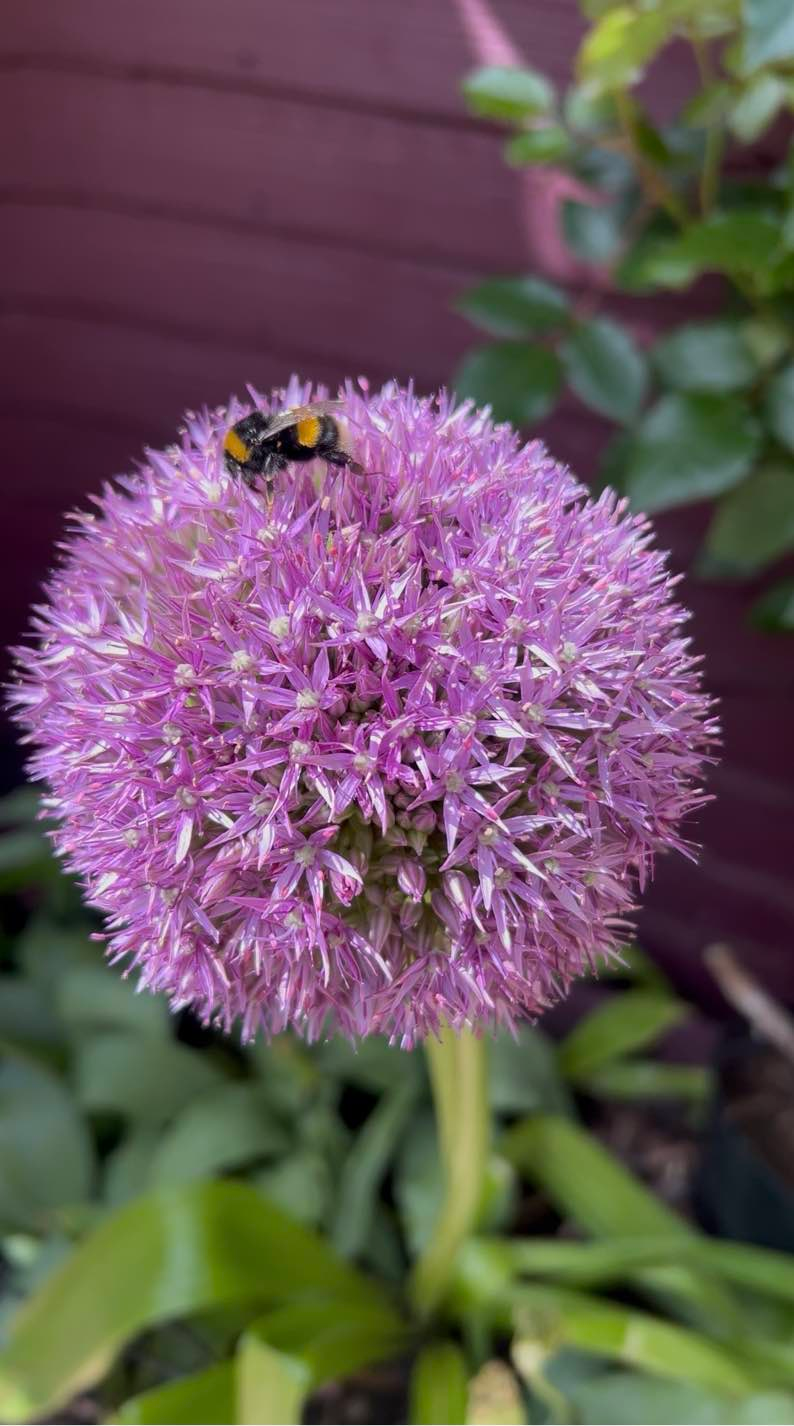
A dramatic bulb with perfect purple globes of starry flowers held on tall, bare stems in early summer.
- Full sun
- 1.5–2 m (5–7 ft)
- 20–30 cm (8–12 in)
- H5 · Zone 7
- June–July
- Deciduous
Overview
From Central Asia, this is one of the tallest ornamental onions. In early summer, sturdy, leafless stems up to 2m carry dense spheres 10-15cm across made of hundreds of small, star-shaped, lilac-purple flowers, a magnet for bees. The broad, grey-green leaves start to wither around flowering time, so hide them behind other plants. The papery seedheads stay decorative for weeks. It is hardy to about -15°C (5°F) and needs full sun and well-drained soil.
At a Glance
Growing Conditions
Aspect Suitability
- South-facing
- West-facing
Site Tolerance
- Drought
Soil Tolerance
- Chalk
- Sandy
- Loam
- Acid
- Neutral pH
- Alkaline
Foliage
Foliage interest: March–June
Seasonal Timeline
- Flowering Jun Jul
- Foliage Mar Apr May Jun
- Fruiting Jul Aug Sep
- Propagate Sep Oct
Maintenance Calendar
- Apr Ignore the leaves turning yellow at the tips, which is normal before flowering
- Jul Leave flower heads standing after flowering, as the seedheads stay decorative for weeks
- Sep Cut down the dry stems once they look untidy, and dry some for indoor arrangements
- Oct Plant bulbs 15-20cm deep in autumn, which anchors the tall stems and protects bulbs from frost
Garden Design
Works well in: Cottage, Modern / Contemporary, Prairie / Meadow, Wildlife-friendly
Plant behind mid-height perennials like hardy geraniums or catmint, which hide the fading leaves while the globes float above.
Companion planting: Grasses, Salvias, Geraniums, Nepeta
Wildlife Value
- Bees
- Butterflies
- Other pollinators
- Beneficial insects
- RHS Plants for Pollinators
Safety
- Toxic to dogs
- Toxic to cats
- Toxic to horses
Like all onions and garlic, alliums are toxic to dogs and cats (and horses) if eaten; ornamental bulbs are not edible.