

Fruit · Tree
Vasconcellea pubescens
Mountain papaya, Mountain pawpaw, Chamburo
Also known as: Carica pubescens, Carica candamarcensis
A tender evergreen fruit tree from the Andes, grown in the UK for its sweet orange pawpaw-like fruits and bold tropical foliage.
- Full sun, Partial shade
- 2–5 m (7–16 ft)
- 1.5–3 m (5–10 ft)
- H1c · Zone 9
- May–August
- Evergreen
Overview
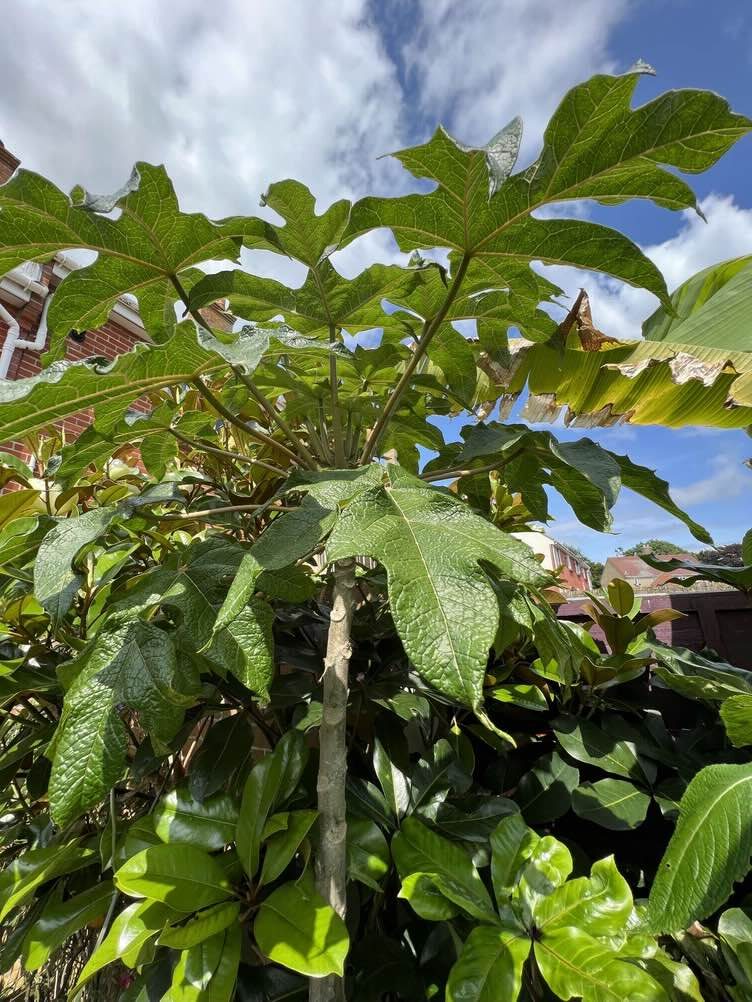
Vasconcellea pubescens, commonly known as mountain papaya or chamburo, is a fast-growing evergreen tree from the high Andes of South America. It has a slender, usually unbranched trunk topped with a crown of large, deeply lobed, palmate leaves, giving it a striking tropical appearance even in a temperate garden.
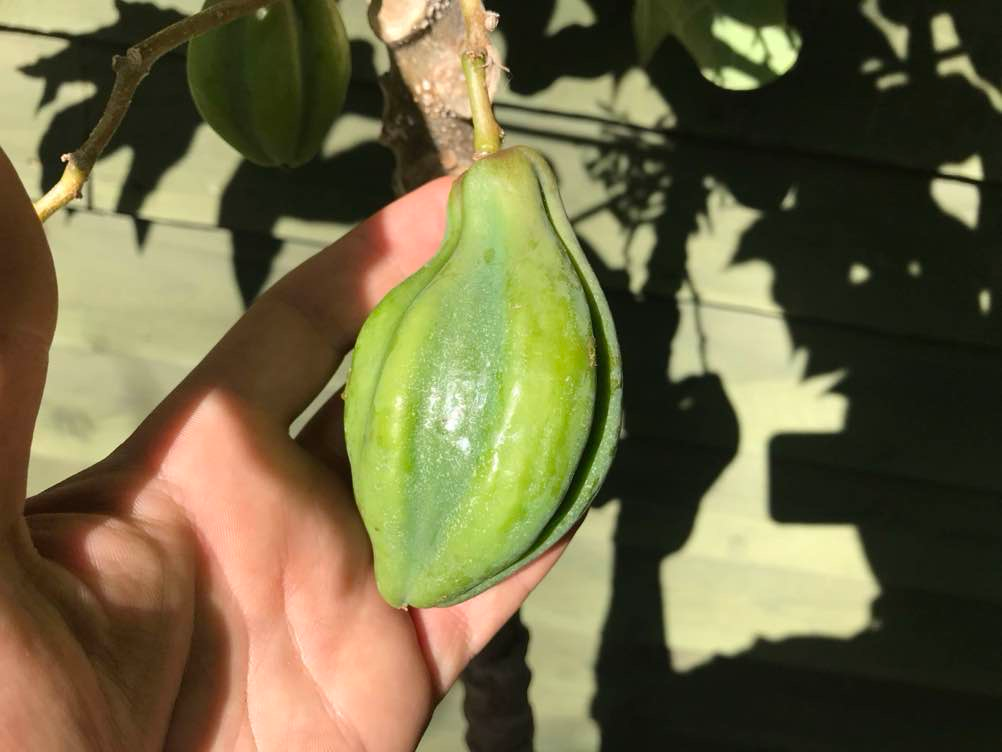
In its native highlands it tolerates cooler conditions than true papaya, which makes it a popular choice for adventurous UK gardeners wanting to try growing exotic fruit. The orange, elongated fruits have a mild, slightly tangy flavour and are usually cooked or juiced rather than eaten raw, much like a pawpaw.
In the UK this plant needs to be grown in a greenhouse, conservatory or large pot that can be brought under cover for winter, as it cannot survive frost. With consistent warmth, shelter from strong wind, and a bright position, it can produce fruit within a few years from seed.
It makes an eye-catching specimen plant for a sunny patio in summer, valued as much for its dramatic leaves as for its unusual homegrown fruit.
At a Glance
Growing Conditions
Aspect Suitability
- South-facing
- West-facing
Soil Tolerance
- Sandy
- Loam
- Acid
- Neutral pH
Foliage
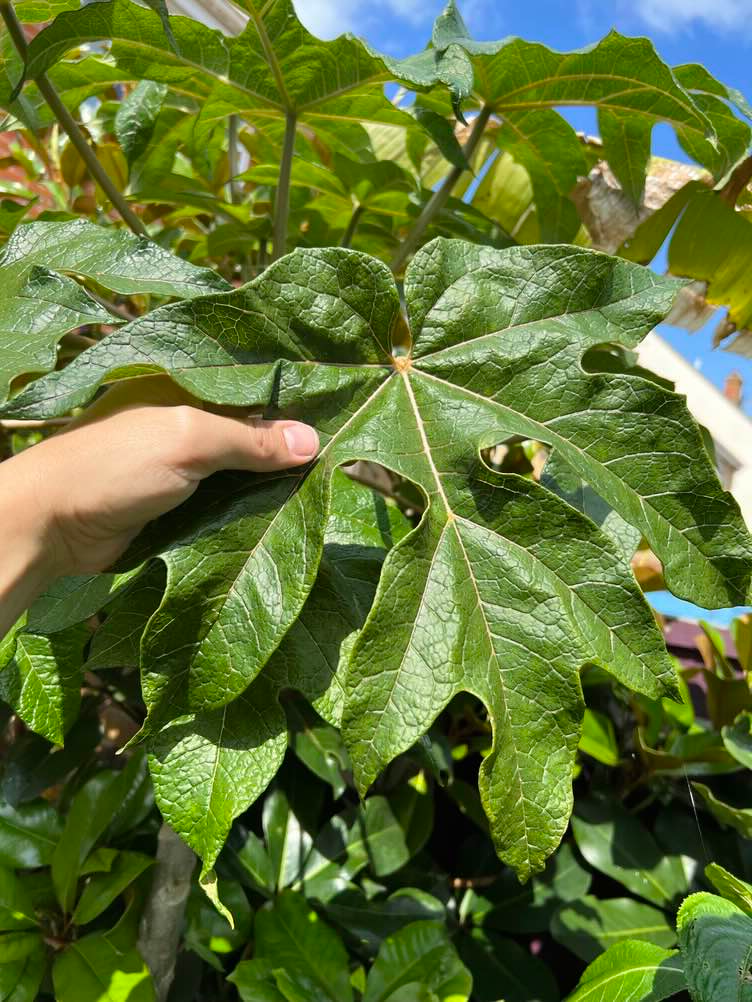
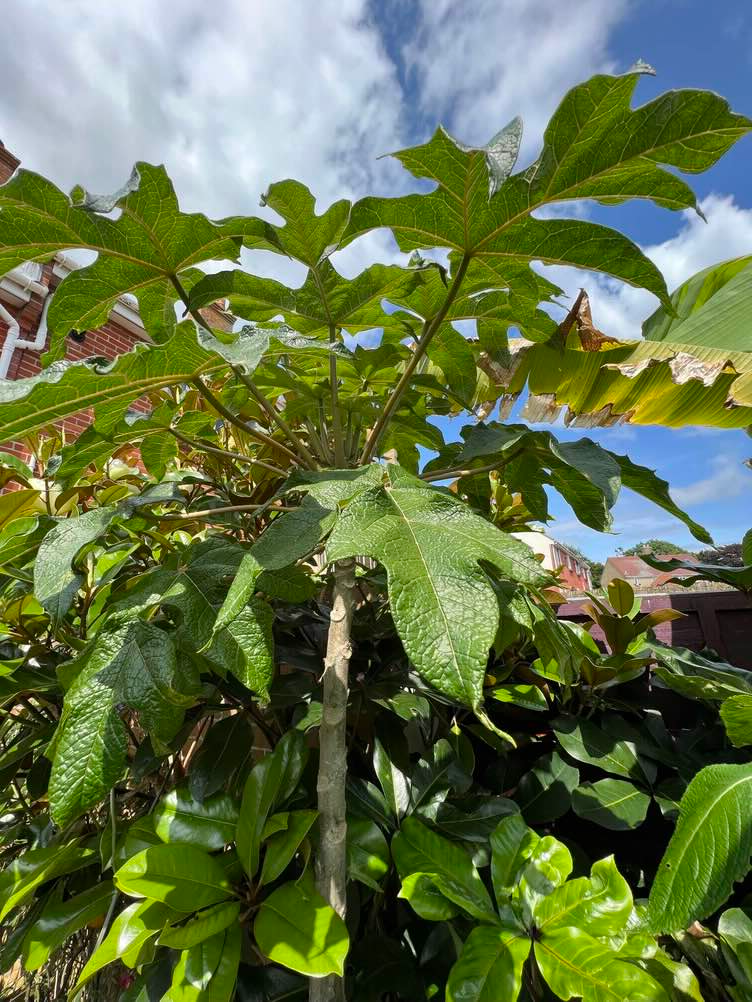
- Architectural foliage
Foliage interest: 12 months of the year
Seasonal Timeline
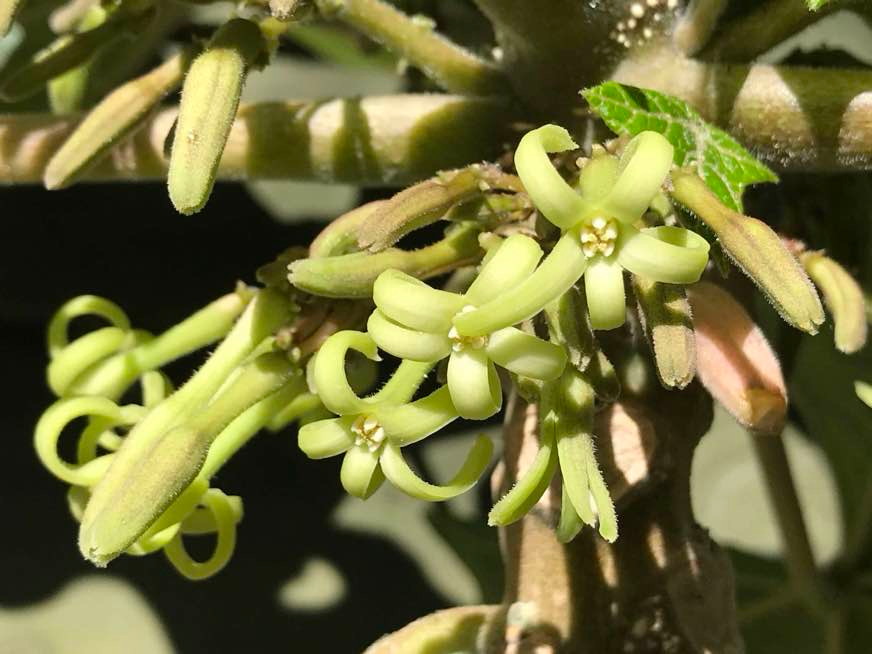
- Flowering May Jun Jul Aug
- Foliage 12 months of the year
- Fruiting Sep Oct Nov Dec
- Propagate Mar Apr May Sep
- Sow indoors Mar
- Sow / plant outside Sep
- Plant out Jun Jul
- Harvest Sep Oct Nov Dec
How to propagate
Ways to grow more Mountain papaya, Mountain pawpaw, Chamburo:
From seed Mar–May Takes a little care
- Sow about 10 mm deep
- Germinates best at about 22°C
- Comes up in 28–56 days
- Prick out about 6 weeks after sowing
- Pot on about 10 weeks after sowing
- Use fresh seed straight from a ripe fruit as dried seed loses viability quickly; plants are dioecious, so raise several seedlings to ensure you end up with both male and female plants for fruiting.
You'll need: Fresh seed from a ripe fruit, free-draining seed compost and a heated propagator or warm windowsill.
- Scoop the seeds from a fully ripe fruit and rub off the sticky orange pulp in a sieve under running water
- Sow straight away (viability drops fast once seed dries out), about 1cm deep in small pots of free-draining, peat-free compost
- Place pots in a heated propagator or on a warm windowsill at 20 to 25°C
- Keep the compost moist but never waterlogged, and be patient as germination is slow and uneven
- Pot on seedlings individually once they have their first true lobed leaf, keeping them warm and in bright light
- How long
- Usually 4 to 8 weeks, though stragglers can take longer.
- It's worked when
- Pale seed leaves appear first, followed by the first proper lobed leaf.
- Then
- Grow seedlings on indoors or in a heated greenhouse for their first year or two, potting on as roots fill the pot, and only stand them outside once summer nights stay reliably above 10°C.
Semi-ripe cuttings Aug–Sep Tricky
You'll need: Gloves, a sharp clean knife, hormone rooting powder and a heated propagator with bottom heat.
- Wear gloves and choose a healthy, semi-ripe side shoot about 15 to 20cm long
- Cut just below a leaf node, strip off the lower leaves and wipe away the milky latex that oozes out
- Dip the cut end in hormone rooting powder
- Insert into free-draining, gritty cutting compost and place in a heated propagator at around 24°C
- Keep humid and warm, misting occasionally, and wait for roots to form before disturbing
- How long
- Rooting can take 2 to 3 months and success is variable.
- It's worked when
- Gentle resistance when the cutting is tugged, plus fresh new leaf growth at the tip.
- Then
- Once rooted, pot into free-draining compost, keep frost-free and in good light, and grow on for a year before moving into a larger container.
Sow fresh seed from ripe fruit in spring into free-draining compost at 20 to 25 degrees C, as viability drops quickly once dried out. Semi-ripe stem cuttings taken in late summer can also root in a warm propagator, giving a faster route to fruiting plants that resemble the parent.
Maintenance Calendar
- Jan Keep in a frost-free, heated spot
- Jan Water sparingly, letting compost dry slightly between waterings
- Jan Check leaves for red spider mite in dry indoor heat
- Jan Maintain a minimum temperature of 10 to 15 degrees C
- Feb Inspect leaves and stems for mealybug and aphids
- Feb Water lightly, avoiding waterlogged compost
- Feb Keep well away from cold draughts and windows
- Feb Wipe dust from leaves to help them photosynthesise
- Mar Sow fresh pawpaw seed in a heated propagator
- Mar Begin light feeding as new growth starts
- Mar Gradually increase watering as days lengthen
- Mar Pot on any rootbound plants into fresh compost
- Mar Check for early signs of pest activity
- Apr Feed fortnightly with a balanced liquid fertiliser
- Apr Water regularly, keeping compost evenly moist
- Apr Pot on young plants as roots fill their containers
- Apr Add a stake to support fast, soft new growth
- Apr Watch for aphids clustering on tender new leaves
- May Acclimatise plants gradually to outdoor conditions
- May Move containers outdoors once frost risk has passed
- May Feed every two weeks with a high-potash feed
- May Water generously as growth speeds up in warmth
- May Check stakes and ties as the plant grows taller
- Jun Water deeply and regularly in warm weather
Garden Design
Works well in: Edible / Kitchen Garden, Tropical / Exotic
A striking architectural centrepiece for a sheltered, sunny courtyard or conservatory border, bringing bold tropical foliage and exotic fruit to a UK garden. Best grown in a large container so it can be moved under cover for winter, or planted out only in the mildest coastal gardens.
Companion planting: Tropical foliage plants, Other tender fruiting trees, Nectar-rich flowers for pollinators
Wildlife Value
- Bees
- Food source
- Food
Safety
- Skin irritant
The milky latex found in the unripe fruit, stems and leaves can irritate skin and eyes on contact, so wear gloves when pruning or harvesting. Ripe fruit is safe and delicious to eat once the latex has gone.