

Evergreen shrub · Subshrub · Tender perennial
Solanum pyracanthum
Porcupine tomato
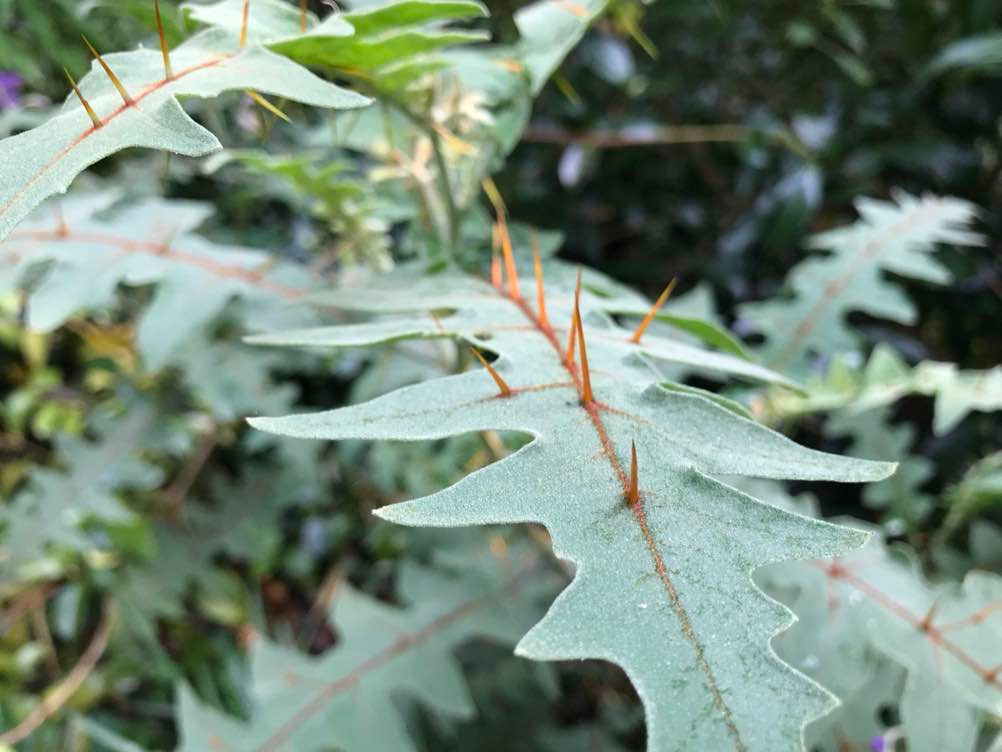
A dramatic foliage plant with velvety purple-veined leaves covered in vivid orange spines, grown as a striking tender specimen in UK gardens.
- Full sun, Partial shade
- 0.6–1.2 m (2–4 ft)
- 60–90 cm (24–35 in)
- H1b · Zone 10
- July–September
- Evergreen
Overview
Solanum pyracanthum, commonly known as the porcupine tomato, is a tender perennial relative of the potato and tomato, grown purely for its extraordinary looks. Its soft, felty leaves are a dusky green with purple veining, and are armed with bright orange, needle-like spines along the midribs and stems, making it one of the most eye-catching architectural plants you can grow.
In summer it produces small clusters of star-shaped, pale purple flowers with yellow centres, typical of the nightshade family, followed by small round fruits. It is not grown for these, however; the foliage is the real star of the show.
Originating from Madagascar, this plant is not hardy in the UK and needs protection from frost. Gardeners usually grow it in a container that can be moved under cover for winter, or treat it as a half-hardy annual, planting out young plants after the last frosts for a bold splash of texture and colour in borders and patio displays until the weather turns cold.
Handle with care: the spines, while attractive, are sharp and can prick skin, so gloves are recommended when pruning or repotting.
At a Glance
Growing Conditions
Aspect Suitability
- East-facing
- South-facing
- West-facing
Soil Tolerance
- Chalk
- Sandy
- Loam
- Acid
- Neutral pH
- Alkaline
Foliage
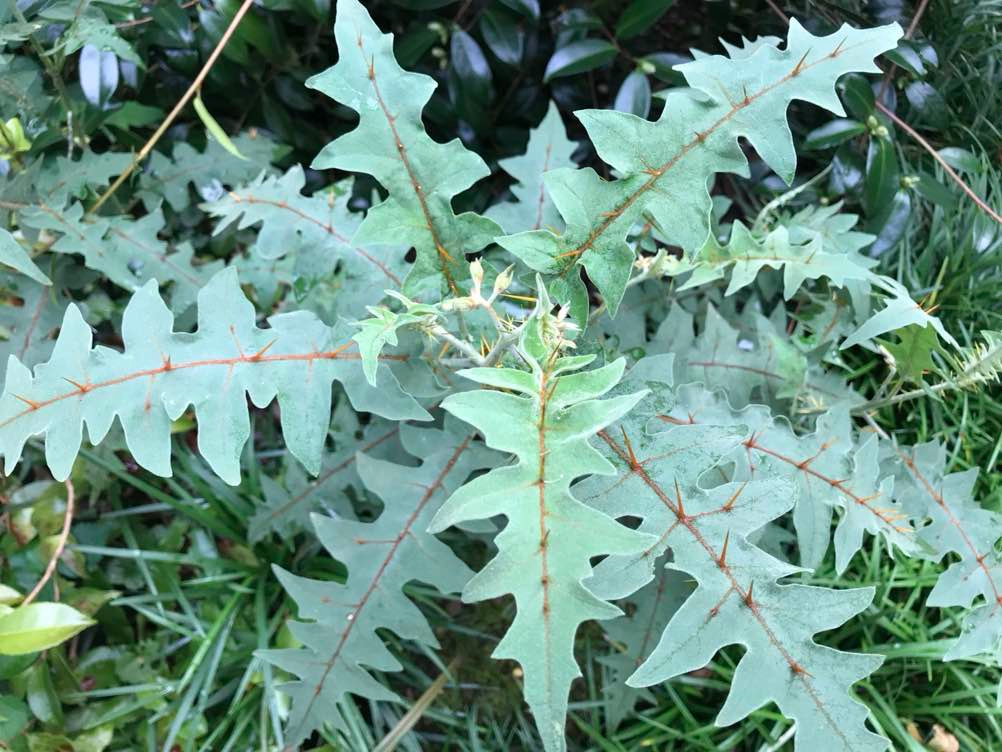
- Architectural foliage
Foliage interest: June–October
Seasonal Timeline
- Flowering Jul Aug Sep
- Foliage Jun Jul Aug Sep Oct
- Fruiting Aug Sep Oct
- Propagate Feb Mar Apr Jul Aug
How to propagate
Ways to grow more Porcupine tomato:
From seed Feb–Apr Takes a little care
- Sow about 3 mm deep
- Germinates best at about 20°C
- Comes up in 14–28 days
- Prick out about 3 weeks after sowing
- Pot on about 8 weeks after sowing
- Seed can be slow and uneven to germinate, so sow a few extra and don't discard trays too soon; bottom heat greatly improves and speeds up germination.
You'll need: A heated propagator or warm windowsill (18-21°C), seed trays or small pots, free-draining seed compost, and patience since this tender perennial needs an early, warm start to flower the same year.
- Fill small pots or modular trays with moist, free-draining seed compost.
- Sow seed thinly on the surface and cover with a fine 2-3mm layer of vermiculite or compost.
- Place in a heated propagator or on a warm windowsill at 18-21°C; germination is slow and erratic so be patient.
- Keep compost evenly moist but never waterlogged, and ensure good light once seedlings emerge.
- Prick out seedlings into individual pots once they have their first true leaves, handling carefully to avoid the developing spines.
- Grow on in warmth and bright light, potting on as roots fill the pot, before hardening off for planting out after the last frost.
- How long
- Germination is slow, usually two to three weeks, with seedlings taking several months to reach a good size.
- It's worked when
- Small seedlings with rounded cotyledons appear, followed by true leaves that soon show the characteristic purple veining.
- Then
- Pot on into richer compost as plants grow, keep frost-free over winter if raised early, and harden off before planting out or standing containers outside once night temperatures stay above about 10°C.
Softwood cuttings Jul–Aug Easy
You'll need: Sharp secateurs or a knife, thick gloves to protect against the spines, small pots, free-draining cuttings compost, and ideally a propagator or clear bag to maintain humidity.
- Wearing gloves, select healthy, non-flowering shoot tips about 8-10cm long from the current season's soft growth.
- Trim just below a leaf node and remove the lower leaves, taking care of the spines on the stem and leaf surfaces.
- Dip the cut end in rooting hormone if available, then insert into pots of free-draining, gritty cuttings compost.
- Cover with a clear plastic bag or propagator lid to keep humidity high, and place somewhere warm with bright, indirect light.
- Keep compost just moist and check regularly for rot, removing any fallen leaves promptly.
- Once new growth appears, usually after three to four weeks, gradually acclimatise the cutting by opening the cover for longer periods.
- How long
- Cuttings typically root within three to four weeks in warm conditions.
- It's worked when
- Gentle resistance when tugged lightly indicates roots have formed, and fresh new leaf growth at the tip confirms rooting.
- Then
- Pot rooted cuttings on into individual pots, grow on in a warm, bright spot, and overwinter young plants indoors or in a heated greenhouse at a minimum of 10°C before hardening off in late spring.
Sow seed in warmth (around 18-21C) in late winter to early spring, as this tender perennial needs a long season to reach flowering size in the UK. Softwood cuttings taken in summer root readily and are a quick way to bulk up stock or overwinter young plants indoors.
Maintenance Calendar
- Jan Check overwintering plants for pests
- Feb Sow seed indoors in gentle heat
- Mar Prick out seedlings into small pots
- Apr Pot on young plants as roots fill pots
- May Harden off plants before planting out
- Jun Plant out once frost risk has passed
- Jun Begin regular feeding with balanced fertiliser
- Jul Take softwood cuttings to bulk up stock
- Jul Inspect leaves for aphids and whitefly
- Aug Mulch around base to retain moisture
- Aug Water deeply during dry spells
- Sep Ease off feeding as growth slows
- Oct Lift and pot up plants before first frosts
- Oct Move containers indoors or into a heated greenhouse
- Dec Check overwintered plants for pests and mould
Garden Design
Works well in: Modern / Contemporary, Tropical / Exotic
Its spiny orange-veined leaves make a bold, eye-catching focal point in a container or tropical border. Pair with other dramatic foliage plants like cannas or bananas, but site it where people won't brush against the spines.
Companion planting: Tender exotics, Foliage plants, Tropical bedding
Wildlife Value
- Bees
Safety
- Toxic to humans
- Toxic to dogs
- Toxic to cats
- Toxic to horses
- Skin irritant
All parts, especially the berries, contain solanine-type alkaloids and are toxic if eaten, so keep away from children and pets. The sharp orange spines on the leaves and stems can prick skin, and the fine hairs may irritate sensitive skin, so wear gloves when handling this plant.