

Herbaceous perennial · Tender perennial · Tuber
Smallanthus maculatus
Mexican yacon
Also known as: Polymnia maculata
A tender Mexican perennial closely related to yacon but less commonly seen in UK gardens.
- Full sun, Partial shade
- 1.5–2.5 m (5–8 ft)
- 1–1.5 m (3–5 ft)
- H1c · Zone 10
- September–October
- Deciduous
Overview
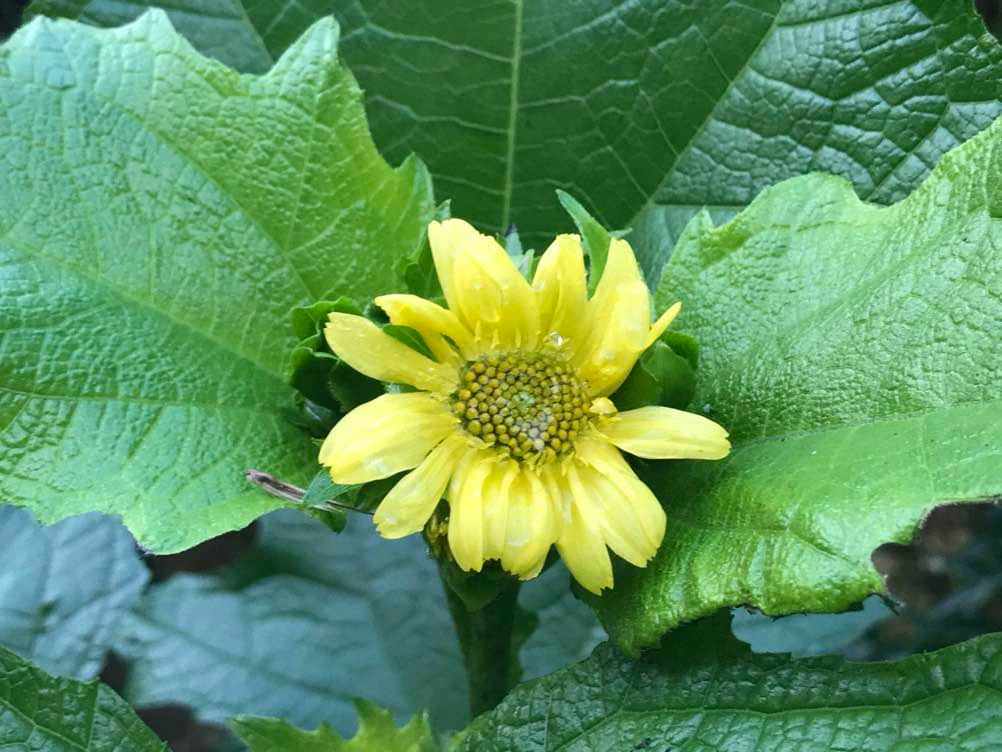
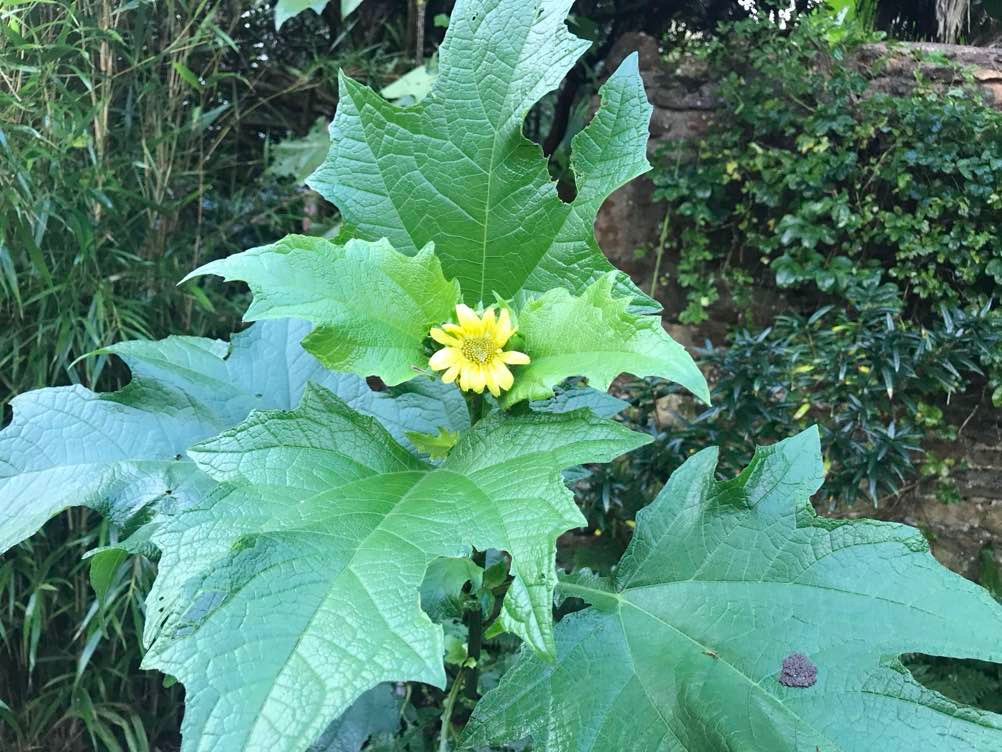
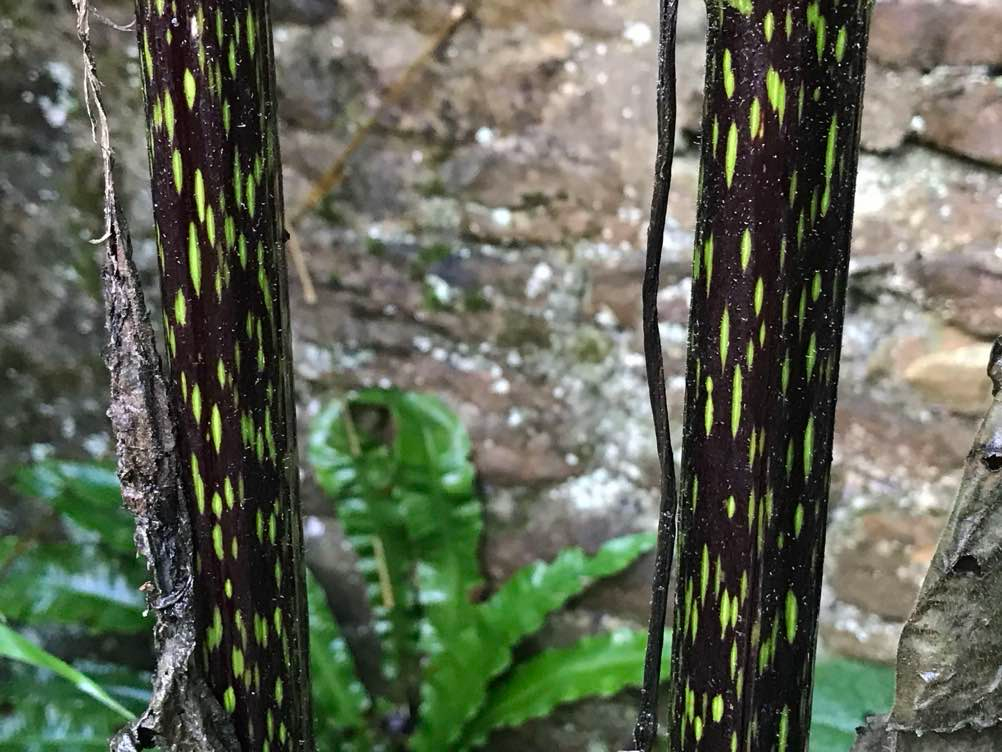
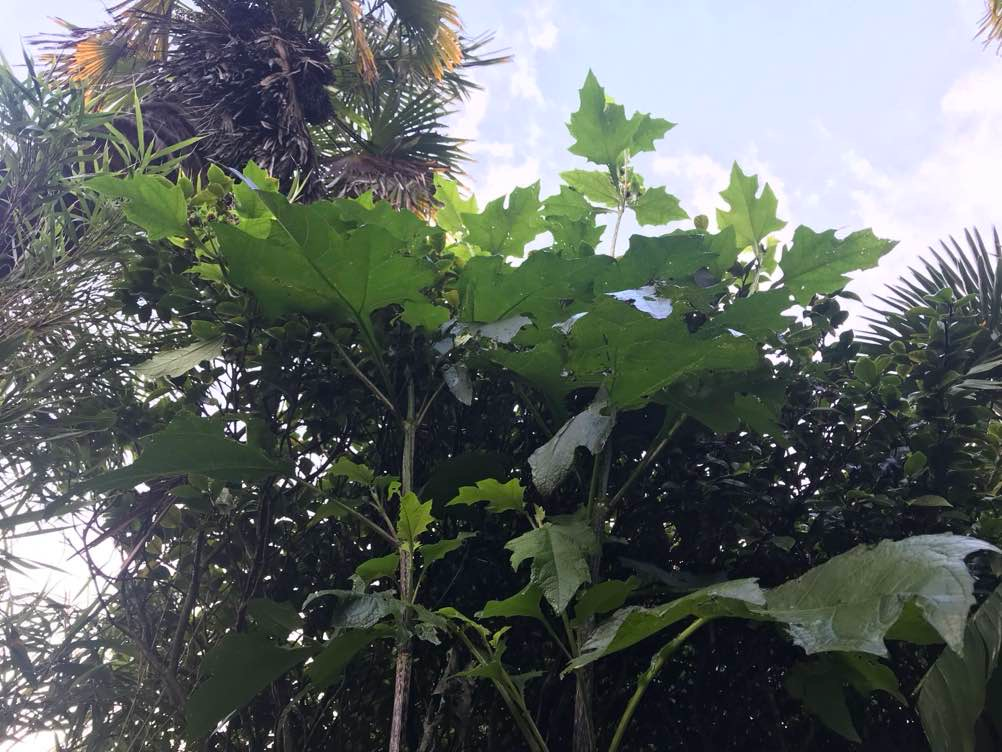
Smallanthus maculatus is a tall, leafy perennial herb from Mexico and Central America, belonging to the same genus as the better-known yacon (Smallanthus sonchifolius). It produces large, slightly hairy, lobed leaves on sturdy stems, topped in late summer with small daisy-like yellow flowers typical of the daisy family.
As a tender plant from warm climates, it has no frost tolerance and must be grown as an annual from stored tubers each year, or kept under glass. It suits a sunny, sheltered spot with rich, well-drained soil, and makes an interesting talking point in a polytunnel, greenhouse border or large container.
At a Glance
Growing Conditions
Aspect Suitability
- South-facing
- West-facing
Soil Tolerance
- Clay
- Sandy
- Loam
- Acid
- Neutral pH
Foliage
- Architectural foliage
Foliage interest: June–October
Seasonal Timeline
- Flowering Sep Oct
- Foliage Jun Jul Aug Sep Oct
- Fruiting Oct Nov
- Propagate Mar Apr May
How to propagate
Ways to grow more Mexican yacon:
Division Mar–Apr Takes a little care
You'll need: A stored, dormant tuber clump brought into warmth, a sharp clean knife, pots and free-draining compost.
- In early spring bring stored tubers into a warm, bright spot (around 15–18°C) to start them into growth.
- Once small shoots appear, lift and carefully divide the clump into sections, each with at least one bud and some root attached.
- Leave cut surfaces to callus for a day, or dust with fungicide, to reduce the risk of rot.
- Pot each division into a 1–2 litre pot of free-draining compost, with the bud just below the surface.
- Keep under glass in a warm, light position until shoots are growing strongly and frosts have passed.
- Harden off over 10–14 days before planting out.
- How long
- New shoots and roots usually establish within 3 to 6 weeks.
- It's worked when
- Strong new shoots are growing and the pot feels full of roots when gently checked.
- Then
- Pot on if roots fill the container, then plant out after all frost risk has passed, usually late May or June, into fertile, free-draining soil.
Root cuttings Mar–Apr Takes a little care
You'll need: Firm, healthy tubers from winter storage, a sharp knife, gritty free-draining compost and bottom heat.
- Select firm, disease-free tubers that have been kept frost-free over winter.
- Cut the tubers into sections roughly 5cm long, each with at least one visible growth bud.
- Let the cut ends dry and callus for about 24 hours to reduce the chance of rot.
- Lay the sections horizontally, bud side up, into trays or pots of moist, gritty compost.
- Keep at 18–20°C in a propagator or on a heat mat until shoots emerge.
- Pot on individually once shoots reach a few centimetres tall.
- How long
- Shoots typically appear within 2 to 4 weeks.
- It's worked when
- Green shoots push up from the buried buds and new roots form beneath.
- Then
- Grow on under cover, harden off gradually, and plant out once sturdy and frosts have finished.
Softwood cuttings May–Jun Takes a little care
You'll need: Young basal shoots from actively growing stock plants, rooting hormone, free-draining cutting compost and a heated propagator.
- In late spring choose strong, non-flowering basal shoots about 10–15cm long.
- Trim the cutting just below a leaf node and remove the lower leaves.
- Dip the cut end in rooting hormone powder.
- Insert cuttings into pots of free-draining, gritty cutting compost.
- Place in a heated propagator at 18–20°C with high humidity until roots form.
- Pot on individually once well rooted and growing away.
- How long
- Rooting usually takes 3 to 5 weeks.
- It's worked when
- A gentle tug meets resistance and fresh new growth appears at the tip.
- Then
- Grow on under cover through summer; either plant out once hardened off and frosts have passed, or overwinter young plants frost-free for planting the following year.
Divide the clustered tubers in spring just as growth begins, ensuring each piece has at least one growth bud, then pot up under cover until frosts have passed. Basal or stem cuttings can also be taken from young shoots in late spring and rooted in a warm propagator. Plants need a long, warm growing season under UK conditions, so starting tubers indoors in early spring gives the best results.
Maintenance Calendar
- Jan Check stored tubers for rot or shrivelling
- Jan Plan next season's planting position
- Feb Start tubers into growth under cover in pots
- Feb Prepare warm propagator or greenhouse space
- Mar Divide clustered tubers, ensuring each piece has a growth bud
- Mar Take basal cuttings from young shoots
- Mar Check emerging shoots for aphids
- Apr Pot on rooted divisions into larger containers
- Apr Water potted plants regularly as growth increases
- Apr Begin light feeding of young potted plants
- May Plant out hardened-off plants after the last frost
- May Install sturdy stakes or supports for tall stems
- May Mulch around the base to retain moisture and suppress weeds
- May Water well after planting out
- Jun Water regularly during dry spells
- Jun Feed with a balanced fertiliser to support rapid growth
- Jun Check for slugs and snails on young growth
- Jun Tie in stems to supports as they grow taller
- Jul Water deeply in dry weather
- Jul Apply a monthly liquid feed
- Jul Monitor for aphids and leaf-eating insects
- Jul Check leaves for signs of powdery mildew
- Aug Continue regular watering through summer heat
- Aug Feed to support flowering and tuber development
Garden Design
Works well in: Edible / Kitchen Garden, Tropical / Exotic
With its tall bushy habit and large bold leaves, Mexican yacon makes a striking summer specimen or focal point in an exotic-style bed. Use it to add height and drama at the back of a border, or grow in a large container on a sheltered, sunny patio where its dramatic foliage and late-season yellow daisy flowers can be enjoyed up close.
Companion planting: Pollinator-friendly plants, Other edible tuber crops, Large-leaved exotics
Wildlife Value
- Bees
- Other pollinators
- Beneficial insects
- Shelter
Safety
The tuberous roots are edible and grown for food, similar to yacon. No significant toxicity is recorded, but as with any unfamiliar edible crop, only eat parts known to be used traditionally.