

Evergreen shrub · Shrub · Tender perennial
Solanum laciniatum
Kangaroo Apple
Also known as: Solanum aviculare var. laciniatum
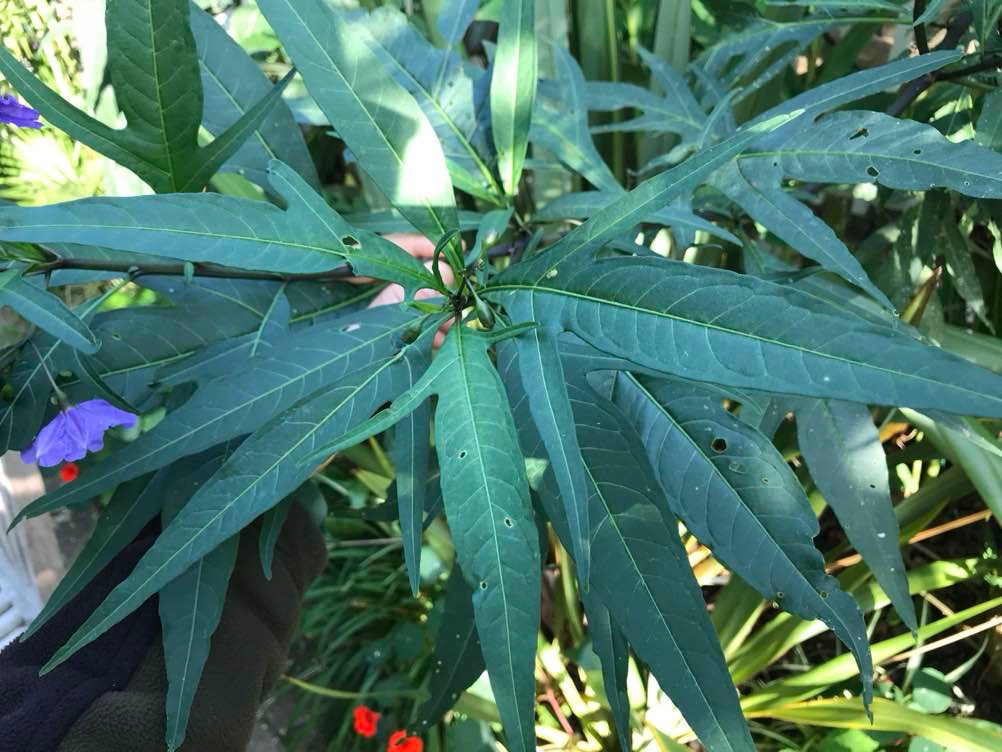
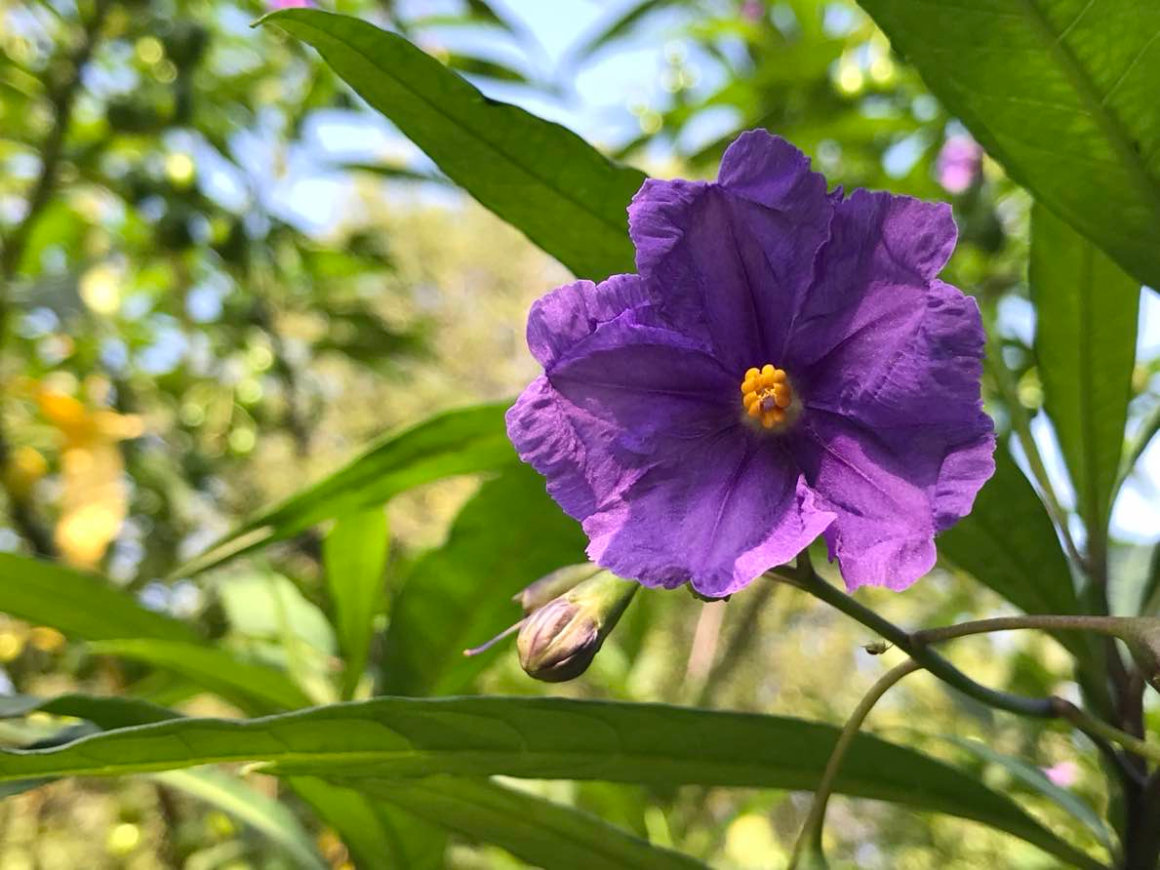
A fast-growing tender shrub with purple star-shaped flowers and glossy, deeply lobed leaves, followed by orange fruits that are not edible.
- Full sun, Partial shade
- 1.5–3 m (5–10 ft)
- 1.5–2.5 m (5–8 ft)
- H2 · Zone 9
- June–September
- Evergreen
Overview
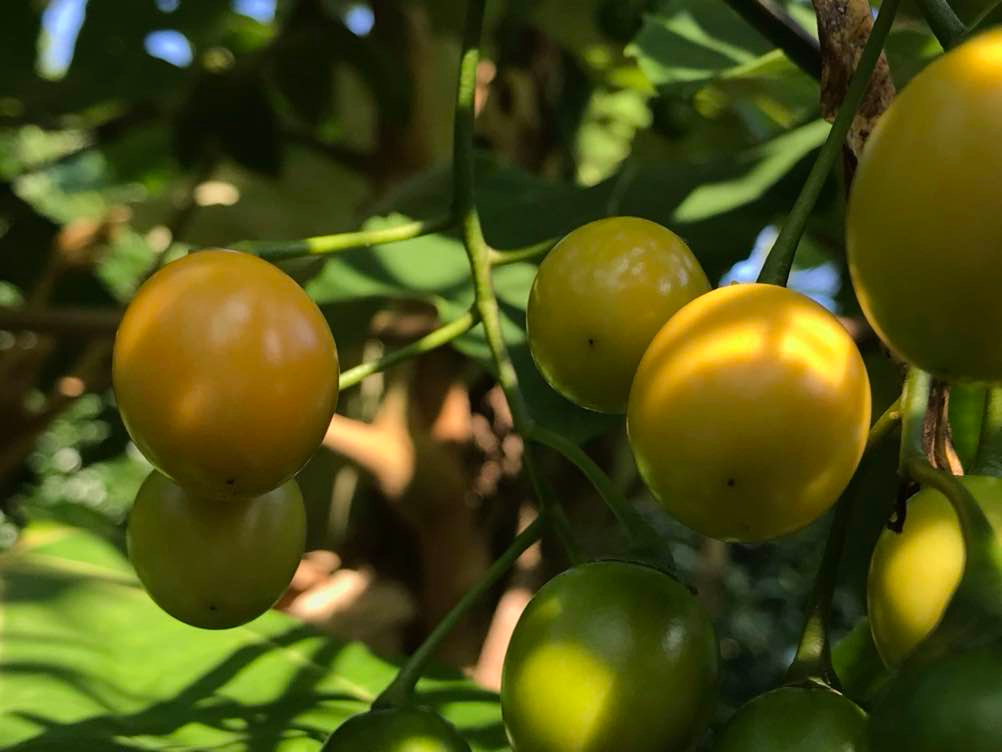
Solanum laciniatum, commonly known as the Kangaroo Apple, is a vigorous, fast-growing shrub native to Australia and New Zealand. It produces attractive violet-blue, star-shaped flowers from summer into autumn, followed by egg-shaped fruits that ripen from green to orange. The fruit is not edible. The deeply lobed, glossy dark green leaves give the plant a lush, almost tropical appearance, making it a striking addition to a sheltered border or large container.
In the UK this plant is not reliably hardy and is best treated as a tender perennial or half-hardy shrub, grown outdoors for summer display and protected or taken as cuttings over winter in all but the very mildest, most sheltered gardens. It grows quickly, often reaching a good size within a single season, and can be cut back hard in spring to keep it bushy and more compact.
Note that fruit and other parts of the plant contain solanine-type alkaloids and should be treated as toxic; this is grown in UK gardens purely as an ornamental foliage and flowering shrub, not as a food crop.
At a Glance
Growing Conditions
Aspect Suitability
- East-facing
- South-facing
- West-facing
Site Tolerance
- Coastal
Soil Tolerance
- Clay
- Chalk
- Sandy
- Loam
- Acid
- Neutral pH
- Alkaline
Foliage
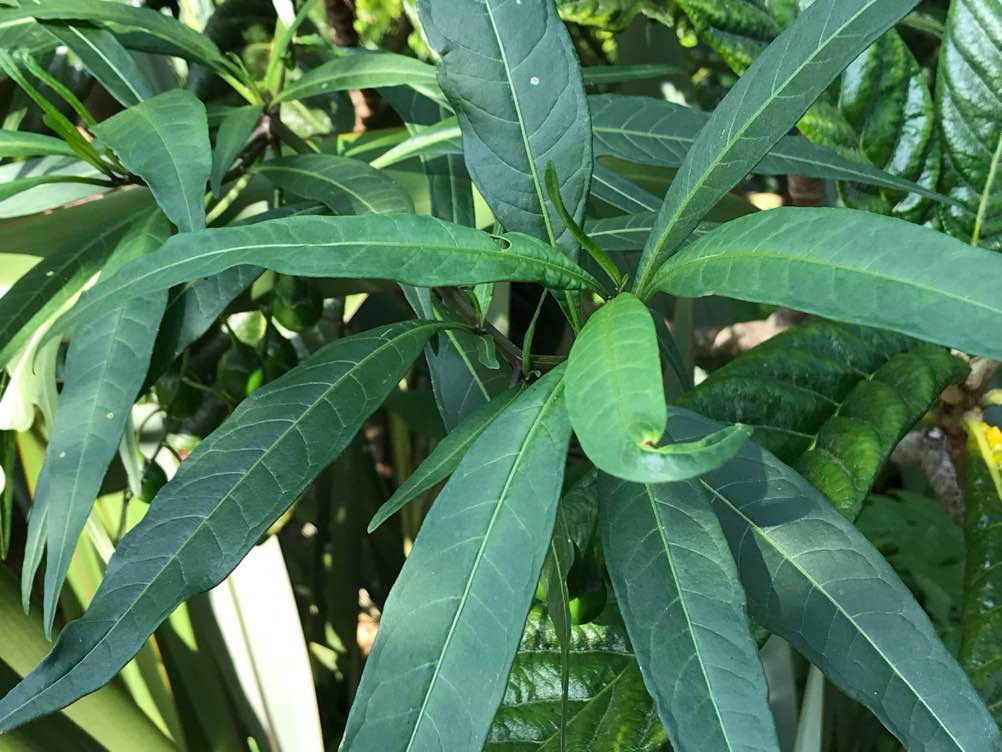
- Architectural foliage
Foliage interest: 12 months of the year
Seasonal Timeline
- Flowering Jun Jul Aug Sep
- Foliage 12 months of the year
- Fruiting Sep Oct Nov
- Propagate Mar Apr May Jun Jul Aug
How to propagate
Ways to grow more Kangaroo Apple:
From seed Mar–Apr Takes a little care
- Sow about 3 mm deep
- Germinates best at about 19°C
- Comes up in 14–60 days
- Prick out about 3 weeks after sowing
- Pot on about 6 weeks after sowing
- Fresh seed germinates best; expect slow, uneven germination and keep consistently warm and moist throughout.
You'll need: Seed trays, free-draining seed compost, and a propagator or warm windowsill holding around 18-20°C.
- Sow seed thinly onto the surface of moist, free-draining seed compost in spring.
- Cover very lightly with a fine sprinkling of vermiculite or sieved compost.
- Place in a propagator or on a warm windowsill at 18-20°C.
- Keep the compost just moist; germination is often slow and uneven, so be patient.
- Once seedlings have their first true leaves, prick them out into individual small pots.
- Grow on somewhere bright and frost-free until ready to pot on or harden off.
- How long
- Germination is slow and erratic, usually taking 2 to 8 weeks.
- It's worked when
- Seedlings push up with their first true leaves and keep growing steadily without damping off.
- Then
- Pot on into larger pots as roots fill the container, keep frost-free through the first winter, and plant out once all frost risk has passed.
Softwood cuttings May–Jun Easy
You'll need: Sharp secateurs or a clean knife, small pots, gritty free-draining compost, and a propagator or polythene bag for humidity.
- In late spring or early summer, take 10-15cm softwood tip cuttings from healthy non-flowering shoots.
- Trim just below a leaf node and strip off the lower leaves.
- Dip the cut end in rooting hormone if you have some, though it is not essential.
- Insert cuttings around the edge of a pot filled with free-draining, gritty compost.
- Cover with a propagator lid or clear polythene bag to keep humidity high, and place somewhere warm but shaded from direct sun.
- Keep the compost moist and check every week or two for signs of rooting.
- How long
- Softwood cuttings usually root within 3 to 6 weeks.
- It's worked when
- Gentle resistance when tugged and fresh new leaf growth show that roots have formed.
- Then
- Pot rooted cuttings up individually, grow on in a sheltered, bright spot, and keep frost-free over the first winter before planting out.
Semi-ripe cuttings Jul–Aug Easy
You'll need: Secateurs, small pots, free-draining cutting compost, and a propagator or clear plastic bag.
- In mid to late summer, take 10-15cm semi-ripe cuttings from this year's growth, firm at the base and still soft at the tip.
- Trim just below a node, remove the lower leaves, and cut any large remaining leaves in half to reduce moisture loss.
- Dip the base in rooting hormone if using.
- Insert the cuttings into pots of free-draining cutting compost.
- Place in a propagator or cover with a clear bag, keeping warm but out of strong direct sun.
- Keep the compost lightly moist until cuttings show signs of new growth.
- How long
- Semi-ripe cuttings typically root in 4 to 8 weeks.
- It's worked when
- New shoot growth at the tips and resistance when gently tugged confirm rooting.
- Then
- Pot on into individual pots, overwinter in a frost-free greenhouse or bright room, and plant out once frosts have finished the following spring.
Sow seed in spring at around 18-20°C, as germination can be slow and erratic. Softwood or semi-ripe cuttings taken in summer root readily and are a quicker way to ensure true-to-type plants. Protect young plants from frost over winter in their first year or two.
Maintenance Calendar
- Jan Protect plants from hard frosts
- Feb Prune to shape before new growth starts
- Mar Sow seed indoors at 18-20°C
- Apr Apply mulch around the base to retain moisture
- Apr Harden off and move outdoors after the last frost
- May Take softwood cuttings
- Jun Water regularly during dry spells
- Jun Check leaves for aphids and whitefly
- Jul Take semi-ripe cuttings
- Aug Feed fortnightly with a balanced fertiliser
- Sep Check for grey mould in humid weather
- Oct Bring container plants indoors before the first frosts
- Nov Protect any remaining outdoor plants with fleece
- Nov Cut back leggy growth before overwintering indoors
- Dec Water sparingly while plants rest indoors
Garden Design
Works well in: Mediterranean, Modern / Contemporary, Tropical / Exotic
A striking foliage plant that brings a lush, exotic feel to a sheltered border or large pot, best used as a focal specimen among other tender perennials. Its bold, deeply cut leaves contrast well with grasses or finer-textured planting, and it works nicely in a Mediterranean or tropical-style scheme near a sunny wall.
Companion planting: Exotic foliage plants, Tender perennials, Mediterranean-style planting
Wildlife Value
- Bees
- Other pollinators
- Birds
- Shelter
- Food source
- Food
Food for birds: September–November
Safety
- Toxic to humans
- Toxic to dogs
- Toxic to cats
- Toxic to horses
All parts, especially unripe green berries, contain solanine-type alkaloids and are toxic if eaten, causing stomach upset or worse. Keep away from children and pets, and only eat fully ripe fruit from known edible strains with caution.