

Herbaceous perennial · Tender perennial
Verbena bonariensis
Purpletop vervain
Also known as: Verbena patagonica
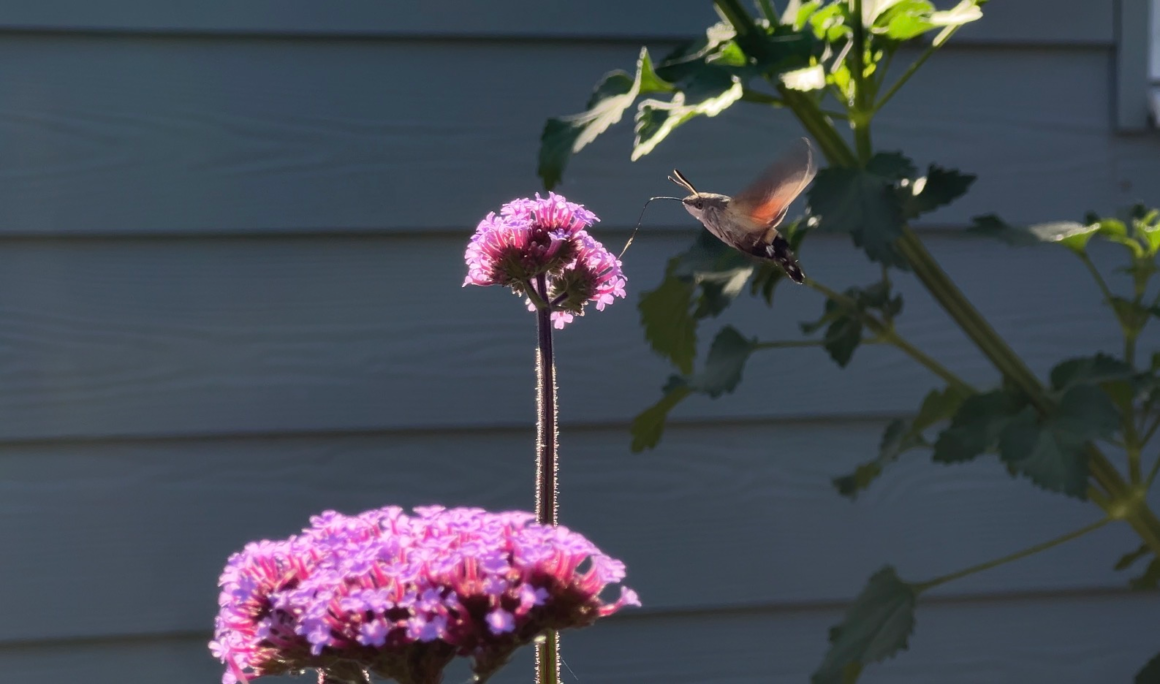
Tall, airy purple flowers held on slender stems above sparse foliage, loved by bees and butterflies all summer long.
- Full sun
- 1–1.8 m (3–6 ft)
- 45–60 cm (18–24 in)
- H4 · Zone 8
- June–October
- Deciduous
- RHS Award of Garden Merit
Overview
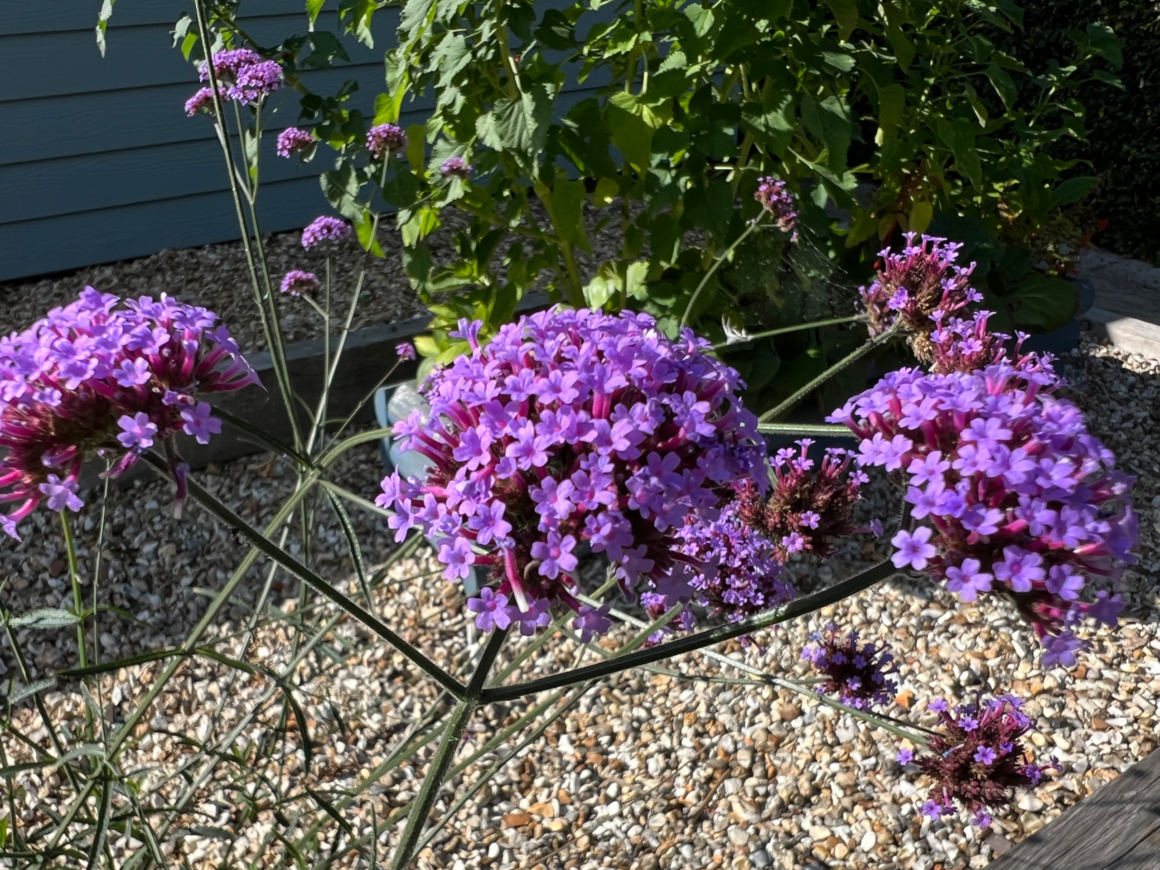
Verbena bonariensis is a graceful, see-through perennial that brings height and movement to borders without blocking the view. Tiny clusters of purple-violet flowers sit atop wiry, branching stems that reach well above head height for low-growing neighbours, while the foliage stays low and tidy at the base.
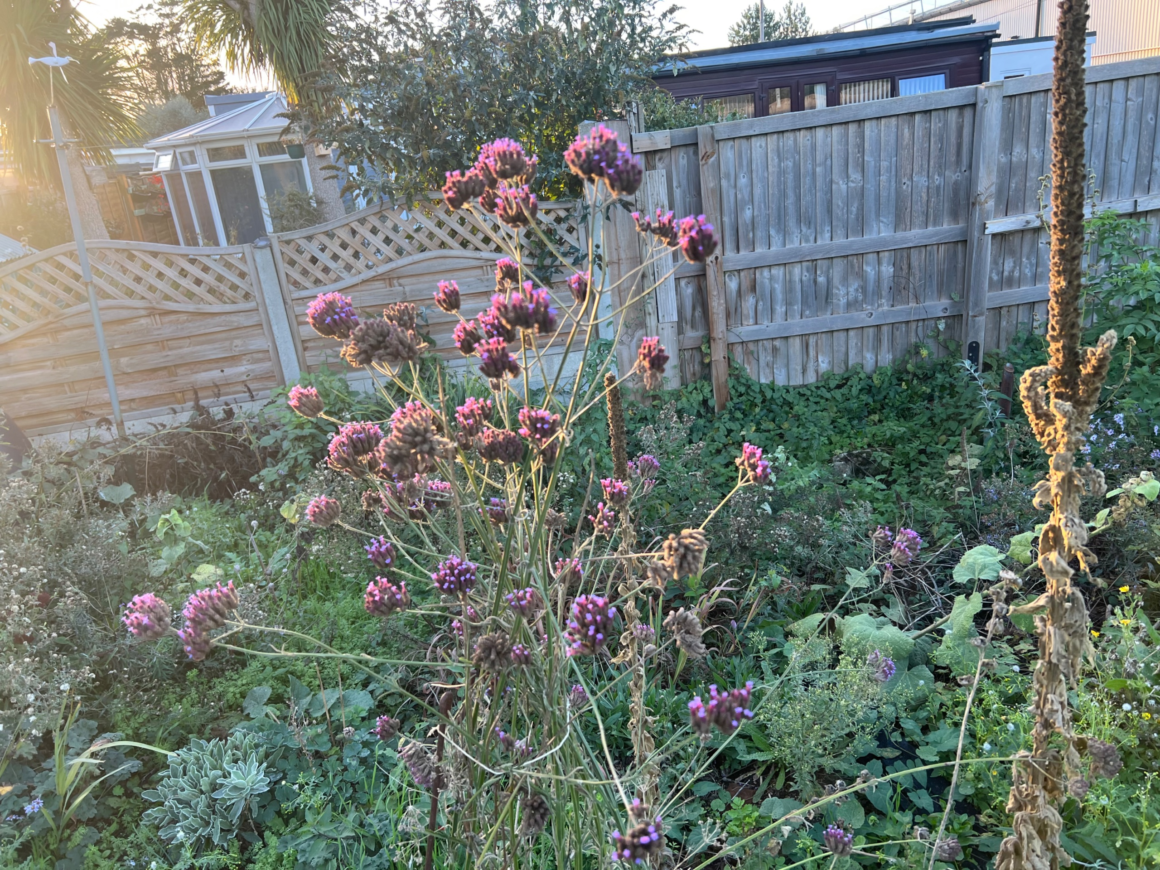
It flowers from midsummer right through to the first frosts, making it one of the best plants for extending colour and feeding pollinators late in the year. Bees and butterflies are especially fond of it, and goldfinches often visit for the seed heads in autumn.
Though originally from South America, it has become a firm favourite in UK gardens thanks to its easy-going nature and self-seeding habit, which lets it pop up naturally through gravel and between other plants for a relaxed, cottage-garden look.
It's not reliably hardy everywhere in the UK, especially in cold or wet winters, but it usually sets plenty of seed so new plants appear even if the parent doesn't survive.
At a Glance
Growing Conditions
Aspect Suitability
- South-facing
- West-facing
Site Tolerance
- Coastal
- Drought
Soil Tolerance
- Clay
- Chalk
- Sandy
- Loam
- Acid
- Neutral pH
- Alkaline
Foliage
- Architectural foliage
Foliage interest: June–October
Seasonal Timeline
- Flowering Jun Jul Aug Sep Oct
- Foliage Jun Jul Aug Sep Oct
- Fruiting Sep Oct Nov
- Propagate Mar Apr May Jun Jul
How to propagate
Ways to grow more Purpletop vervain:
From seed Feb–Apr Easy
- Needs light to germinate: press onto the surface, don't cover
- Germinates best at about 19°C
- Comes up in 14–28 days
- Prick out about 3 weeks after sowing
- Pot on about 6 weeks after sowing
- Seed needs light to germinate, so press it onto the compost surface rather than covering it; this plant also self-seeds freely in the garden and small seedlings can simply be lifted and transplanted.
You'll need: Seed trays, peat-free seed compost, a propagator or warm windowsill at 18 to 20°C.
- Fill a seed tray or small pots with peat-free seed compost and firm gently level.
- Sow seed thinly on the surface, pressing it in lightly but not covering it, as light helps germination.
- Water from below to avoid dislodging the seed, then cover with a propagator lid or clear bag.
- Keep at 18 to 20°C in a bright spot out of direct sun, keeping the compost just moist.
- Prick out seedlings into cell trays once they have their first true leaves.
- Harden off before planting out once all risk of frost has passed.
- How long
- Seeds usually germinate within 2 to 4 weeks at 18 to 20°C.
- It's worked when
- Fine green seedlings appear fairly evenly across the compost surface within a month.
- Then
- Pot on into 9cm pots as roots fill the cell, grow on under cover, then harden off over 10 to 14 days and plant out about 4 weeks after the last frost, spacing plants 45cm apart.
Softwood cuttings Apr–Jul Takes a little care
You'll need: Sharp secateurs or a scalpel, free-draining cuttings compost, small pots and a propagator or clear bag.
- In late spring, choose strong non-flowering basal shoots around 8 to 10cm long from the base of the plant.
- Trim each cutting just below a leaf node and remove the lowest pair of leaves.
- Dip the cut end in rooting hormone if you have some, then insert into free-draining cuttings compost.
- Water well and cover with a propagator lid or clear plastic bag to keep humidity high.
- Keep in a warm, bright spot out of direct sun, misting occasionally and ventilating to prevent mould.
- Pot on individually once you see new growth and resistance to a gentle tug.
- How long
- Cuttings typically root within 3 to 6 weeks in warm conditions.
- It's worked when
- New leaf growth at the tip and firm resistance when gently tugged show roots have formed.
- Then
- Pot rooted cuttings into individual small pots, grow on in a cool greenhouse or cold frame, and overwinter young plants under glass as frost insurance before hardening off and planting out the following late spring.
Sow seed in spring under cover at around 18 to 20 degrees Celsius, as it needs light to germinate so just press it onto the compost surface rather than covering it. This plant self-seeds freely in the garden, so you'll often find new seedlings popping up nearby which can be transplanted while small. Take basal or softwood cuttings in late spring to early summer to produce sturdy plants quickly and to overwinter as insurance against a hard frost.
Maintenance Calendar
- Feb Sow seed indoors at 18-20°C
- Mar Cut back old flowering stems to new growth
- Mar Take basal cuttings for new plants
- Apr Plant out hardened-off seedlings after last frost
- Apr Check new growth for slugs and snails
- May Water newly planted verbena regularly until established
- May Monitor for aphids on young shoots
- Jun Watch for powdery mildew in humid spells
- Jul Water deeply during prolonged dry weather
- Aug Collect ripe seed heads for propagation
- Sep Plan winter protection for tender stock
- Oct Mulch thickly around the base before frosts arrive
- Nov Leave seedheads and stems standing for wildlife and winter interest
- Dec Check fleece or mulch protection after storms
Garden Design
Works well in: Cottage, Mediterranean, Modern / Contemporary, Prairie / Meadow, Wildlife-friendly
Its see-through habit lets you plant it towards the front or middle of a border without hiding plants behind it. Works beautifully threaded through grasses or paired with bold-leaved neighbours for contrast, and the airy purple heads bring long-lasting colour and movement well into autumn.
Companion planting: Ornamental grasses, Daisy-flowered perennials, Mediterranean herbs, Other prairie perennials
Wildlife Value
- Bees
- Butterflies
- Moths
- Other pollinators
- Birds
- Beneficial insects
- Food source
- RHS Plants for Pollinators
- Food
Food for birds: September–November
Spreads or self-seeds freely: keep it in check.
Safety
Verbena bonariensis is not known to be toxic to people or pets, making it a safe choice for family gardens. As with any plant, it's sensible to avoid eating it and to wash hands after handling if you have sensitive skin.