

Aquatic perennial · Perennial
Cyperus alternifolius
Umbrella papyrus
Also known as: Cyperus involucratus, Cyperus flabelliformis, Cyperus alternifolius subsp. flabelliformis
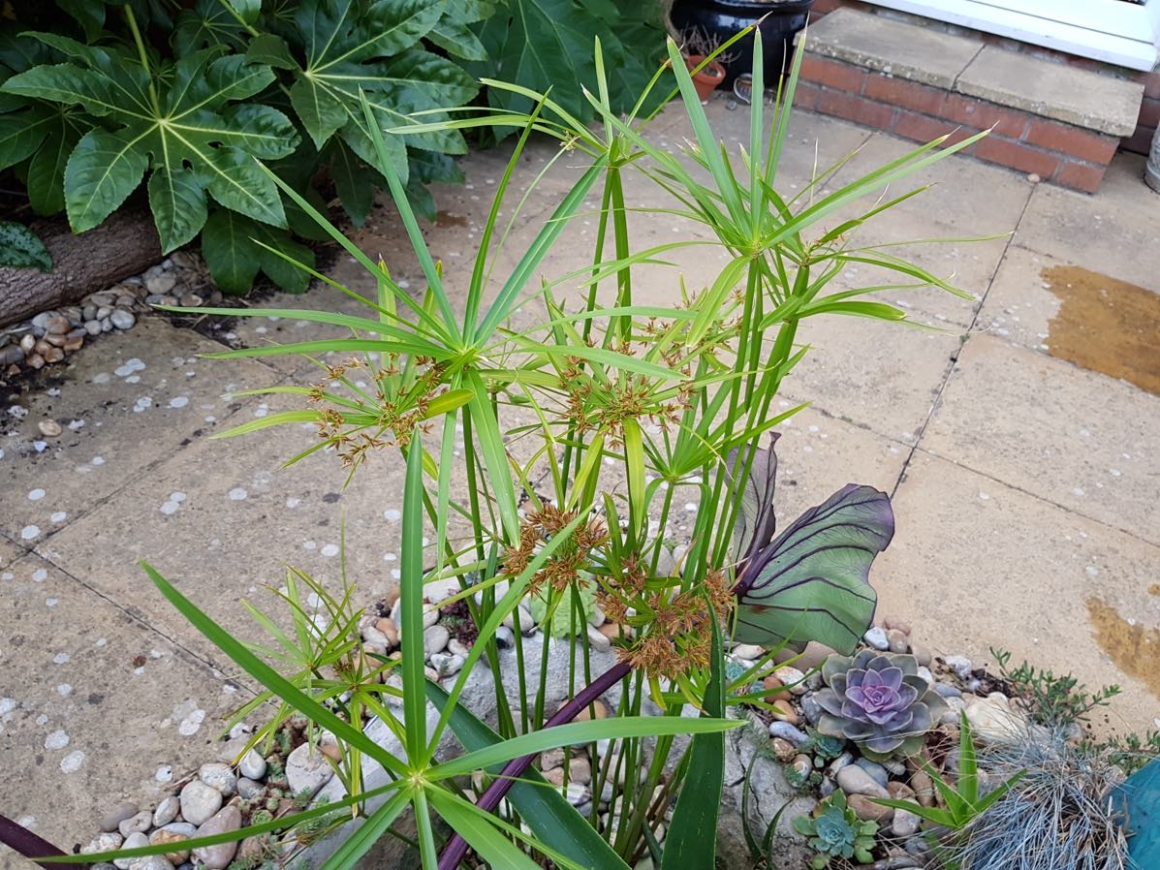
An elegant, water-loving sedge with tall green stems topped by umbrella-like whorls of narrow leafy bracts.
- Full sun, Partial shade
- 0.6–1.5 m (2–5 ft)
- 0.5–1 m (2–3 ft)
- H1c · Zone 10
- June–September
- Evergreen
Overview
Native to Madagascar and nearby islands, with a closely related form widespread in tropical Africa and Arabia, the umbrella papyrus forms dense clumps of upright, three-angled green stems. Each stem ends in a flat, spoked whorl of narrow, grass-like bracts, like the ribs of an umbrella, with small brown flower clusters in summer. It grows naturally in marshes and along streams, so it thrives in permanently wet soil or standing in shallow water. It is frost tender (minimum about 5°C / 41°F), so in climates with frosty winters it is grown as a pond-side or patio plant for summer and moved indoors as a houseplant for winter; in frost-free climates it can be grown outdoors all year. It has become a weed of waterways in some warm regions, including parts of Australia and the Pacific. Plants sold under this name are often Cyperus involucratus, which many botanists now treat as part of the same species.
At a Glance
Growing Conditions
Aspect Suitability
- East-facing
- South-facing
- West-facing
Site Tolerance
- Wet soil
Soil Tolerance
- Clay
- Sandy
- Loam
- Acid
- Neutral pH
- Alkaline
Foliage
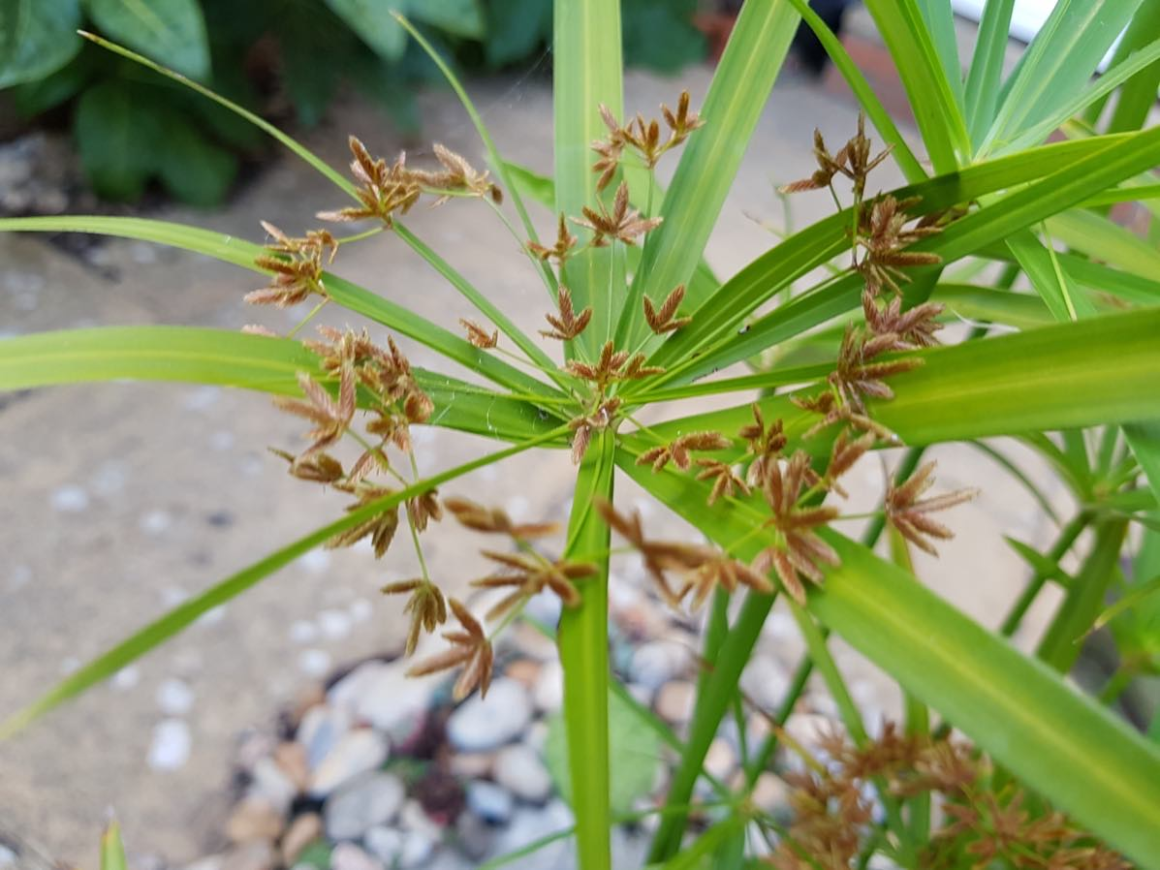
- Architectural foliage
Foliage interest: 12 months of the year
Seasonal Timeline
- Flowering Jun Jul Aug Sep
- Foliage 12 months of the year
- Propagate Apr May Jun Jul
How to propagate
Ways to grow more Umbrella papyrus: the usual steps for each method.
Division Apr Easy
You'll need: A garden fork or spade (two forks back to back help with big clumps) and a sharp knife.
- Water the plant well the day before.
- Dig up the whole clump with a fork, keeping as much root as you can.
- Split it into pieces about the size of your fist, each with healthy roots and shoots: pull them apart by hand, or cut tough clumps with a knife or spade.
- Throw away any old, woody middle.
- Replant the pieces straight away at the same depth, and water them in well.
- How long
- Settles in within a few weeks.
- It's worked when
- Fresh new growth within a few weeks.
- Then
- Water in dry spells for the rest of the season.
Leaf cuttings Apr–Jul Easy
You'll need: A healthy leaf, a clean knife, a pot of gritty compost or cactus compost.
- Take a healthy, full-grown leaf (for succulents, twist it off cleanly).
- For succulents, leave it a few days for the cut end to dry; for others, use it straight away.
- Rest it on, or push its base just into, the compost.
- Keep it warm and bright, out of direct sun, and only just moist.
- How long
- Tiny plantlets in about 3 to 8 weeks.
- It's worked when
- Small new plants forming at the base of the leaf.
- Then
- Pot the little plants up on their own once they're big enough to handle.
From seed Apr–May Easy
You'll need: Seed compost, a seed tray or small pots, labels, and a clear lid or plastic bag.
- Fill a tray or pots with seed compost, level it and firm it gently.
- Water the compost and let it drain.
- Sow the seeds thinly on top. Cover them with a fine layer of compost or vermiculite about as deep as the seed is big; leave tiny seeds uncovered.
- Label them, cover with a clear lid or bag, and keep them somewhere bright but out of hot sun.
- Keep the compost just moist, and take the cover off once seedlings appear.
- How long
- Usually comes up in 1 to 3 weeks.
- It's worked when
- Seedlings with their first pair of leaves.
- Then
- When each has its first true leaves, prick them out into their own small pots, holding them by a leaf, never the stem. Harden them off for a week or two before planting out.
Divide clumps in spring. Alternatively cut off a leaf whorl with about 5cm of stem, trim the bracts by half and float it upside down in water; roots and new shoots form within a few weeks.
Maintenance Calendar
- Mar Cut old, browning stems out at the base to make room for fresh growth
- May Move pots outside once nights stay above about 10°C (50°F), or stand them in a pond margin
- Jul Never let the compost dry out, and standing the pot in water is the easiest way to keep it constantly wet
- Sep Bring plants indoors to a bright spot before the first frost, keeping the compost moist
Garden Design
Works well in: Japanese / Zen, Modern / Contemporary, Tropical / Exotic
Stand the pot in a shallow saucer or sink it into a pond margin with water just over the pot rim; the umbrella heads look striking against plain walls or water.
Companion planting: Colocasias, Cannas, Ferns, Marginal water plants
Wildlife Value
- Shelter
Listed as an invasive non-native plant in the UK: never let it spread into the wild.
Safety
Not known to be toxic. It can spread along waterways in warm climates and is an environmental weed in parts of Australia and the Pacific, so never plant it into natural ponds or streams there.