

Perennial · Tuber
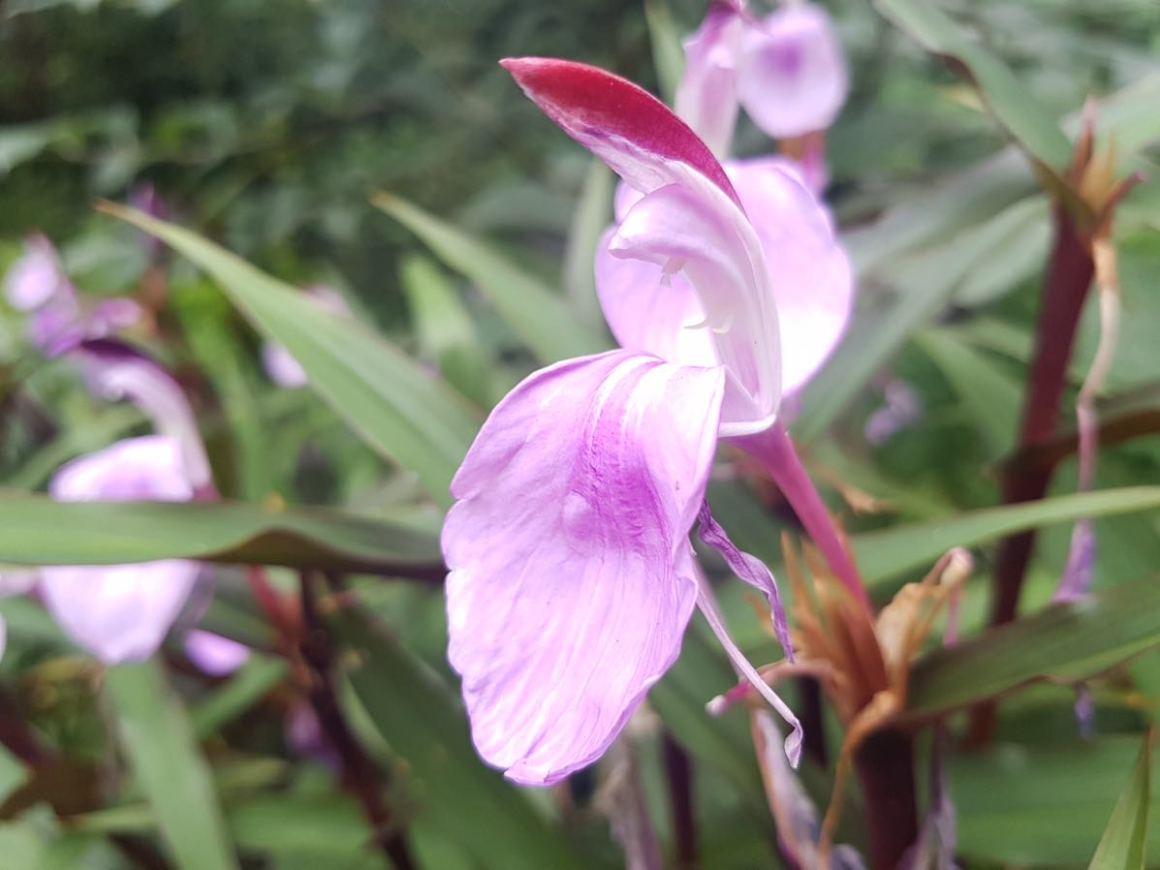
Roscoea purpurea
Purple roscoea
Also known as: Roscoea procera
A hardy Himalayan ginger relative with leafy stems and exotic, orchid-like purple flowers in late summer.
- Partial shade
- 20–50 cm (8–20 in)
- 15–30 cm (6–12 in)
- H5 · Zone 7
- July–September
- Deciduous
Overview
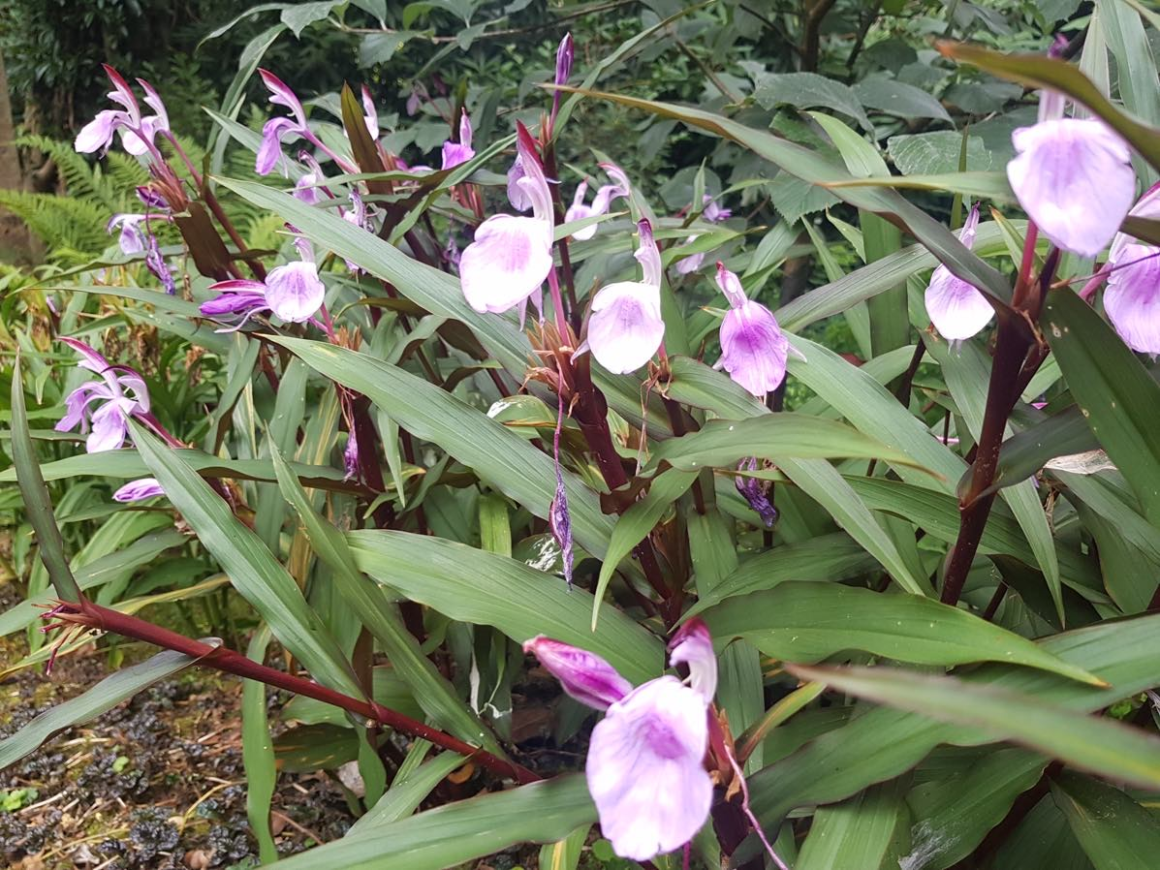
This hardy member of the ginger family comes from the Himalaya, where it grows in grassy, partly shaded slopes. It forms clumps of upright, leafy stems that look a little like small sweetcorn plants, and from mid to late summer produces exotic, orchid-like hooded flowers in shades of lilac to rich purple (white, pink, red and bicoloured forms are also grown). It grows from fleshy, tuberous roots that are hardy to about -15°C (5°F) when planted 10-15cm deep in soil that stays moist in summer but drains in winter. It is very late to appear, often not until early summer, so it is easy to dig up by mistake. It prefers cool, moist summers and partial shade and struggles in hot, dry climates.
At a Glance
Growing Conditions
Aspect Suitability
- North-facing
- East-facing
- West-facing
Soil Tolerance
- Clay
- Loam
- Acid
- Neutral pH
- Alkaline
Foliage
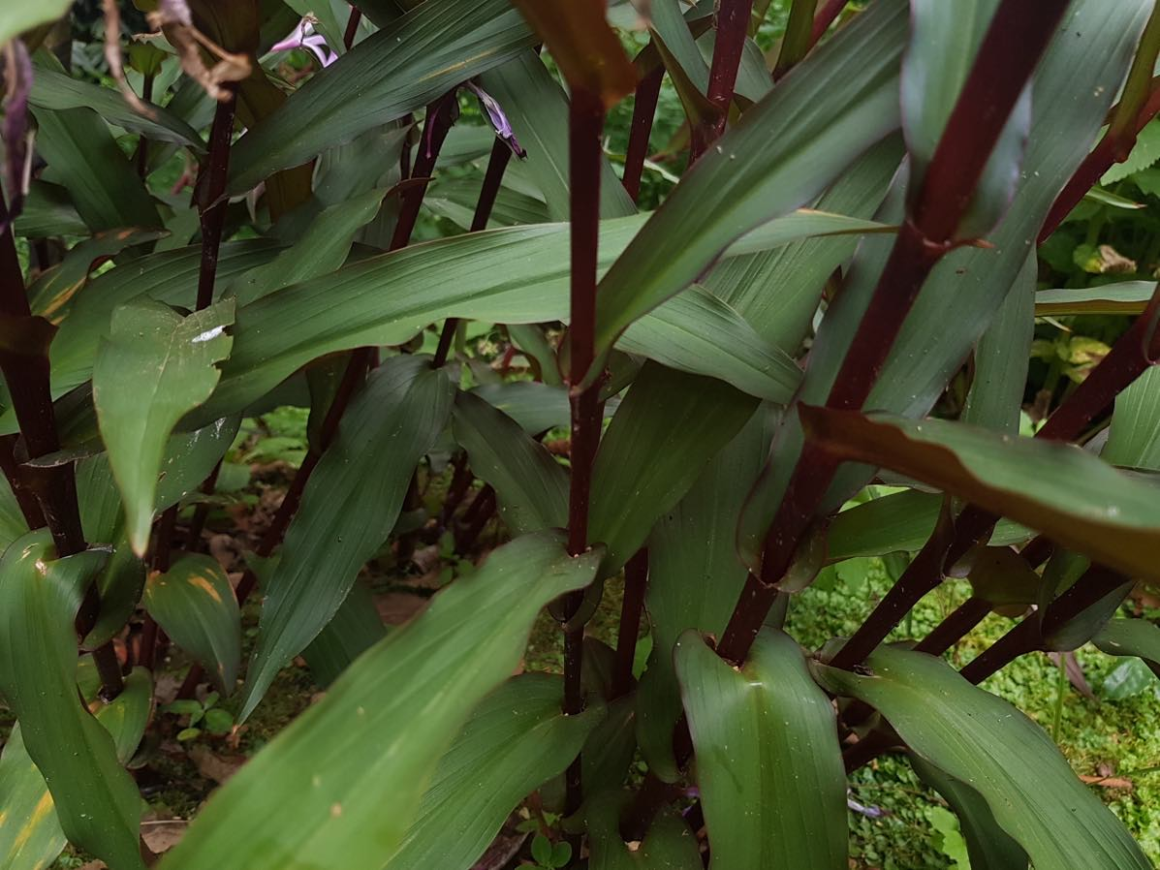
Foliage interest: June–October
Seasonal Timeline
- Flowering Jul Aug Sep
- Foliage Jun Jul Aug Sep Oct
- Propagate Mar Apr Sep Oct
How to propagate
Ways to grow more Purple roscoea: the usual steps for each method.
Division Mar–Apr, Sep–Oct Easy
You'll need: A garden fork or spade (two forks back to back help with big clumps) and a sharp knife.
- Water the plant well the day before.
- Dig up the whole clump with a fork, keeping as much root as you can.
- Split it into pieces about the size of your fist, each with healthy roots and shoots: pull them apart by hand, or cut tough clumps with a knife or spade.
- Throw away any old, woody middle.
- Replant the pieces straight away at the same depth, and water them in well.
- How long
- Settles in within a few weeks.
- It's worked when
- Fresh new growth within a few weeks.
- Then
- Water in dry spells for the rest of the season.
From seed Mar–Apr Easy
You'll need: Seed compost, a seed tray or small pots, labels, and a clear lid or plastic bag.
- Fill a tray or pots with seed compost, level it and firm it gently.
- Water the compost and let it drain.
- Sow the seeds thinly on top. Cover them with a fine layer of compost or vermiculite about as deep as the seed is big; leave tiny seeds uncovered.
- Label them, cover with a clear lid or bag, and keep them somewhere bright but out of hot sun.
- Keep the compost just moist, and take the cover off once seedlings appear.
- How long
- Usually comes up in 1 to 3 weeks.
- It's worked when
- Seedlings with their first pair of leaves.
- Then
- When each has its first true leaves, prick them out into their own small pots, holding them by a leaf, never the stem. Harden them off for a week or two before planting out.
Divide clumps carefully in spring as shoots appear, keeping the brittle tuberous roots intact. Fresh seed sown in autumn and left outside over winter germinates the following spring.
Maintenance Calendar
- Apr Mulch with leaf mould before shoots appear, keeping the roots cool and moist as in its mountain home
- Jun Protect the late-emerging shoots from slugs, as damage now can stop flowering
- Jul Water in dry spells, since dry soil shortens the flowering season
- Oct Clear the dead stems once they collapse after frost, marking where the roots are
Garden Design
Works well in: Cottage, Modern / Contemporary, Tropical / Exotic, Woodland / Shade
Plant at the front of a shady border or in a raised bed where the orchid-like flowers can be seen up close. Mark its position, as it appears very late.
Companion planting: Hostas, Ferns, Epimediums, Hardy begonias
Wildlife Value
- Other pollinators
Safety
Not known to be toxic to people or pets.