

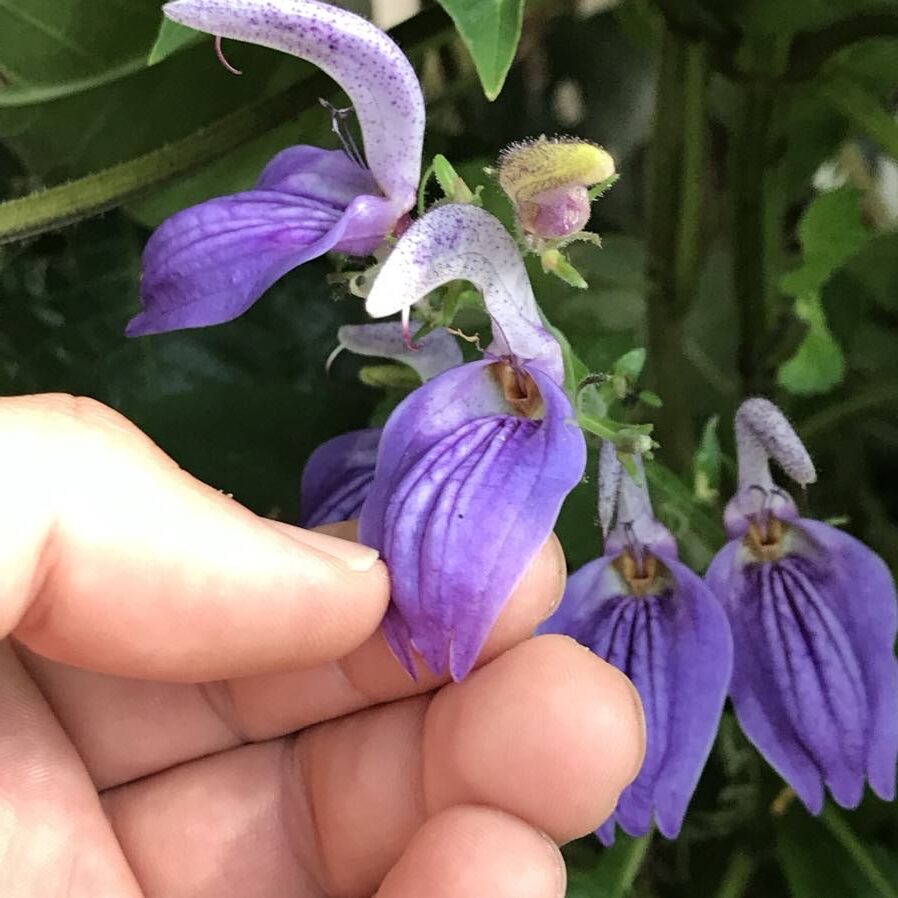
Shrub · Tender perennial
Brillantaisia subulugurica
Giant salvia
Also known as: Brillantasia subulugurica (misspelling), Brillantaisia cicatricosa
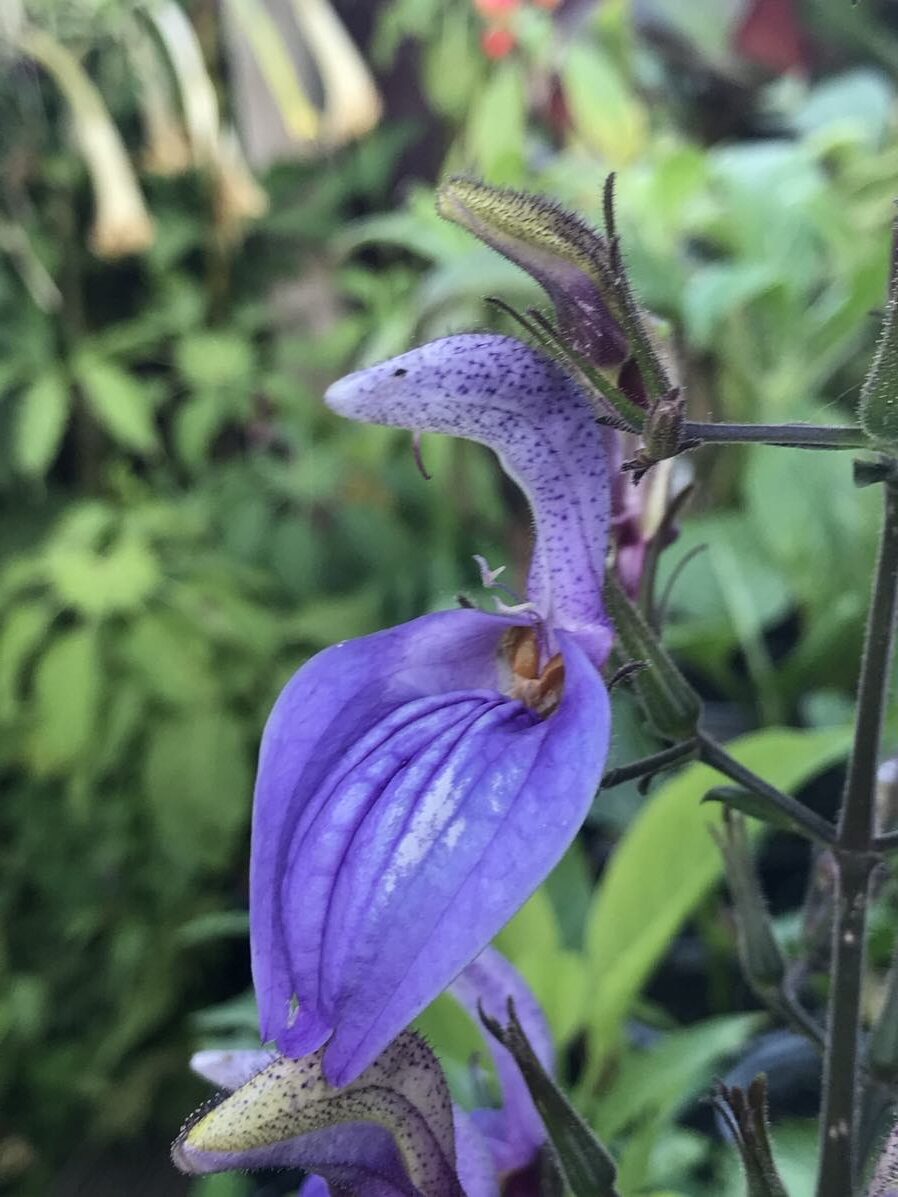
A fast-growing tropical African shrub with big glossy leaves and tall spikes of large, violet, sage-like flowers.
- Full sun, Partial shade
- 1–2 m (3–7 ft)
- 0.6–1.2 m (2–4 ft)
- H2 · Zone 10
- August–November
- Evergreen
Overview
Often called giant salvia, this vigorous member of the acanthus family is not a true salvia but comes from the forests of eastern and south-eastern Africa. It grows quickly into a bushy, soft-wooded shrub with large, glossy, dark green leaves on square stems, and from late summer into autumn produces tall, branching spikes of big, hooded, violet to purple flowers that bees love. It is frost tender: light frost kills the top growth, though roots may survive just below freezing under a mulch. In climates with frosty winters, grow it as a summer feature in a large pot or border and keep cuttings or the whole plant frost-free over winter. In frost-free climates it can flower almost all year. Some botanists treat it as a form of Brillantaisia cicatricosa.
At a Glance
Growing Conditions
Aspect Suitability
- East-facing
- South-facing
- West-facing
Soil Tolerance
- Sandy
- Loam
- Acid
- Neutral pH
- Alkaline
Foliage
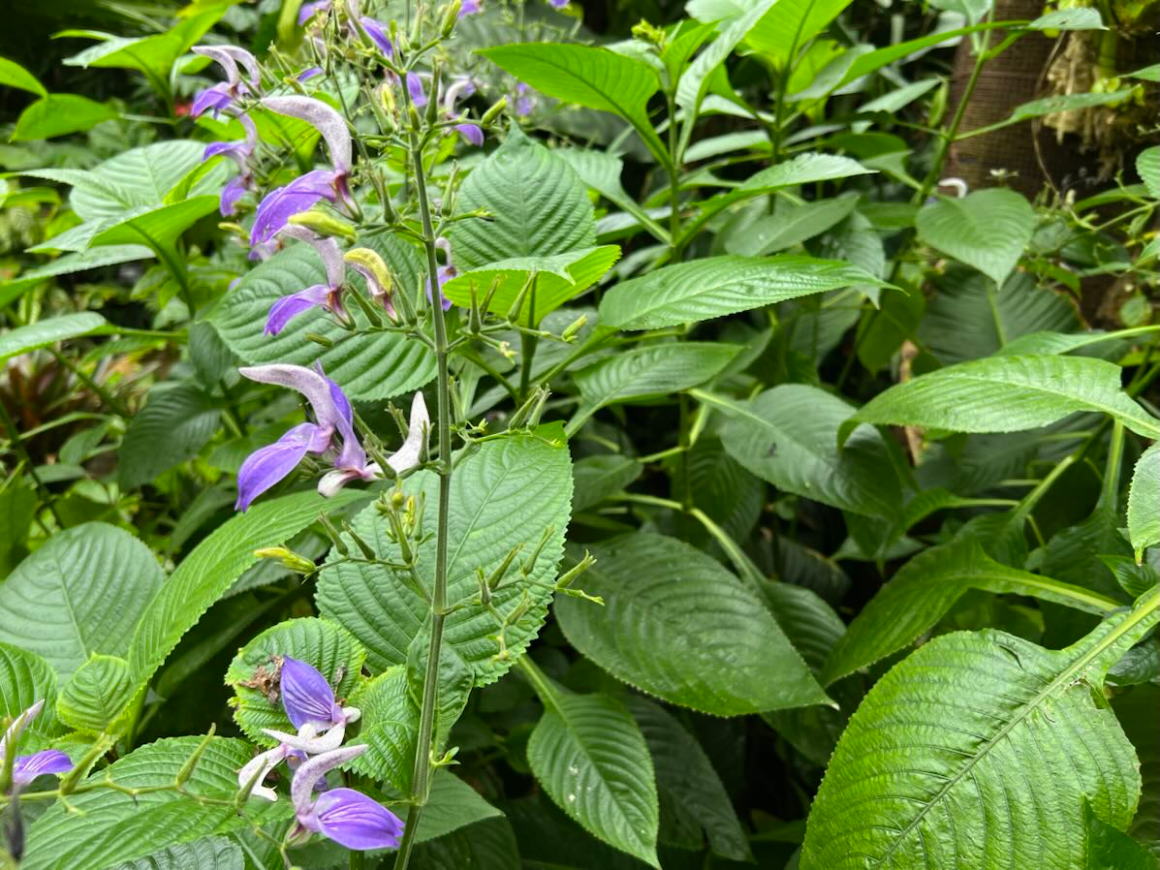
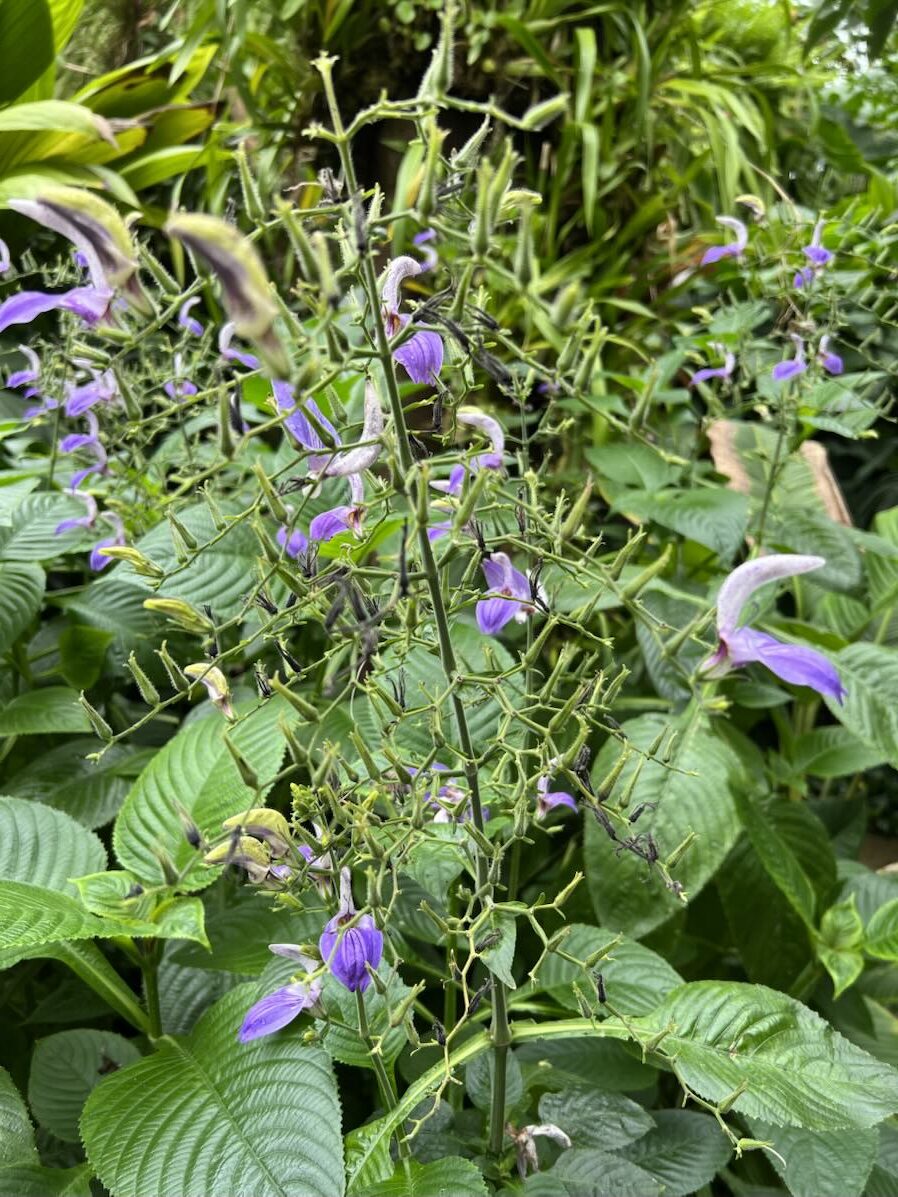
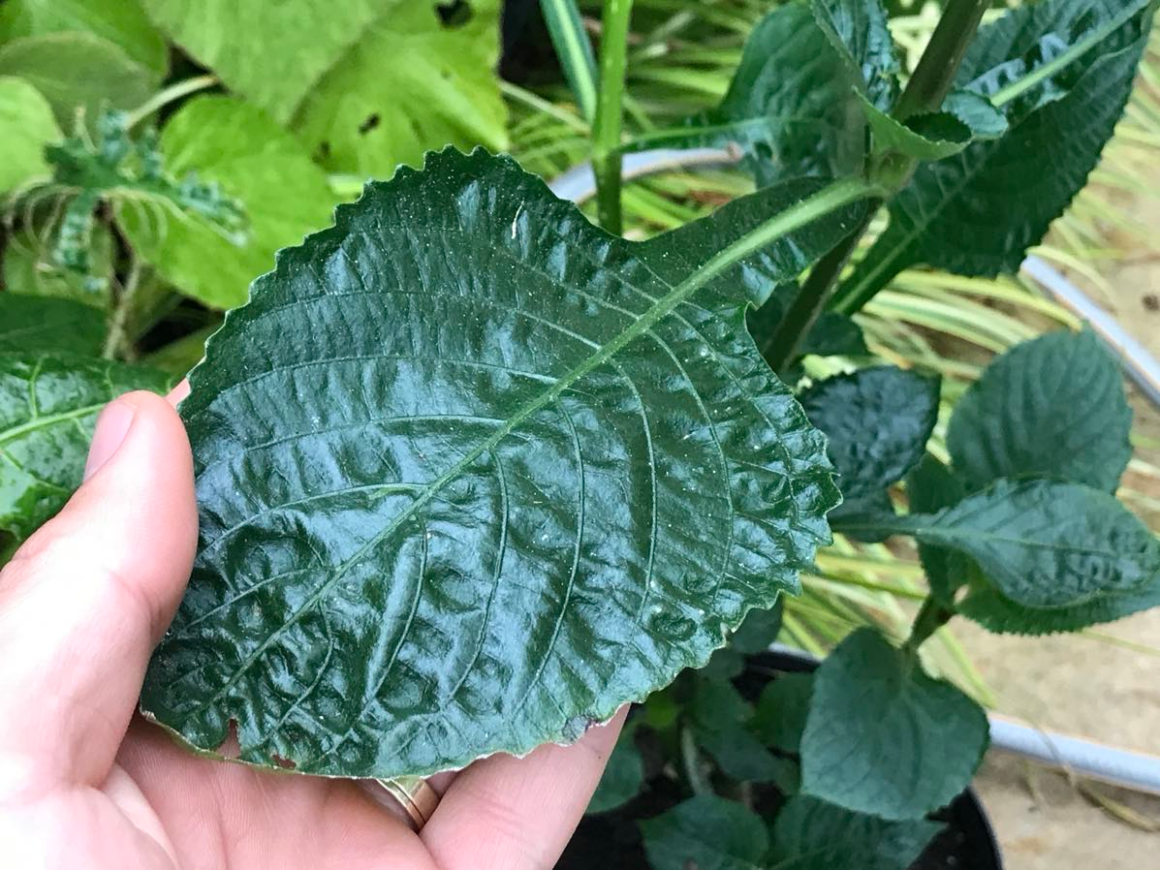
- Architectural foliage
Foliage interest: 12 months of the year
Seasonal Timeline
- Flowering Aug Sep Oct Nov
- Foliage 12 months of the year
- Propagate Apr May Jun Jul Aug
How to propagate
Ways to grow more Giant salvia: the usual steps for each method.
Softwood cuttings Apr–Jun Takes a little care
You'll need: Clean, sharp secateurs or a knife, small pots, gritty compost (half compost, half grit or perlite), a plastic bag, and rooting powder if you have it.
- Early in the morning, cut soft, non-flowering shoot tips about 5 to 10 cm long, and keep them in a plastic bag so they don't wilt.
- Trim each one just below a leaf joint and take off the lower leaves, leaving two or three at the top.
- Dip the cut end in rooting powder if you have some.
- Push them into the edge of a pot of gritty compost so their leaves don't touch, and water them in.
- Cover with a clear bag or put them in a propagator, somewhere bright but out of direct sun.
- How long
- Roots in about 3 to 6 weeks.
- It's worked when
- New growth at the tips, and roots showing through the pot's holes.
- Then
- Pot each one up on its own and grow it on. Keep young plants frost-free through their first winter.
From seed Apr–May Easy
You'll need: Seed compost, a seed tray or small pots, labels, and a clear lid or plastic bag.
- Fill a tray or pots with seed compost, level it and firm it gently.
- Water the compost and let it drain.
- Sow the seeds thinly on top. Cover them with a fine layer of compost or vermiculite about as deep as the seed is big; leave tiny seeds uncovered.
- Label them, cover with a clear lid or bag, and keep them somewhere bright but out of hot sun.
- Keep the compost just moist, and take the cover off once seedlings appear.
- How long
- Usually comes up in 1 to 3 weeks.
- It's worked when
- Seedlings with their first pair of leaves.
- Then
- When each has its first true leaves, prick them out into their own small pots, holding them by a leaf, never the stem. Harden them off for a week or two before planting out.
Soft stem cuttings root very easily in warmth from spring to late summer; take a few in late summer to overwinter indoors.
Maintenance Calendar
- Mar Cut overwintered plants back hard in early spring to keep them compact and bushy
- May Plant out or move pots outside once nights stay above about 10°C (50°F)
- Jul Water and feed generously, as it needs plenty of moisture to flower well
- Oct Take cuttings or bring the plant under frost-free cover before the first frost
Garden Design
Works well in: Modern / Contemporary, Tropical / Exotic
Plant it in a sheltered, partly shaded exotic border or a big pot, where the late violet spikes extend the season; regular water keeps it flowering.
Companion planting: Cannas, Salvias, Dahlias, Bananas
Wildlife Value
- Bees
- Other pollinators
Safety
Not known to be toxic to people or pets.