

Perennial · Tuber
Colocasia esculenta ‘Mojito’
Mojito elephant ear
Also known as: Colocasia 'Mojito'
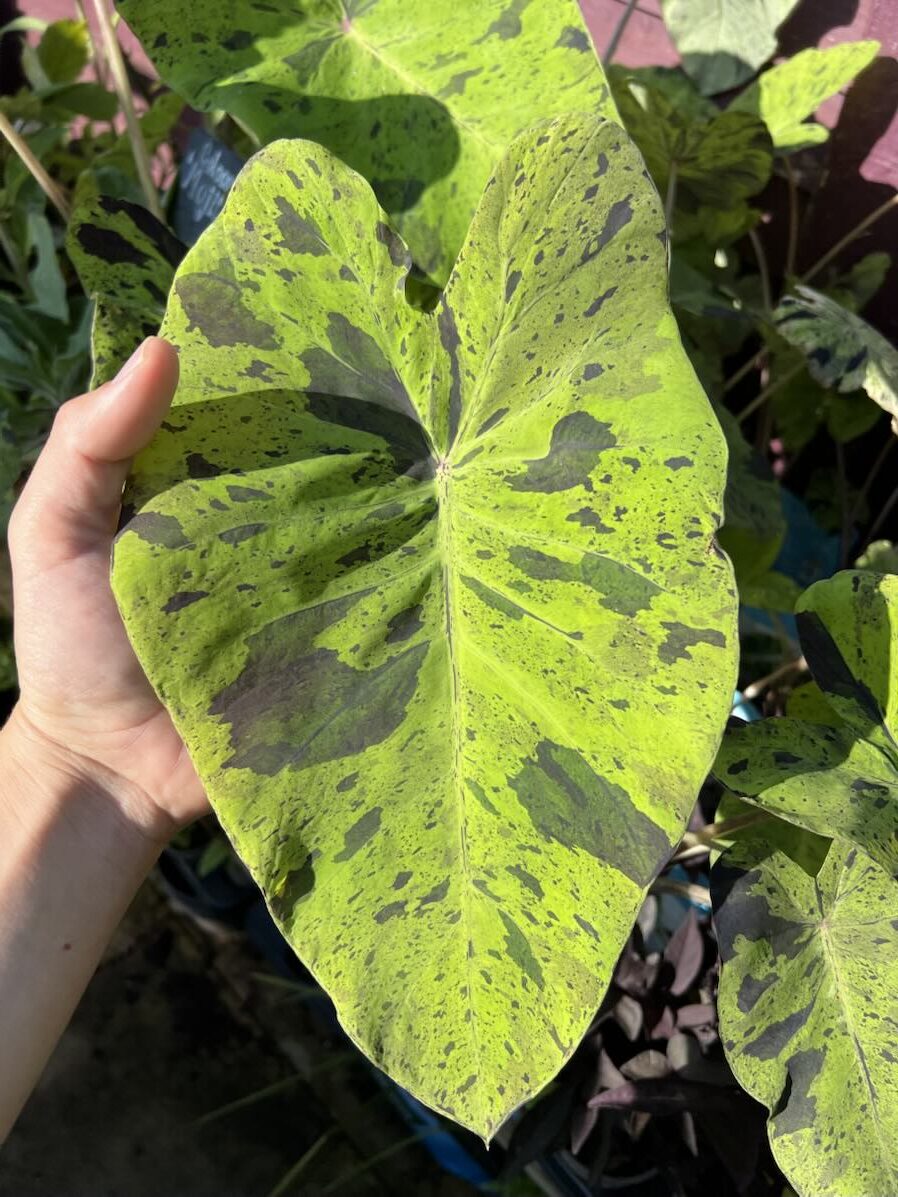
A striking elephant ear with lime-green leaves randomly speckled and splashed with dark purple, so no two leaves are alike.
- Full sun, Partial shade
- 1–1.5 m (3–5 ft)
- 0.5–1 m (2–3 ft)
- H2 · Zone 9
- Deciduous
Overview
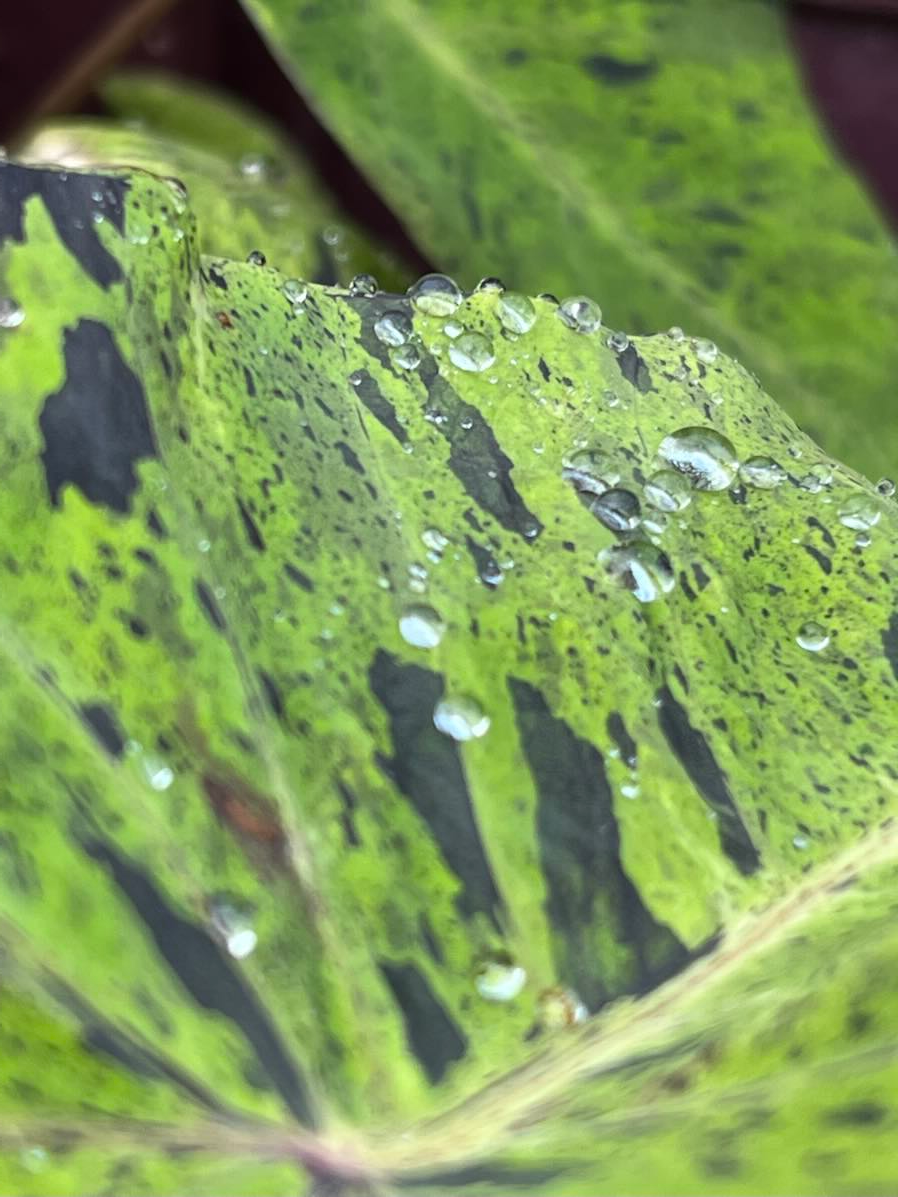
Mojito forms an upright clump of large, heart-shaped, light to lime-green leaves irregularly speckled, streaked and splashed with dark purple-black, with matching marks on the leaf stalks. The pattern varies from leaf to leaf, so each one is different. It grows to about 1-1.5m and colours well in sun or part shade, provided the soil stays constantly moist. The leaves collapse at the first frost; in frost-free or near-frost-free climates the tubers can stay in the ground, but elsewhere lift and store them frost-free or keep the pot under cover.
At a Glance
Growing Conditions
Aspect Suitability
- East-facing
- South-facing
- West-facing
Site Tolerance
- Wet soil
Soil Tolerance
- Clay
- Sandy
- Loam
- Acid
- Neutral pH
- Alkaline
Foliage
- Variegated
- Architectural foliage
Foliage interest: May–October
Seasonal Timeline
- Foliage May Jun Jul Aug Sep Oct
- Propagate Apr May Jun
How to propagate
Ways to grow more Mojito elephant ear: the usual steps for each method.
Division Apr Easy
You'll need: A garden fork or spade (two forks back to back help with big clumps) and a sharp knife.
- Water the plant well the day before.
- Dig up the whole clump with a fork, keeping as much root as you can.
- Split it into pieces about the size of your fist, each with healthy roots and shoots: pull them apart by hand, or cut tough clumps with a knife or spade.
- Throw away any old, woody middle.
- Replant the pieces straight away at the same depth, and water them in well.
- How long
- Settles in within a few weeks.
- It's worked when
- Fresh new growth within a few weeks.
- Then
- Water in dry spells for the rest of the season.
Offsets, runners and bulblets Apr Easy
You'll need: A trowel, small pots and compost.
- Find the small plants, offsets or bulblets growing beside the parent plant, or on its runners.
- Gently separate them with some roots, cutting any runner from the parent.
- Pot them up, or replant them at the same depth, and water.
- How long
- Grows on within a few weeks.
- It's worked when
- New leaves on the young plants.
- Then
- Grow them on until they're a good size before planting out.
Separate rooted offsets or small side tubers in spring as growth starts, and keep them warm and moist until established. Named forms must be propagated this way to stay true.
Maintenance Calendar
- Apr Start stored tubers into growth in warmth under cover
- Jun Plant out or move pots outside once nights stay above about 10°C (50°F)
- Jul Water heavily and feed every one to two weeks, as these are hungry, thirsty plants
- Oct Before the first frost, bring pots under cover or lift the tubers and store them dry and frost-free
Garden Design
Works well in: Modern / Contemporary, Tropical / Exotic
The speckled leaves look best beside plain-leaved plants such as dark cannas or green bananas, which stop the effect becoming too busy.
Companion planting: Cannas, Bananas, Gingers, Ferns
Wildlife Value
- Shelter
Safety
- Toxic to humans
- Toxic to dogs
- Toxic to cats
- Toxic to horses
- Skin irritant
All raw parts contain irritating calcium oxalate crystals. Harmful if eaten, and the sap can irritate skin and eyes; wear gloves and keep away from children and pets.