

Annual · Vegetable
Solanum lycopersicum
Tomato
Also known as: Lycopersicon esculentum, Lycopersicon lycopersicum
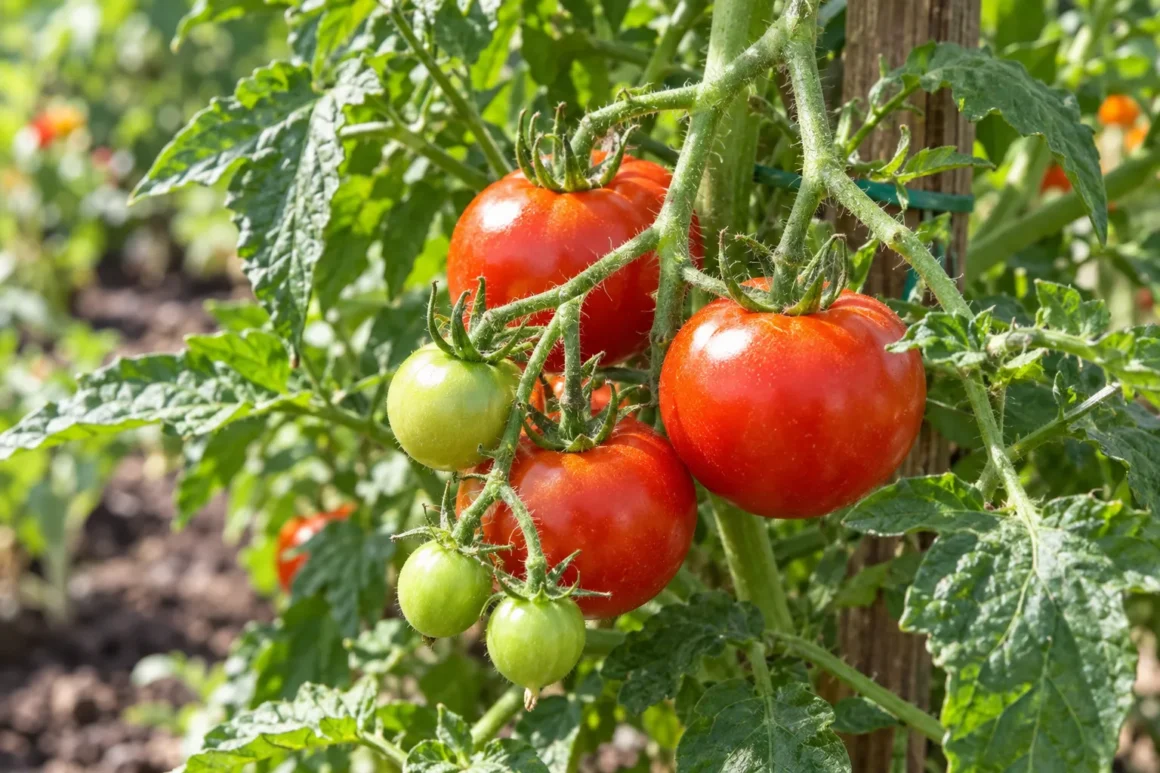
The most widely grown home fruit crop, a frost-tender plant bearing juicy red, yellow, orange or near-black fruits from summer to the first frost.
- Full sun
- 0.6–2 m (2–7 ft)
- 45–75 cm (18–30 in)
- H1c · Zone 10
- June–September
- Deciduous
Overview
Tomatoes come from the dry Andean slopes of western South America and are now grown in almost every vegetable garden in the world. Plants are either tall, vining cordon (indeterminate) types that keep growing and fruiting until frost, or compact bush (determinate) types that crop over a shorter period and need little training. Fruit ranges from tiny cherry and grape types to plum, salad and large beefsteak tomatoes. All need warmth: growth stalls below about 10°C (50°F), frost kills them, and fruit sets poorly when days top about 32°C (90°F). In cool-summer climates grow them under cover or against a warm, sunny wall; in hot climates give some afternoon shade. Fruit size, colour, flavour and habit depend on the variety, so check the details for the one you choose.
At a Glance
Growing Conditions
Aspect Suitability
- South-facing
- West-facing
Soil Tolerance
- Clay
- Sandy
- Loam
- Acid
- Neutral pH
- Alkaline
Foliage
Foliage interest: May–October
Seasonal Timeline
- Flowering Jun Jul Aug Sep
- Foliage May Jun Jul Aug Sep Oct
- Fruiting Jul Aug Sep Oct
- Propagate Feb Mar Apr Jun Jul
- Sow indoors Feb Mar
- Plant out Apr May
- Harvest Jul Aug Sep Oct
How to propagate
Ways to grow more Tomato: the usual steps for each method.
From seed Mar–Apr Easy
You'll need: Seed compost, a seed tray or small pots, labels, and a clear lid or plastic bag.
- Fill a tray or pots with seed compost, level it and firm it gently.
- Water the compost and let it drain.
- Sow the seeds thinly on top. Cover them with a fine layer of compost or vermiculite about as deep as the seed is big; leave tiny seeds uncovered.
- Label them, cover with a clear lid or bag, and keep them somewhere bright but out of hot sun.
- Keep the compost just moist, and take the cover off once seedlings appear.
- How long
- Usually comes up in 1 to 3 weeks.
- It's worked when
- Seedlings with their first pair of leaves.
- Then
- When each has its first true leaves, prick them out into their own small pots, holding them by a leaf, never the stem. Harden them off for a week or two before planting out.
Softwood cuttings Apr, Jun Takes a little care
You'll need: Clean, sharp secateurs or a knife, small pots, gritty compost (half compost, half grit or perlite), a plastic bag, and rooting powder if you have it.
- Early in the morning, cut soft, non-flowering shoot tips about 5 to 10 cm long, and keep them in a plastic bag so they don't wilt.
- Trim each one just below a leaf joint and take off the lower leaves, leaving two or three at the top.
- Dip the cut end in rooting powder if you have some.
- Push them into the edge of a pot of gritty compost so their leaves don't touch, and water them in.
- Cover with a clear bag or put them in a propagator, somewhere bright but out of direct sun.
- How long
- Roots in about 3 to 6 weeks.
- It's worked when
- New growth at the tips, and roots showing through the pot's holes.
- Then
- Pot each one up on its own and grow it on. Keep young plants frost-free through their first winter.
Sow seed indoors at 18-24°C (65-75°F) six to eight weeks before your last frost. Side shoots pinched out in summer root quickly in water or moist compost, giving young plants for a late crop in long-season climates. Seed saved from hybrid (F1) varieties will not come true.
Maintenance Calendar
- Mar Sow seed indoors at 18-24°C (65-75°F) six to eight weeks before your last frost, as plants need a long, warm season
- May Harden off and plant out once nights stay above 10°C (50°F), burying the stem up to the lowest leaves so it roots along its length
- May Put in a strong stake, string or cage at planting, as fruit-laden stems snap easily
- Jun Pinch out side shoots on cordon types every week, which channels energy into fruit (bush types need no pinching)
- Jun Water deeply and evenly, as irregular watering causes split fruit and blossom end rot
- Jul Feed weekly with a high-potash fertiliser once the first fruits have set
- Jul Check for blight in warm, humid weather and remove affected leaves straight away
- Aug Pick fruit as it colours, which encourages the rest to ripen
- Sep Pinch out the growing tip about four weeks before your first expected frost so the remaining fruit can ripen
- Oct Clear plants at the first frost and ripen any green fruit indoors
Garden Design
Works well in: Cottage, Edible / Kitchen Garden
Grow cordon types up stakes, strings or cages at the back of a sunny bed, and bush or trailing cherry types in pots, raised beds and hanging baskets. Underplanting with basil or marigolds makes good use of the space around the stems.
Companion planting: Basil, Marigolds, Lettuce, Carrots, Avoid planting next to potatoes
Wildlife Value
- Bees
- Food source
- Food
Safety
- Toxic to humans
- Toxic to dogs
- Toxic to cats
- Toxic to horses
Ripe fruit is edible. Leaves, stems and unripe green fruit contain glycoalkaloids (tomatine and solanine) and are harmful if eaten in quantity, and the plant is toxic to dogs, cats and horses. Handling the sticky, hairy stems can stain hands and irritate sensitive skin.