

Annual · Vegetable
Solanum melongena
Aubergine, Eggplant, Brinjal
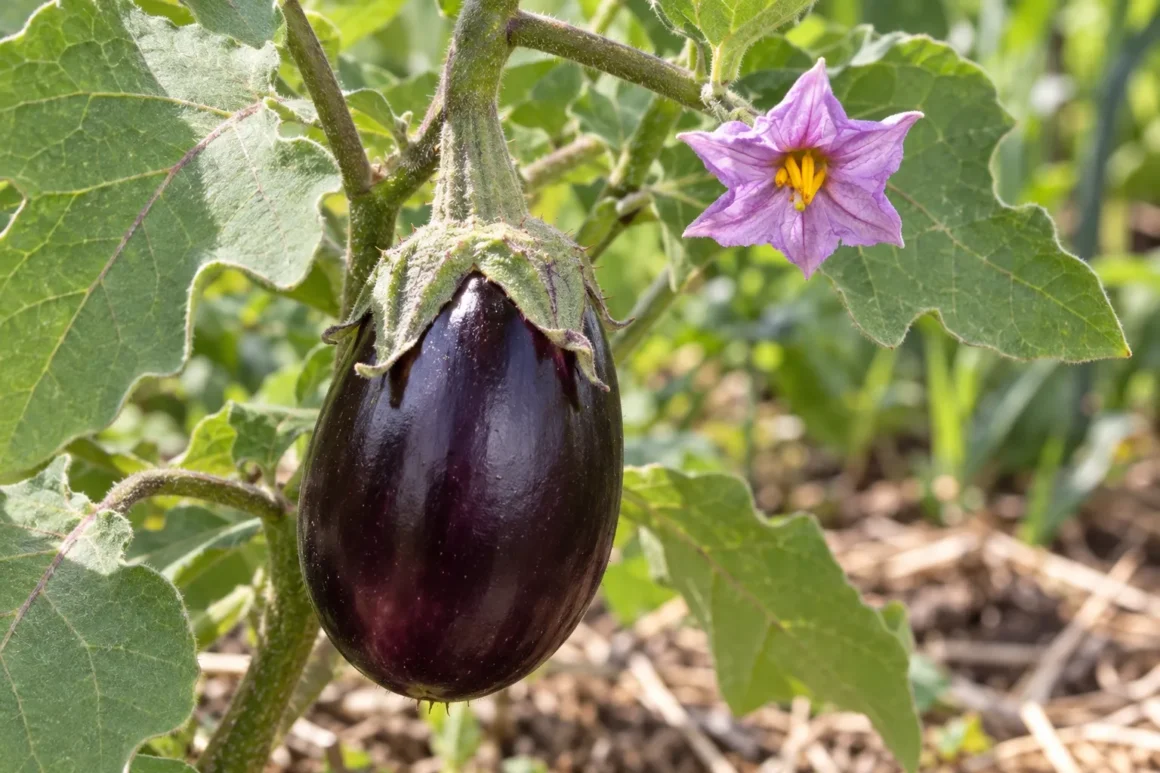
A heat-loving fruiting vegetable with soft, felted leaves, purple star flowers and glossy purple, white or striped fruits.
- Full sun
- 0.6–1 m (2–3 ft)
- 45–60 cm (18–24 in)
- H1b · Zone 10
- June–September
- Deciduous
Overview
Aubergine, known as eggplant in North America and brinjal in South Asia, was domesticated in tropical Asia and needs more warmth than almost any other common vegetable. It makes a bushy, upright plant with large, soft grey-green leaves and pretty purple flowers, followed by glossy fruit that may be long and slender, round or egg-shaped, in deep purple, white, green or striped. Plants need night temperatures above about 15°C (59°F) to set fruit well and are killed by frost. In cool-summer climates grow them under cover or in a pot in the warmest spot available; in long, hot summers they crop heavily outdoors. Fruit size, shape and colour depend on the variety.
At a Glance
Growing Conditions
Aspect Suitability
- South-facing
- West-facing
Soil Tolerance
- Clay
- Sandy
- Loam
- Acid
- Neutral pH
Foliage
- Architectural foliage
Foliage interest: May–October
Seasonal Timeline
- Flowering Jun Jul Aug Sep
- Foliage May Jun Jul Aug Sep Oct
- Fruiting Jul Aug Sep Oct
- Propagate Jan Feb Mar
- Sow indoors Feb Mar
- Plant out May Jun
- Harvest Jul Aug Sep Oct
How to propagate
One way to grow more Aubergine, Eggplant, Brinjal: the usual steps for each method.
From seed Jan–Mar Easy
You'll need: Seed compost, a seed tray or small pots, labels, and a clear lid or plastic bag.
- Fill a tray or pots with seed compost, level it and firm it gently.
- Water the compost and let it drain.
- Sow the seeds thinly on top. Cover them with a fine layer of compost or vermiculite about as deep as the seed is big; leave tiny seeds uncovered.
- Label them, cover with a clear lid or bag, and keep them somewhere bright but out of hot sun.
- Keep the compost just moist, and take the cover off once seedlings appear.
- How long
- Usually comes up in 1 to 3 weeks.
- It's worked when
- Seedlings with their first pair of leaves.
- Then
- When each has its first true leaves, prick them out into their own small pots, holding them by a leaf, never the stem. Harden them off for a week or two before planting out.
Sow indoors eight to ten weeks before your last frost at 21-30°C (70-86°F); seed is slow and erratic in cool compost. Pot on into individual pots before roots become crowded.
Maintenance Calendar
- Feb Sow seed indoors in warmth eight to ten weeks before your last frost, as plants need a very long, hot season
- May Plant out three or more weeks after your last frost when nights stay above 15°C (59°F), or grow under cover
- Jun Pinch out the tip when plants reach about 30cm (12in) to encourage bushy, branching growth
- Jul Feed every week with a high-potash fertiliser once the first fruits set
- Jul Check leaf undersides for red spider mite in hot, dry weather and mist plants under cover
- Aug Cut fruit while the skin is still glossy, as dull skin means it is overripe, bitter and seedy
- Oct Clear plants after the last harvest or the first frost
Garden Design
Works well in: Edible / Kitchen Garden, Modern / Contemporary
Its soft grey leaves and purple flowers make it ornamental enough for a large patio pot or a hot, sunny border. Give it the warmest, most sheltered position available.
Companion planting: Basil, Beans, Peppers, Marigolds
Wildlife Value
- Bees
- Food source
- Food
Safety
- Toxic to humans
- Toxic to dogs
- Toxic to cats
- Toxic to horses
Cooked fruit is edible. Leaves, stems and flowers contain solanine and are harmful if eaten, and the plant is toxic to dogs, cats and horses. Some types have small spines on the stems and the green cap of the fruit, so wear gloves when harvesting.