

Biennial · Vegetable
Pastinaca sativa
Parsnip
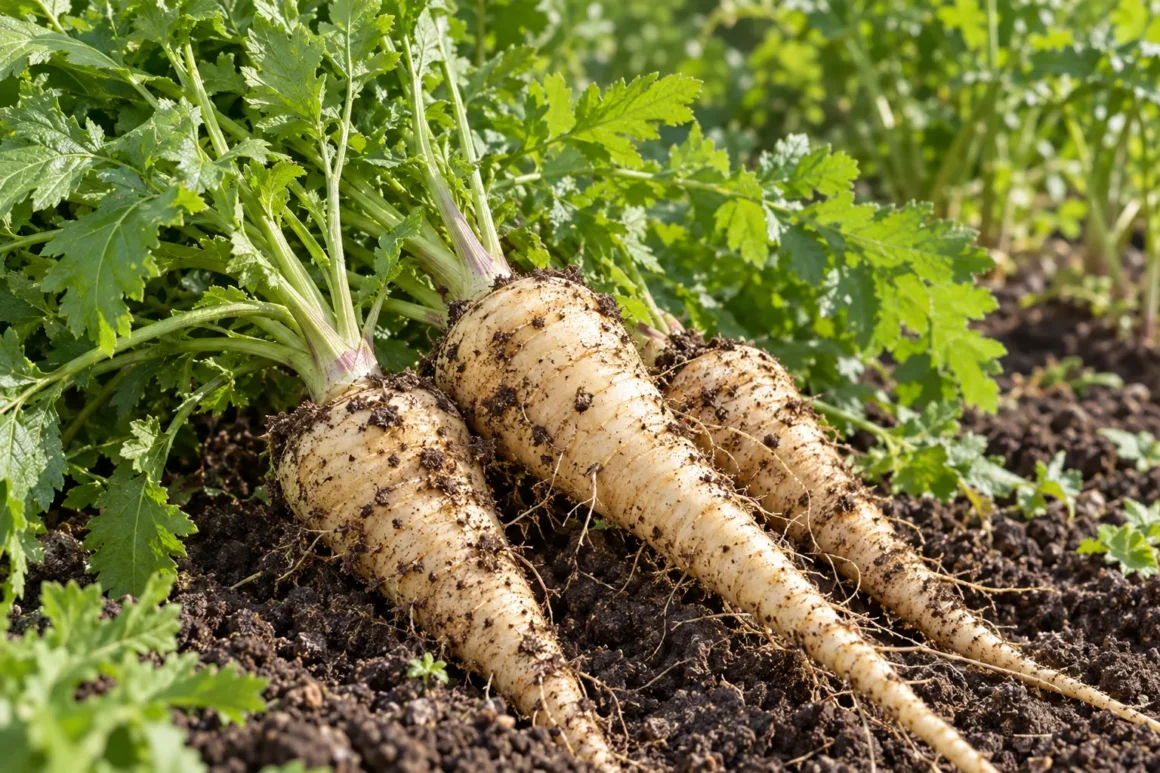
A very hardy root crop with long, creamy, sweet-flavoured roots that improve after frost and stand in the ground all winter.
- Full sun
- 30–60 cm (12–24 in)
- 20–30 cm (8–12 in)
- H6 · Zone 4
- Deciduous
Overview
The parsnip is native to Europe and western Asia and was a staple sweet vegetable before sugar was widely available. It forms a rosette of large, divided leaves above a long, tapering, cream-coloured root. Parsnips need a long season, from spring sowing to autumn harvest, but very little care in between, and are extremely hardy: cold weather turns starches to sugar, so the roots taste sweetest after the first frosts and can be left in the ground and dug as needed through winter. They grow best in deep, loose, stone-free soil and are slow and erratic to germinate, so always use fresh seed. Root length and resistance to canker depend on the variety.
At a Glance
Growing Conditions
Aspect Suitability
- South-facing
- West-facing
Soil Tolerance
- Clay
- Sandy
- Loam
- Neutral pH
- Alkaline
Foliage
Foliage interest: April–November
Seasonal Timeline
- Foliage Apr May Jun Jul Aug Sep Oct Nov
- Propagate Mar Apr May
- Sow / plant outside Mar Apr
- Harvest Oct Nov Dec Jan Feb Mar
How to propagate
One way to grow more Parsnip: the usual steps for each method.
From seed Mar–May Easy
You'll need: Seed compost, a seed tray or small pots, labels, and a clear lid or plastic bag.
- Fill a tray or pots with seed compost, level it and firm it gently.
- Water the compost and let it drain.
- Sow the seeds thinly on top. Cover them with a fine layer of compost or vermiculite about as deep as the seed is big; leave tiny seeds uncovered.
- Label them, cover with a clear lid or bag, and keep them somewhere bright but out of hot sun.
- Keep the compost just moist, and take the cover off once seedlings appear.
- How long
- Usually comes up in 1 to 3 weeks.
- It's worked when
- Seedlings with their first pair of leaves.
- Then
- When each has its first true leaves, prick them out into their own small pots, holding them by a leaf, never the stem. Harden them off for a week or two before planting out.
Sow fresh seed 1-2cm (0.5in) deep direct where plants are to grow, two to three weeks before your last frost or once the soil has warmed slightly. Sow three seeds per station and thin to the strongest, as germination is slow (three to four weeks) and patchy. Fast radishes sown between them mark the row.
Maintenance Calendar
- Feb Lift any remaining roots before they regrow in spring
- Apr Sow fresh seed direct in deep, loose soil, as old seed germinates poorly
- May Thin seedlings to 15cm (6in) apart once they have true leaves
- Jun Hoe carefully between rows to keep weeds down while plants are young
- Aug Water in long dry spells, as sudden heavy rain after drought causes split roots and canker
- Oct Lift roots after the first frosts, which make them sweeter
- Dec Cover rows with straw in very cold areas so you can still dig them when the ground freezes
Garden Design
Works well in: Edible / Kitchen Garden
Sow in rows in deep, loose soil in an open bed that can be occupied for most of the year. A row of radishes sown with them marks the line while the slow parsnips appear.
Companion planting: Onions, Garlic, Radishes, Lettuce
Safety
- Skin irritant
Roots are edible. The leaves and stems contain furanocoumarins that can cause painful blistering when sap-covered skin is exposed to sunlight, so wear gloves and long sleeves when handling the foliage on sunny days. Wild parsnip is an invasive weed with the same effect.