

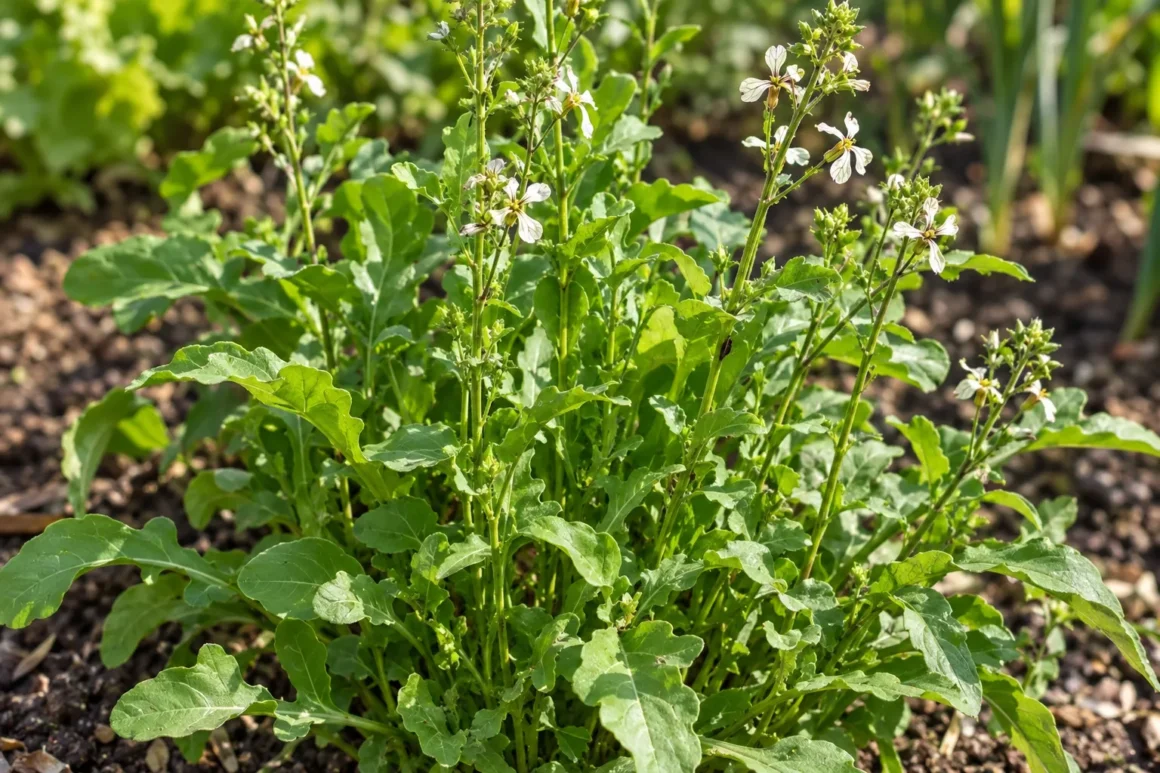
Annual · Vegetable
Eruca vesicaria subsp. sativa
Rocket, Arugula, Salad rocket
Also known as: Eruca sativa
A fast, peppery salad leaf ready in about four weeks, with pretty cream, purple-veined flowers that are also edible.
- Full sun, Partial shade
- 20–60 cm (8–24 in)
- 15–30 cm (6–12 in)
- H4 · Zone 8
- May–September
- Deciduous
Overview
Salad rocket, known as arugula in North America, is native to the Mediterranean and has been eaten since Roman times. It forms a loose rosette of lobed, deeply peppery leaves that can be picked as baby salad within about four weeks of sowing, and it regrows after cutting. If left, it bolts into tall stems of cream, purple-veined flowers, which are edible and attract bees and hoverflies. Rocket grows best in cool weather and tolerates light frost; heat and long days make it bolt quickly and taste fiery, so sow it in spring and late summer, or in light shade in summer. The slower, longer-lived wild rocket is a different plant, Diplotaxis tenuifolia.
At a Glance
Growing Conditions
Aspect Suitability
- East-facing
- South-facing
- West-facing
Soil Tolerance
- Clay
- Chalk
- Sandy
- Loam
- Neutral pH
- Alkaline
Foliage
Foliage interest: March–November
Seasonal Timeline
- Flowering May Jun Jul Aug Sep
- Foliage Mar Apr May Jun Jul Aug Sep Oct Nov
- Fruiting Jul Aug Sep
- Propagate Mar Apr May Aug Sep
- Sow / plant outside Mar Apr May Jun Jul Aug Sep
- Harvest Apr May Jun Jul Aug Sep Oct Nov
How to propagate
One way to grow more Rocket, Arugula, Salad rocket: the usual steps for each method.
From seed Mar–May, Aug–Sep Easy
You'll need: Seed compost, a seed tray or small pots, labels, and a clear lid or plastic bag.
- Fill a tray or pots with seed compost, level it and firm it gently.
- Water the compost and let it drain.
- Sow the seeds thinly on top. Cover them with a fine layer of compost or vermiculite about as deep as the seed is big; leave tiny seeds uncovered.
- Label them, cover with a clear lid or bag, and keep them somewhere bright but out of hot sun.
- Keep the compost just moist, and take the cover off once seedlings appear.
- How long
- Usually comes up in 1 to 3 weeks.
- It's worked when
- Seedlings with their first pair of leaves.
- Then
- When each has its first true leaves, prick them out into their own small pots, holding them by a leaf, never the stem. Harden them off for a week or two before planting out.
Sow thinly 1cm (0.5in) deep direct from about four weeks before your last frost, and every three weeks for a steady supply. Late-summer sowings give the best-flavoured, slowest-bolting leaves. Plants left to flower will self-seed.
Maintenance Calendar
- Mar Sow direct or in pots about four weeks before your last frost
- Apr Cover with fine insect mesh, as flea beetles riddle the leaves with holes
- Apr Cut leaves when 5-10cm (2-4in) long, leaving the base to regrow
- May Sow again every three weeks, in light shade as the weather warms
- Jun Water in dry weather, which slows bolting and keeps the flavour milder
- Aug Sow in late summer for the best autumn leaves
Garden Design
Works well in: Edible / Kitchen Garden
Sow in short rows, window boxes or pots near the kitchen, or scatter between slower crops. A few plants left to flower feed beneficial insects.
Companion planting: Lettuce, Peas, Beans, Spinach
Wildlife Value
- Bees
- Other pollinators
- Beneficial insects
Safety
Leaves and flowers are edible and not known to be toxic to people or pets.