

Perennial
Aquilegia vulgaris
Columbine
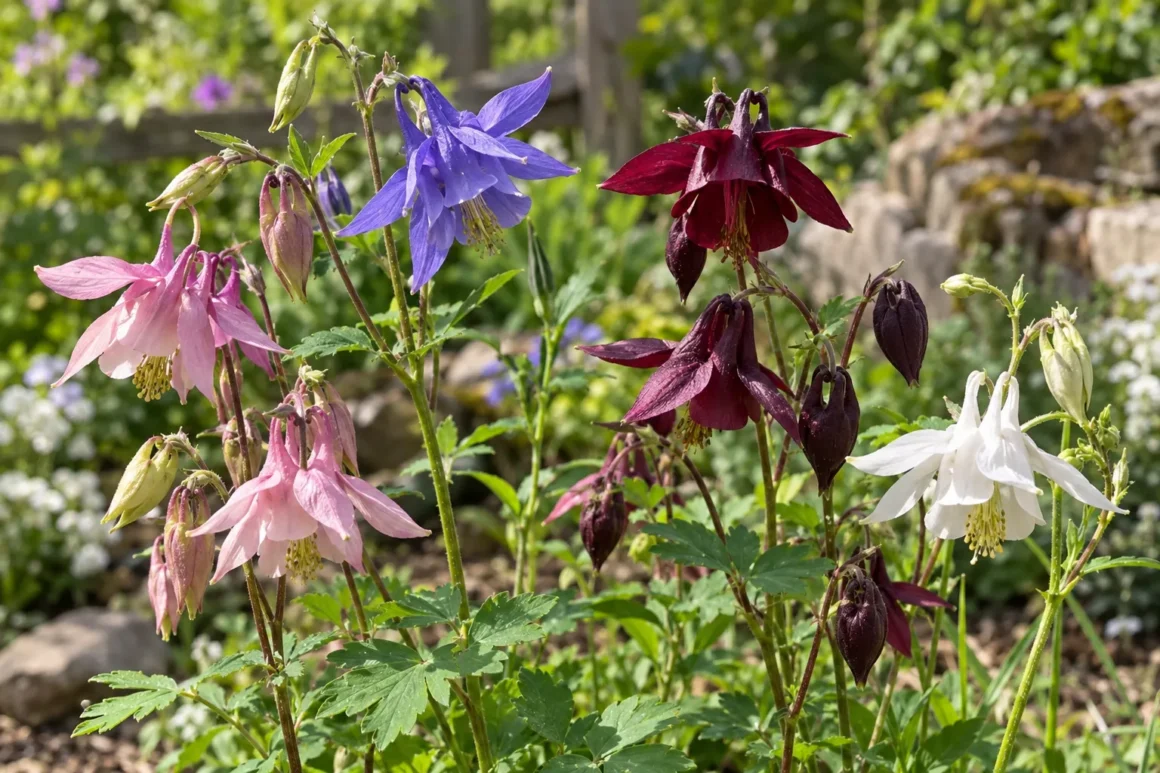
A native cottage-garden perennial with nodding, spurred flowers in blue, purple, pink and white in late spring.
- Full sun, Partial shade
- 50–90 cm (20–35 in)
- 30–45 cm (12–18 in)
- H7 · Zone 5
- May–June
- Deciduous
Overview
Columbine, also called granny’s bonnet, is a clump-forming perennial with ferny, blue-green leaves and nodding, spurred flowers on slender stems in late spring and early summer. The wild form is violet-blue, and garden forms come in purple, pink, white and bicolours, some double.
It grows in sun or partial shade in moist but well-drained soil and is ideal for cottage borders and woodland edges. Plants are short-lived but self-seed generously, and the seedlings cross freely, giving a changing mix of colours. Cut back after flowering if you don’t want seedlings or if the leaves get mildew.
Very hardy, to below −20°C (−4°F), USDA zones 3–8. It prefers cool to warm summers; in hot climates grow it in light shade. It has naturalised in parts of North America and south-eastern Australia.
At a Glance
Growing Conditions
Aspect Suitability
- East-facing
- South-facing
Site Tolerance
- Exposed sites
Soil Tolerance
- Clay
- Chalk
- Sandy
- Loam
- Acid
- Neutral pH
- Alkaline
Foliage
Foliage interest: March–October
Seasonal Timeline
- Flowering May Jun
- Foliage Mar Apr May Jun Jul Aug Sep Oct
- Propagate Apr Jul Aug Sep
How to propagate
One way to grow more Columbine:
From seed Jul–Sep Easy
- Needs light to germinate: press onto the surface, don't cover
- Needs a cold spell first: 4 weeks in the fridge in damp compost or sand (or sow outside in autumn and let winter do it)
- Germinates best at about 16°C
- Comes up in 21–56 days
- Prick out about 6 weeks after sowing
- Pot on about 12 weeks after sowing
- Stored seed needs a few weeks of cold.
You'll need: Seed tray, seed compost
- Sow fresh seed on the surface and cover lightly.
- Leave outside in a cool, shaded spot.
- Prick out into pots when large enough.
- Plant out the following spring.
- How long
- 10 minutes
- It's worked when
- high
- Then
- Flowers in its second year.
Sow fresh seed in late summer; it crosses freely, so seedlings rarely match the parent.
Maintenance Calendar
- May Check for aquilegia sawfly caterpillars stripping the leaves
- Jun Remove mildewed or downy-mildew-spotted leaves
- Jul Cut back after flowering unless saving seed
- Aug Sow fresh seed in trays or where it is to flower
Garden Design
Works well in: Cottage, Wildlife-friendly, Woodland / Shade
Let it drift between later perennials to fill the gap between bulbs and summer flowers.
Companion planting: Alliums, Ferns, Geraniums, Foxgloves
Wildlife Value
- Bees
- Other pollinators
- RHS Plants for Pollinators
Safety
Self-seeds freely and has naturalised in parts of North America and Victoria, Australia; remove seed heads where it may spread. The seeds and roots of plants in this family are commonly treated as harmful if eaten.