

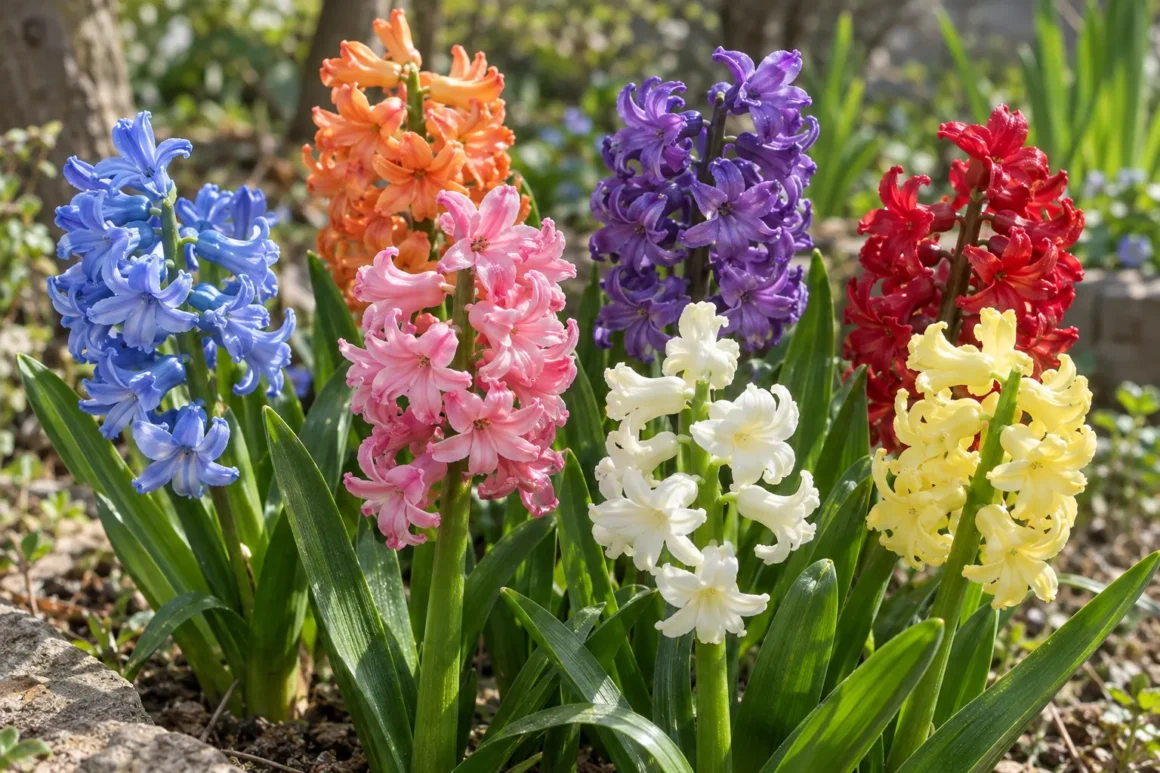
Bulb · Perennial
Hyacinthus orientalis
Hyacinth
A spring bulb with dense, intensely fragrant spikes of starry bells, for pots, borders and forcing indoors.
- Full sun, Partial shade
- 20–30 cm (8–12 in)
- 8–10 cm (3–4 in)
- H4 · Zone 8
- March–April
- Deciduous
Overview
Hyacinth, also called garden or Dutch hyacinth, is a spring bulb with strap-shaped leaves and a single dense spike of waxy, bell-shaped flowers with a powerful sweet scent. Garden varieties come in blue, purple, pink, red, white, apricot and yellow; the wild form is pale violet and much looser.
Plant bulbs in autumn about 10 cm (4 in) deep in sun or light shade, in any well-drained soil. They are excellent in pots near doors and paths, and specially prepared bulbs can be forced to flower indoors in winter. After the first year the spikes become looser and more natural-looking.
Hardy to about −10°C (14°F) in pots and colder in the ground, USDA zones 4–8. Bulbs need a cool winter; in mild-winter climates chill them in a refrigerator for 8–10 weeks and treat them as annuals. Handling bulbs can irritate skin, and all parts are harmful if eaten.
At a Glance
Growing Conditions
Aspect Suitability
- East-facing
- South-facing
- West-facing
Site Tolerance
- Exposed sites
Soil Tolerance
- Clay
- Chalk
- Sandy
- Loam
- Acid
- Neutral pH
- Alkaline
Foliage
Foliage interest: February–May
Seasonal Timeline
- Flowering Mar Apr
- Foliage Feb Mar Apr May
- Propagate Jun Jul
How to propagate
One way to grow more Hyacinth:
Offsets, runners and bulblets Jun–Jul Easy
You'll need: Hand fork, gloves, paper bags
- Lift bulbs once the leaves have died down.
- Separate any offsets.
- Dry and store somewhere cool and airy.
- Replant in autumn.
- How long
- 15 minutes
- It's worked when
- medium
- Then
- Grow small offsets on until flowering size.
Lift after the leaves die down and separate offsets; they take several years to reach flowering size.
Maintenance Calendar
- Apr Cut off faded flower spikes, leaving the leaves
- Apr Liquid feed with a high-potash fertiliser after flowering
- Jun Lift potted bulbs once leaves die and store dry
- Sep Pot up prepared bulbs for indoor flowers
- Oct Plant bulbs 10 cm (4 in) deep, wearing gloves
Garden Design
Works well in: Cottage
Plant in pots and near paths where the scent can be enjoyed.
Companion planting: Spring bulbs, Primroses, Pansies, Muscari
Wildlife Value
- Bees
Safety
- Toxic to humans
- Toxic to dogs
- Toxic to cats
- Toxic to horses
- Skin irritant
All parts, especially the bulbs, are harmful if eaten by people, dogs, cats and horses. The bulbs can cause skin irritation; wear gloves when planting.