

Houseplant · Perennial
Alocasia macrorrhizos
Giant taro
Giant upright elephant ears on stout stems, a tender aroid for summer patios and tropical gardens.
- Partial shade
- 1.5–2.5 m (5–8 ft)
- 1.5–2.5 m (5–8 ft)
- H1a · Zone 12
- Evergreen
Overview
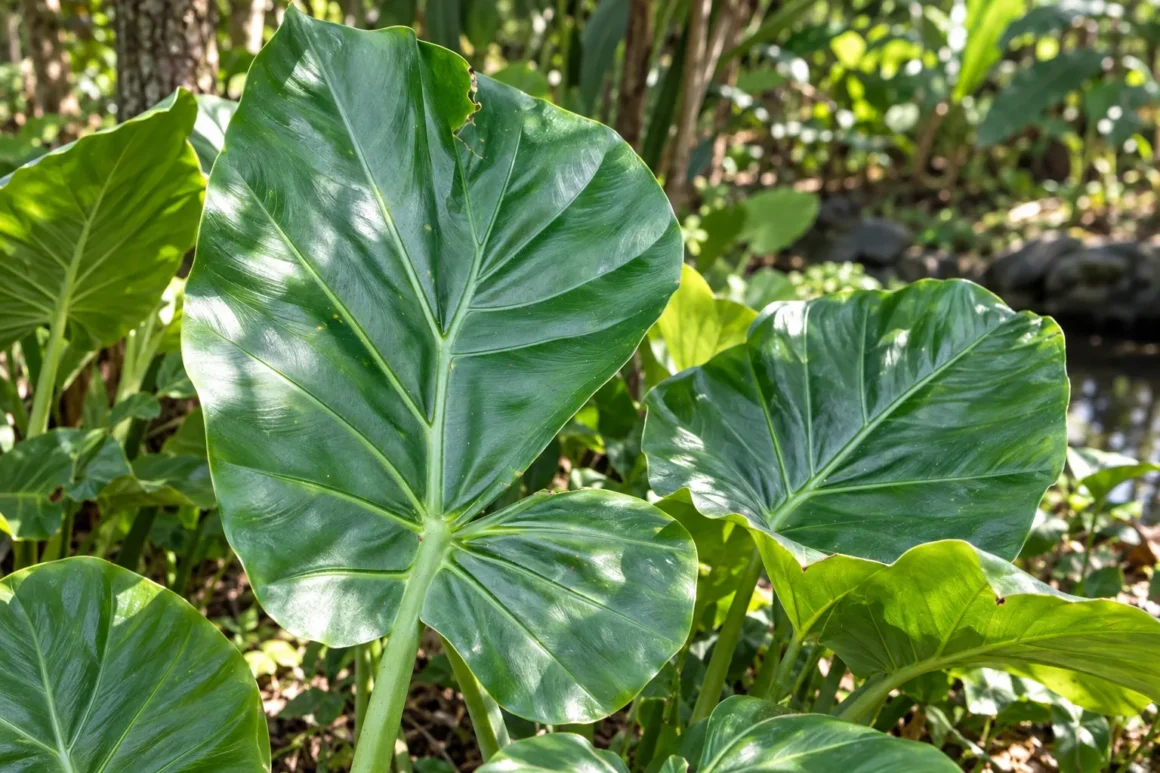
Giant taro, also called giant elephant ear or cunjevoi, carries glossy, arrow-shaped leaves held upright on thick stalks. Pale green spathes are produced on mature plants, sometimes followed by red berries.
It is fully tender and needs a minimum of about 15°C (59°F). It is hardy outdoors only in USDA zones 9–11, where it can reach 3.5–4.5 m (12–15 ft) and naturalises in wet tropical places. In cooler climates grow it in a large pot, 1.5–2.5 m (5–8 ft), and bring it in for winter.
Give bright, filtered light; full sun scorches the leaves. Water and feed generously in warm weather.
At a Glance
Growing Conditions
Aspect Suitability
- East-facing
- South-facing
- West-facing
Soil Tolerance
- Sandy
- Loam
- Acid
- Neutral pH
- Alkaline
Foliage
- Architectural foliage
Foliage interest: 12 months of the year
Seasonal Timeline
- Foliage 12 months of the year
- Propagate Apr May
How to propagate
One way to grow more Giant taro:
Division Apr Easy
You'll need: Spade or sharp knife
- Unpot the plant
- Separate offsets or cut the rhizome so each piece has a growing point
- Pot in free-draining compost in warmth
- How long
- 1 hour
- It's worked when
- high
- Then
- Water in well and keep moist while new roots form.
Divide rhizomes or pot offsets in spring warmth; fresh seed germinates at about 23°C (73°F).
Maintenance Calendar
- May Feed every two to three weeks from spring to autumn
- Jun Move outside to a sheltered shady spot once nights stay above 15°C (59°F)
- Jul Water freely and mist in dry weather
- Aug Check leaf undersides for spider mite
- Sep Bring indoors before nights fall below 15°C (59°F)
Garden Design
Works well in: Tropical / Exotic
One of the largest-leaved plants for a summer patio. Keep in a big pot so it can come inside before nights turn cold.
Companion planting: Bananas, Colocasias, Cannas, Gingers
Wildlife Value
- Shelter
Safety
- Toxic to humans
- Toxic to dogs
- Toxic to cats
- Toxic to horses
- Skin irritant
Toxic if eaten raw; all parts contain calcium oxalate. The sap irritates skin and eyes, so wear gloves. Keep away from pets and children.