

Perennial
Ensete ventricosum
Abyssinian banana
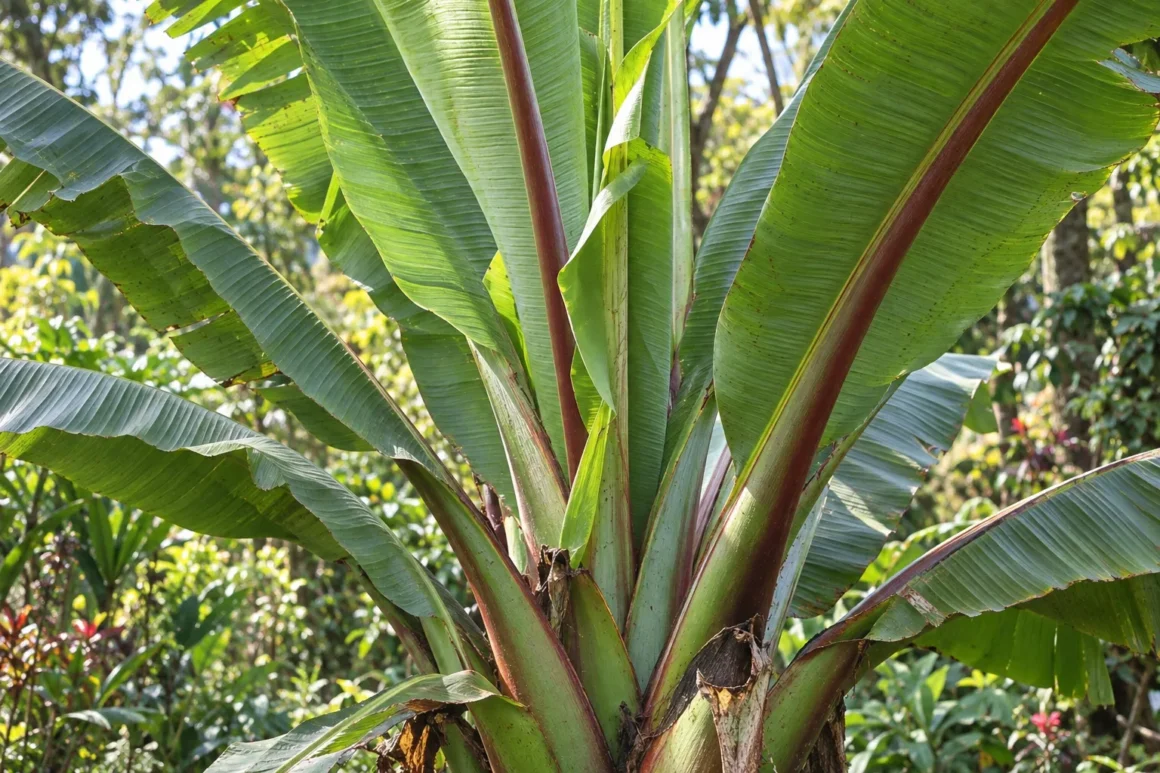
A fast-growing, single-stemmed ornamental banana with huge upright paddle leaves and a red midrib.
- Full sun, Partial shade
- 2.5–4 m (8–13 ft)
- 2.5–4 m (8–13 ft)
- H2 · Zone 10
- Evergreen
- RHS Award of Garden Merit
Overview
The Abyssinian or Ethiopian banana grows a stout false stem topped with paddle-shaped leaves up to 3 m (10 ft) long, each with a red midrib beneath. It rarely flowers in gardens; when it does, the stem dies after fruiting.
It tolerates light frost but not freezing, roughly to 1°C (34°F), and is hardy only in USDA zones 10–11. In the tropics and frost-free subtropics it reaches 6 m (20 ft); in cooler climates it is grown in a big pot or planted out for summer at 2.5–4 m (8–13 ft).
Give full sun, rich moist soil, regular feeding and strong shelter from wind.
At a Glance
Growing Conditions
Aspect Suitability
- South-facing
- West-facing
Soil Tolerance
- Sandy
- Loam
- Acid
- Neutral pH
- Alkaline
Foliage
- Architectural foliage
Foliage interest: 12 months of the year
Seasonal Timeline
- Foliage 12 months of the year
- Propagate Mar Apr
How to propagate
One way to grow more Abyssinian banana: the usual steps for each method.
From seed Mar–Apr Easy
- Needs light to germinate: press onto the surface, don't cover
- Soak in warm water for 48 hours before sowing
- Hard seed coat: nick it with nail clippers or rub it on sandpaper first
- Germinates best at about 25°C
- Comes up in 30–180 days
- Prick out about 4 weeks after sowing
- Pot on about 10 weeks after sowing
- Nick the hard coat and soak for two days. Keep at 25–30°C (77–86°F); seed may take months.
You'll need: Seed compost, a seed tray or small pots, labels, and a clear lid or plastic bag.
- Fill a tray or pots with seed compost, level it and firm it gently.
- Water the compost and let it drain.
- Sow the seeds thinly on top. Cover them with a fine layer of compost or vermiculite about as deep as the seed is big; leave tiny seeds uncovered.
- Label them, cover with a clear lid or bag, and keep them somewhere bright but out of hot sun.
- Keep the compost just moist, and take the cover off once seedlings appear.
- How long
- Usually comes up in 1 to 3 weeks.
- It's worked when
- Seedlings with their first pair of leaves.
- Then
- When each has its first true leaves, prick them out into their own small pots, holding them by a leaf, never the stem. Harden them off for a week or two before planting out.
Grown only from seed, as it does not sucker. Germination is slow and erratic; soak seed and give steady bottom heat.
Maintenance Calendar
- May Move or plant outside after your last frost
- Jun Feed every two weeks in summer
- Jul Water heavily in hot weather
- Sep Remove dead leaves at the base of the leaf blade
- Oct Bring under cover or wrap before the first frost
Garden Design
Works well in: Tropical / Exotic
A single-stemmed banana with upright paddle leaves and a red midrib. Plant in the warmest, most sheltered spot to keep leaves unshredded.
Companion planting: Cannas, Colocasias, Gingers, Tree ferns
Wildlife Value
- Shelter
Safety
Not known to be toxic. The pseudostem dies after flowering, which is rare in cultivation.