

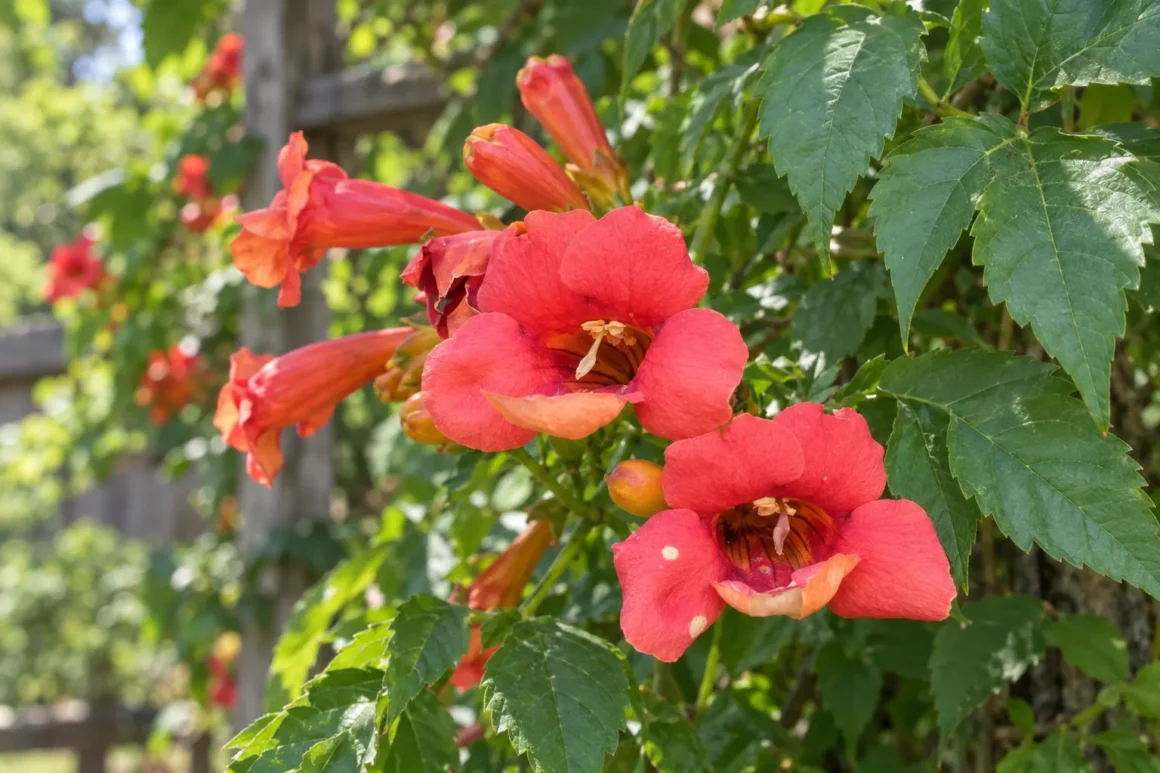
Climber
Campsis radicans
Trumpet vine
A vigorous self-clinging climber with clusters of orange-red trumpet flowers loved by hummingbirds in its native America.
- Full sun, Partial shade
- 9–12 m (30–39 ft)
- 1.5–3 m (5–10 ft)
- H5 · Zone 7
- July–September
- Deciduous
Overview
Trumpet vine or trumpet creeper is a vigorous deciduous climber that clings by aerial roots, with pinnate leaves and clusters of orange to scarlet trumpets on new growth from mid to late summer. Long bean-like seed pods follow.
It is hardy to about −15°C (5°F), USDA zones 4–10, but flowers best after long, hot summers; in cool, short summers it may flower sparsely. In its native eastern USA it is a hummingbird plant and can become invasive through suckers and seed.
Plant on a strong support in full sun and prune hard each late winter.
At a Glance
Growing Conditions
Aspect Suitability
- South-facing
- West-facing
Site Tolerance
- Drought
Soil Tolerance
- Clay
- Chalk
- Sandy
- Loam
- Acid
- Neutral pH
- Alkaline
Foliage
Foliage interest: May–October
Seasonal Timeline
- Flowering Jul Aug Sep
- Foliage May Jun Jul Aug Sep Oct
- Fruiting Sep Oct Nov
- Propagate Feb Mar Jul Aug
How to propagate
Ways to grow more Trumpet vine:
Root cuttings Jan Easy
You'll need: Sharp knife, gritty compost
- Lift a pencil-thick root while dormant
- Cut 5 cm (2 in) sections
- Insert upright in gritty compost in a cold frame
- How long
- 30 minutes
- It's worked when
- high
- Then
- Pot on when shoots appear.
Semi-ripe cuttings Jul Takes a little care
You'll need: Rooting hormone
- Take 10 cm (4 in) cuttings
- Dip in hormone
- Insert in gritty compost under cover
- How long
- 15 minutes
- It's worked when
- medium
- Then
- Overwinter in a cold frame.
Root cuttings or rooted suckers are easiest; semi-ripe cuttings in summer.
Maintenance Calendar
- Feb Cut last year's side shoots back to two or three buds
- May Remove suckers from the base
- Jun Tie in new leaders until self-clinging
- Sep Remove unwanted seed pods to limit self-seeding
Garden Design
Works well in: Tropical / Exotic, Wildlife-friendly
Clusters of orange-red trumpets on a self-clinging vine for a hot wall, pergola or fence. Needs long hot summers to flower well.
Companion planting: Wisteria, Grape vines, Cannas, Salvias
Wildlife Value
- Bees
- Birds
Safety
- Skin irritant
Low toxicity if eaten, but sap and leaves can cause skin redness and itching (it is nicknamed cow-itch); wear gloves when pruning. Aggressive: suckers and self-seeds, and aerial roots can damage paint and render.