

Perennial
Hibiscus moscheutos
Swamp rose mallow
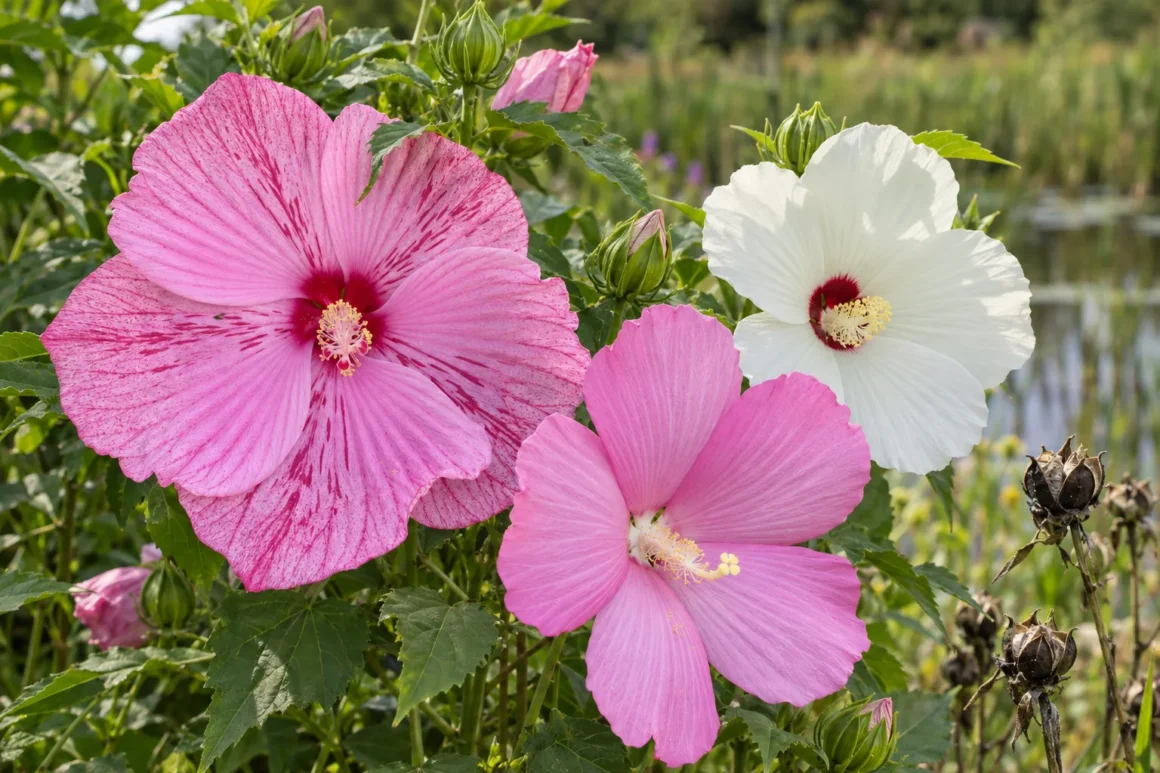
A hardy perennial hibiscus with flowers up to 20 cm (8 in) across in white, pink or red, often with a dark eye.
- Full sun
- 1.5–2.5 m (5–8 ft)
- 0.5–1 m (2–3 ft)
- H4 · Zone 8
- July–September
- Deciduous
Overview
Swamp rose mallow, also called hardy hibiscus or common rose mallow, is a herbaceous perennial native to wetlands of eastern North America. Tall stems carry broad leaves and huge saucer flowers up to 20 cm (8 in) across from mid summer to early autumn.
It is hardy to about −10°C (14°F) in the RHS rating, and to USDA zone 4 in its native range, but needs long hot summers to flower well; in cool climates it can be shy. It thrives in hot, humid summers and wet soil.
Grow in full sun in rich, moist to wet soil. It hosts many native moth and butterfly caterpillars in North America.
At a Glance
Growing Conditions
Aspect Suitability
- South-facing
- West-facing
Site Tolerance
- Wet soil
Soil Tolerance
- Clay
- Loam
- Acid
- Neutral pH
Foliage
Foliage interest: June–October
Seasonal Timeline
- Flowering Jul Aug Sep
- Foliage Jun Jul Aug Sep Oct
- Fruiting Sep Oct
- Propagate Mar Apr May Jun
How to propagate
Ways to grow more Swamp rose mallow:
Division May Easy
You'll need: Spade or sharp knife
- Lift or expose the clump as growth starts
- Cut into sections, each with roots and healthy buds
- Replant at the same depth in improved soil
- How long
- 1 hour
- It's worked when
- high
- Then
- Water in well and keep moist while new roots form.
Softwood cuttings May Takes a little care
You'll need: Sharp knife, gritty compost
- Take 10 cm (4 in) young shoots
- Remove lower leaves
- Root in a propagator
- How long
- 15 minutes
- It's worked when
- medium
- Then
- Pot on and plant out once established.
Sow in warmth in spring; divide or take softwood cuttings as shoots appear.
Maintenance Calendar
- May Mark the crown and be patient, as shoots appear late
- Jun Feed and mulch
- Jul Never let the soil dry out
- Aug Check for sawfly larvae and aphids
- Nov Cut stems to 30–60 cm (12–24 in), leaving them for nesting bees
Garden Design
Works well in: Tropical / Exotic, Wildlife-friendly
Dinner-plate flowers on a hardy perennial give a tropical look in cold gardens. Shoots appear very late in spring, so mark the spot.
Companion planting: Cannas, Grasses, Eupatorium, Hedychiums
Wildlife Value
- Bees
- Butterflies
- Birds
Safety
Not known to be toxic.