

Tree
Betula pendula
Silver birch
Graceful, fast-growing tree with white bark, weeping twigs and yellow autumn leaves; a superb wildlife tree.
- Full sun, Partial shade
- 15–25 m (49–82 ft)
- 5–1 m (16–33 ft)
- H7 · Zone 5
- Deciduous
Overview
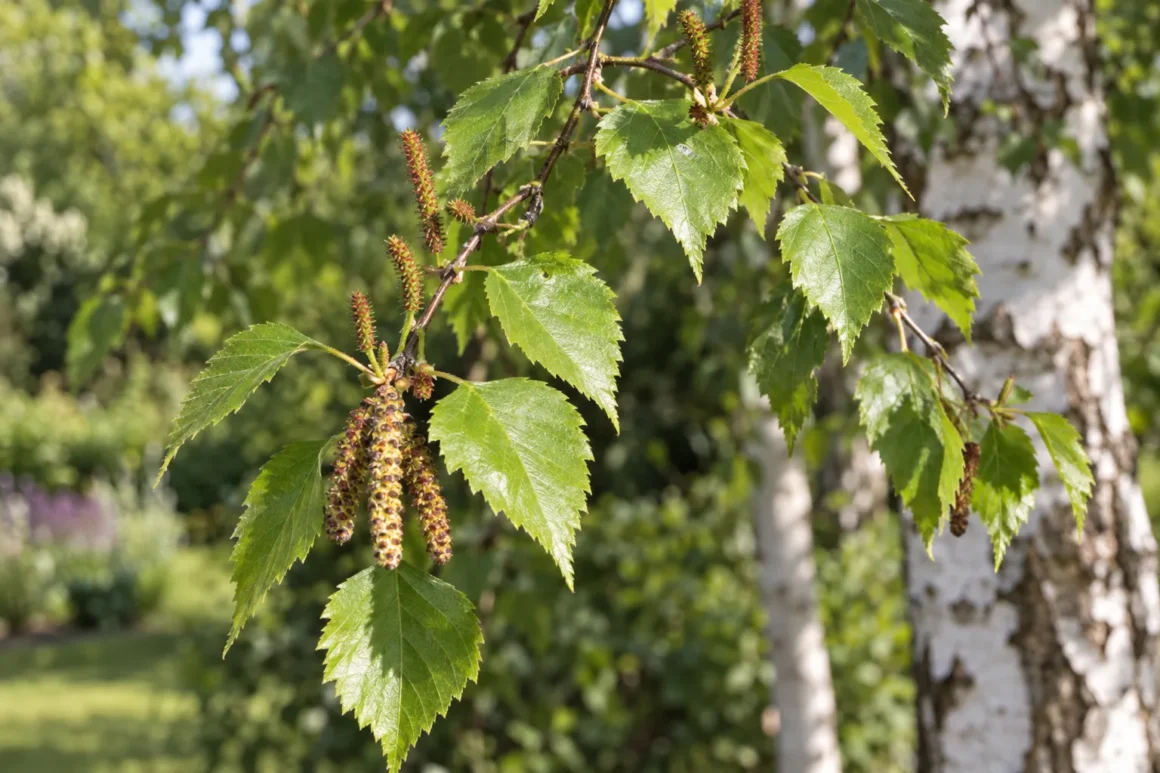
Silver birch is a fast-growing deciduous tree native to Europe and Asia, known for its white, peeling bark, weeping twig tips and small diamond-shaped leaves that turn butter-yellow in autumn. Catkins appear in spring.
It is hardy to below −25°C (−13°F), USDA zones 2–7, and grows in poor, light soils in sun. It does poorly in hot, humid summers: in warm climates it is short-lived and very prone to the bronze birch borer, so it is not recommended where summers regularly exceed about 24°C (75°F) for long periods.
Its light shade allows planting beneath, and it supports many insects and birds.
At a Glance
Growing Conditions
Aspect Suitability
- North-facing
- East-facing
- South-facing
- West-facing
Site Tolerance
- Exposed sites
- Wind
- Drought
Soil Tolerance
- Clay
- Chalk
- Sandy
- Loam
- Acid
- Neutral pH
- Alkaline
Foliage
- Autumn colour
Foliage interest: April–October
Seasonal Timeline
- Foliage Apr May Jun Jul Aug Sep Oct
- Propagate Sep Oct
How to propagate
One way to grow more Silver birch: the usual steps for each method.
From seed Sep–Oct Easy
You'll need: Seed compost, a seed tray or small pots, labels, and a clear lid or plastic bag.
- Fill a tray or pots with seed compost, level it and firm it gently.
- Water the compost and let it drain.
- Sow the seeds thinly on top. Cover them with a fine layer of compost or vermiculite about as deep as the seed is big; leave tiny seeds uncovered.
- Label them, cover with a clear lid or bag, and keep them somewhere bright but out of hot sun.
- Keep the compost just moist, and take the cover off once seedlings appear.
- How long
- Usually comes up in 1 to 3 weeks.
- It's worked when
- Seedlings with their first pair of leaves.
- Then
- When each has its first true leaves, prick them out into their own small pots, holding them by a leaf, never the stem. Harden them off for a week or two before planting out.
Sow fresh seed on the surface; it needs light to germinate.
Garden Design
Works well in: Modern / Contemporary, Wildlife-friendly, Woodland / Shade
Light canopy and white bark; plant in groups of three for a woodland feel.
Companion planting: Bulbs, Ferns, Grasses
Wildlife Value
- Moths
- Birds
- Beneficial insects
- Shelter
- Food source
- Caterpillar food plant
- Nesting cover for birds
- Food
Caterpillars it feeds: Buff-tip, Pebble hook-tip, Kentish glory
Food for birds: January, September, October, November, December