

Fruit · Shrub · Tree
Corylus avellana
Hazel
Also known as: Corylus sylvestris
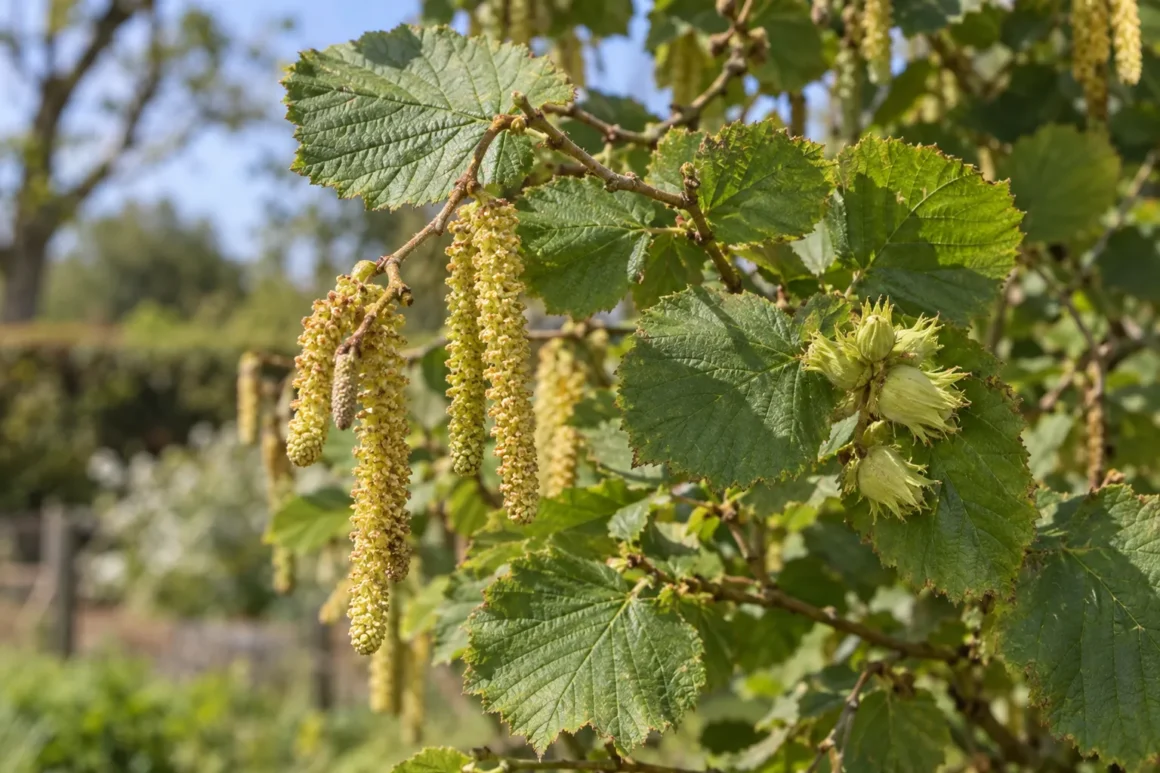
Multi-stemmed native shrub with dangling yellow catkins in late winter and edible hazelnuts in autumn.
- Full sun, Partial shade
- 4–6 m (13–20 ft)
- 3–5 m (10–16 ft)
- H6 · Zone 6
- January–March
- Deciduous
Overview
Hazel, also called cobnut or European filbert, is a multi-stemmed deciduous shrub or small tree native to Europe and western Asia. Yellow lamb's-tail catkins hang from bare twigs in late winter, followed by rounded leaves that turn yellow in autumn and clusters of edible nuts in husks.
It is hardy to about −20°C (−4°F), USDA zones 4–8, and grows in most well-drained soils, especially chalk and loam, in sun or part shade. In eastern North America it is badly affected by eastern filbert blight, so resistant varieties are grown there instead.
Plant two or more for a good crop, and coppice old stems to keep it productive.
At a Glance
Growing Conditions
Aspect Suitability
- North-facing
- East-facing
- South-facing
- West-facing
Site Tolerance
- Exposed sites
- Wind
- Coastal
Soil Tolerance
- Clay
- Chalk
- Sandy
- Loam
- Acid
- Neutral pH
- Alkaline
Foliage
- Autumn colour
Foliage interest: April–October
Seasonal Timeline
- Flowering Jan Feb Mar
- Foliage Apr May Jun Jul Aug Sep Oct
- Fruiting Aug Sep Oct
- Propagate Oct Nov
- Sow / plant outside Oct Nov
- Harvest Aug Sep Oct
How to propagate
Ways to grow more Hazel:
From seed Oct–Nov Takes a little care
- Sow about 20 mm deep
- Needs a cold spell first: 12 weeks in the fridge in damp compost or sand (or sow outside in autumn and let winter do it)
- Germinates best at about 5°C
- Comes up in 150–180 days
- Pot on about 30 weeks after sowing
- The wild species comes reasonably true from seed, but it's slow; layering or taking rooted suckers is quicker and keeps named forms true.
You'll need: Freshly picked hazelnuts, deep pots or a prepared seed bed, and wire mesh to keep off squirrels and mice.
- Collect ripe brown hazelnuts as soon as they drop in September or October, before squirrels take them all.
- Sow straightaway, 2 to 3 nuts to a deep pot, or in rows in a sheltered seed bed outdoors.
- Cover with about 2cm of soil or grit and firm gently.
- Protect the sown area with wire mesh or a cage to stop rodents digging up the nuts.
- Leave the pots or bed outside all winter so the nuts get the cold spell they need.
- Watch for shoots pushing through the following spring.
- How long
- Shoots usually appear the following spring, after a winter outdoors.
- It's worked when
- A sturdy shoot with a pair of rounded, toothed leaves pushes up through the soil.
- Then
- Grow seedlings on in pots for their first year or two, then plant out into their final position once well rooted.
Layering Mar–Apr, Oct–Nov Easy
You'll need: A low, flexible one-year-old stem, a trowel, and a peg or large stone to hold it down.
- Choose a supple, low-growing stem from the current or previous year's growth.
- Bend it down to the soil and nick or scrape the bark lightly on the underside where it will touch the ground.
- Dig a shallow trench about 10cm deep, bury that wounded section, and peg it firmly in place, leaving the tip upright above the soil.
- Water well and keep the area weeded and moist through the following seasons.
- After 12 to 18 months, gently tug the layer to check for resistance, which shows roots have formed.
- Sever the rooted layer from the parent plant with secateurs and lift it carefully.
- How long
- Takes around a year to eighteen months to root well.
- It's worked when
- The buried stem resists a gentle tug and the tip shows fresh new growth.
- Then
- Pot up or transplant the new rooted hazel straightaway, water in well, and keep it moist through its first season.
Division Feb–Mar, Oct–Nov Easy
You'll need: A spade, sharp secateurs, and an established hazel throwing up rooted suckers around its base.
- In autumn or late winter, look for a rooted sucker growing away from the main stool.
- Dig carefully around it to expose its own roots without disturbing the parent plant too much.
- Sever the connection to the parent with secateurs or a sharp spade cut.
- Lift the sucker with as much of its own root system intact as possible.
- Replant immediately at the same depth in its new spot and firm in well.
- How long
- Already rooted, so it establishes within the same season with little wait.
- It's worked when
- The transplanted sucker stands firm and pushes out new leaves the following spring.
- Then
- Water in dry spells during the first year and mulch around the base to help it settle in.
Layer a low branch, or detach rooted suckers in autumn; sown nuts need a winter outdoors.
Garden Design
Works well in: Edible / Kitchen Garden, Wildlife-friendly, Woodland / Shade
Coppice on rotation for bean poles and pea sticks; catkins brighten late winter.
Companion planting: Bluebells, Primroses, Woodland bulbs
Wildlife Value
- Bees
- Moths
- Birds
- Beneficial insects
- Shelter
- Food source
- RHS Plants for Pollinators
- Caterpillar food plant
- Nesting cover for birds
- Food
Caterpillars it feeds: Nut-tree tussock, Large emerald, Barred umber
Food for birds: August–October