

Shrub · Tree
Griselinia littoralis
New Zealand broadleaf
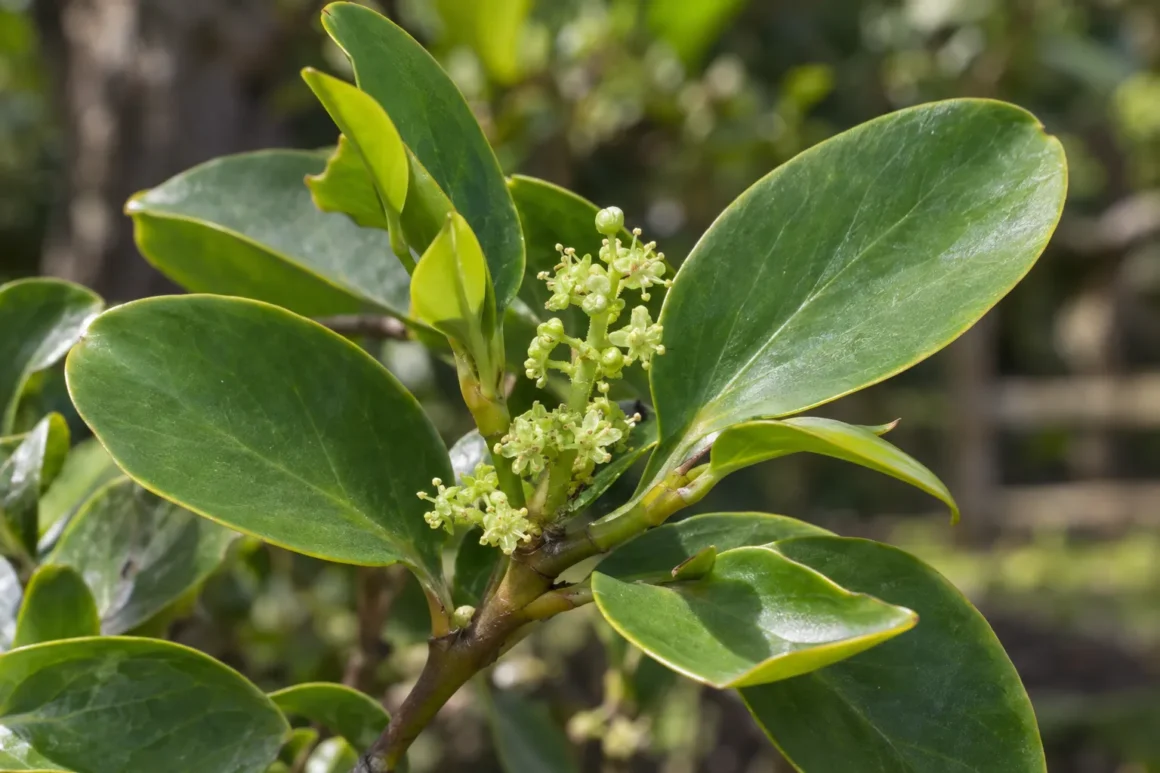
Fast, dense evergreen with glossy apple-green leaves; one of the best salt-tolerant hedges for exposed coasts.
- Full sun, Partial shade
- 1.5–8 m (5–26 ft)
- 1.5–4 m (5–13 ft)
- H5 · Zone 7
- Evergreen
- RHS Award of Garden Merit
Overview
New Zealand broadleaf, also called kapuka, is a fast-growing evergreen shrub or small tree from New Zealand, where it grows from the coast up into the mountains. Thick, glossy, apple-green leaves shrug off salt spray, so it is a favourite windbreak hedge in seaside gardens. The tiny yellow-green flowers are hardly noticed, and purple berries appear only on female plants grown near a male.
It is hardy to about −15°C (5°F), USDA zones 7–10, and grows in any well-drained soil, including clay that does not sit wet. It thrives in mild, moist maritime climates; in hot, humid summers or very dry inland gardens it struggles, and it can be scorched by hard frosts in cold, exposed inland sites. Left unclipped it reaches 4–8 m (13–26 ft), but it takes trimming well.
At a Glance
Growing Conditions
Aspect Suitability
- East-facing
- South-facing
- West-facing
Site Tolerance
- Exposed sites
- Wind
- Coastal
- Salt
Soil Tolerance
- Clay
- Chalk
- Sandy
- Loam
- Acid
- Neutral pH
- Alkaline
Foliage
Foliage interest: 12 months of the year
Seasonal Timeline
- Foliage 12 months of the year
- Propagate Jul Aug Sep
How to propagate
One way to grow more New Zealand broadleaf: the usual steps for each method.
Semi-ripe cuttings Jul–Sep Takes a little care
You'll need: Clean, sharp secateurs, small pots, gritty compost, and rooting powder if you have it.
- Choose this year's shoots that are firm at the base but still soft at the tip, and cut pieces 10 to 15 cm long.
- Trim just below a leaf joint and take off the lower leaves; pinch out the soft tip.
- Dip the cut end in rooting powder if you have some.
- Push them into pots of gritty compost, water them in and cover with a clear bag.
- Keep them in a cold frame, greenhouse or bright windowsill out of direct sun.
- How long
- Roots in about 6 to 10 weeks.
- It's worked when
- New leaves, and the cutting resists when you tug it gently.
- Then
- Keep them somewhere cool and frost-free over winter, and pot them up separately in spring.
Semi-ripe cuttings root readily with a little bottom heat.
Garden Design
Works well in: Cottage, Modern / Contemporary
A bright, clean-looking evergreen hedge or screen that sets off darker plants in front.
Companion planting: Grasses, Hydrangeas, Escallonias
Wildlife Value
- Shelter
- Nesting cover for birds