

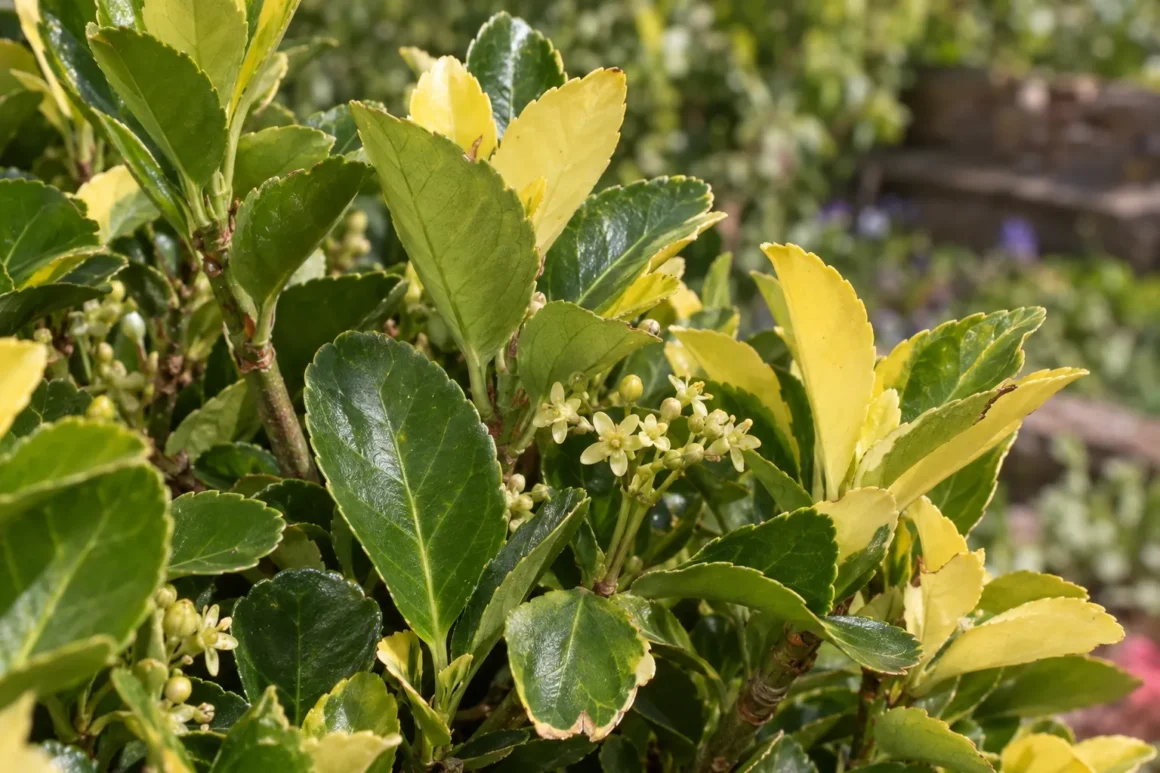
Shrub
Euonymus japonicus
Japanese spindle
Also known as: Euonymus pulchellus
Glossy, dense evergreen that thrives in sea air; a classic clipped seaside hedge and topiary shrub.
- Full sun, Partial shade
- 1–4 m (3–13 ft)
- 1–2.5 m (3–8 ft)
- H5 · Zone 7
- Evergreen
Overview
Japanese spindle is a dense, bushy evergreen shrub from the coasts of Japan, Korea and China, with glossy, dark green, finely toothed leaves. The small greenish flowers are inconspicuous and the pink and orange fruits are seldom produced in gardens. It is grown for its shiny foliage and its outstanding tolerance of salt spray.
It is hardy to about −15°C (5°F), USDA zones 6–9, and grows in clay, loam, sand or chalk. It suits temperate and warm-temperate climates and handles hot, dry summers once established; in humid climates scale insects and mildew can disfigure it. It reaches 2.5–4 m (8–13 ft) unclipped but is usually kept much smaller.
At a Glance
Growing Conditions
Aspect Suitability
- North-facing
- East-facing
- South-facing
- West-facing
Site Tolerance
- Exposed sites
- Wind
- Coastal
- Salt
- Drought
Soil Tolerance
- Clay
- Chalk
- Sandy
- Loam
- Acid
- Neutral pH
- Alkaline
Foliage
Foliage interest: 12 months of the year
Seasonal Timeline
- Foliage 12 months of the year
- Propagate Jul Aug
How to propagate
One way to grow more Japanese spindle: the usual steps for each method.
Semi-ripe cuttings Jul–Aug Takes a little care
You'll need: Clean, sharp secateurs, small pots, gritty compost, and rooting powder if you have it.
- Choose this year's shoots that are firm at the base but still soft at the tip, and cut pieces 10 to 15 cm long.
- Trim just below a leaf joint and take off the lower leaves; pinch out the soft tip.
- Dip the cut end in rooting powder if you have some.
- Push them into pots of gritty compost, water them in and cover with a clear bag.
- Keep them in a cold frame, greenhouse or bright windowsill out of direct sun.
- How long
- Roots in about 6 to 10 weeks.
- It's worked when
- New leaves, and the cutting resists when you tug it gently.
- Then
- Keep them somewhere cool and frost-free over winter, and pot them up separately in spring.
Semi-ripe cuttings in summer.
Garden Design
Works well in: Japanese / Zen, Modern / Contemporary
Clips into crisp hedges, balls and cones that stay glossy by the sea.
Companion planting: Grasses, Hebes, Pittosporums
Wildlife Value
- Shelter