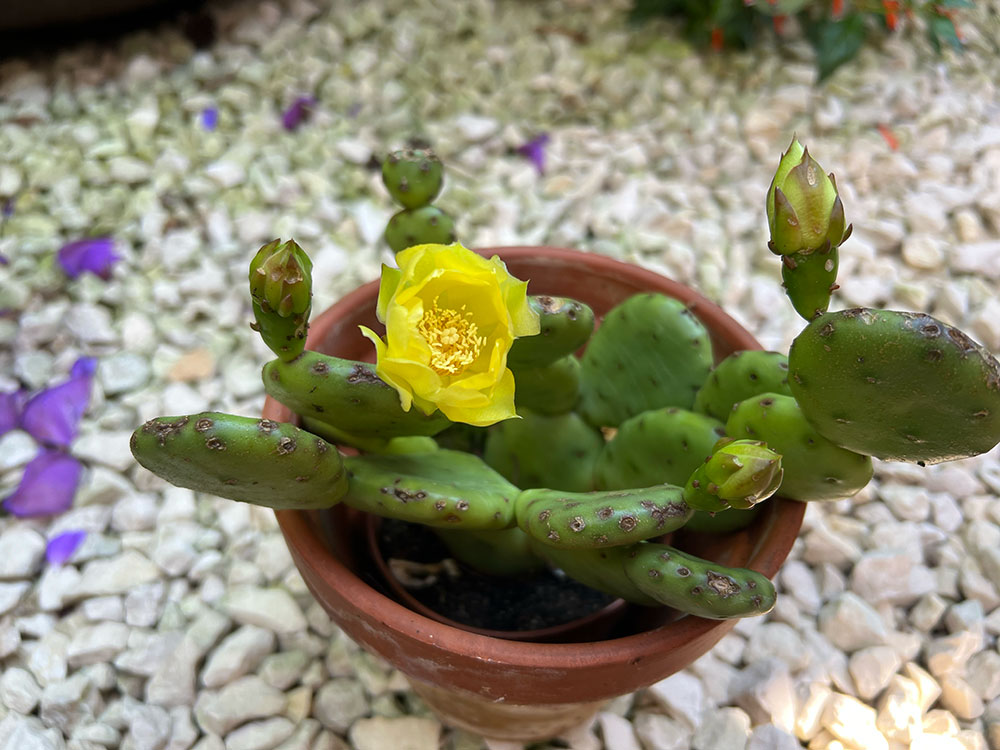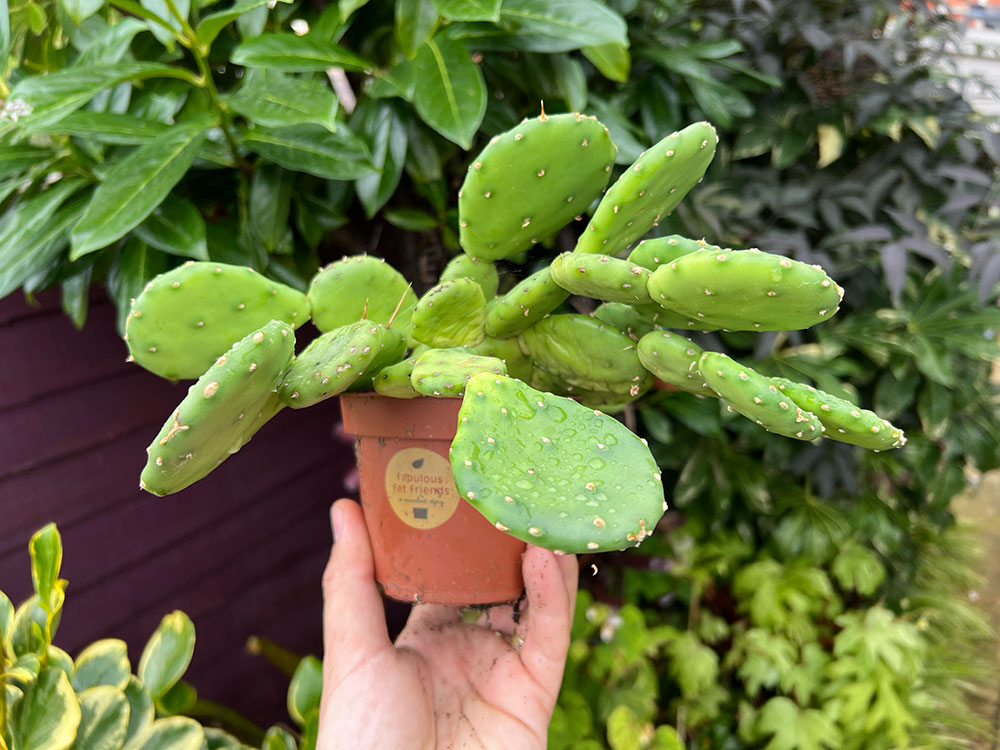

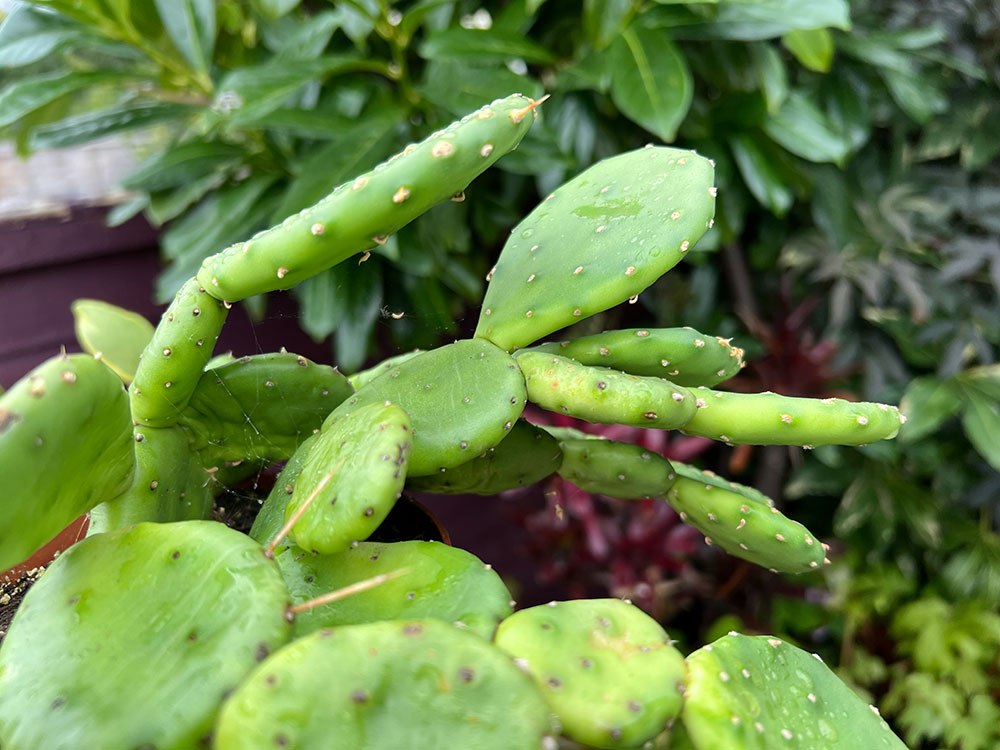
Opuntia humifusa, commonly called the Eastern Prickly Pear, is native to North America, where it grows in sandy prairies, rocky slopes, and coastal dunes. Its flattened green pads form low-spreading clusters that store water and resist desiccation. In early summer, it produces brilliant yellow flowers, often with orange centres, followed by edible red fruits. Its ability to withstand severe cold, poor soils, and drought makes it one of the hardiest cacti for temperate gardens.
| KEY PLANT INFORMATION | |
|---|---|
| Family: | Cactaceae |
| Plant Type: | Hardy prickly pear cactus |
| Plant Colours: | Green pads, yellow flowers |
| Flowering period: | Late spring to summer |
| Fragrance: | Light, mildly sweet |
| Mature Height: | 10–40 cm (4–16 in) |
| Light Requirements: | Full sun only |
| Water Requirements: | Low; drought tolerant |
| Cold Hardiness: | –35 °C (–31 °F) |
| Difficulty: | Easy |

Plant Type
Cactus
This species is a low-growing, clump-forming cactus composed of flattened pads called cladodes. Each pad is technically a modified stem capable of photosynthesis, water storage, and producing new pads or flowers. As a true succulent, it thrives in dry, nutrient-poor conditions and has strong drought tolerance. It’s ideal for rock gardens, xeric borders, coastal sites, and any spot requiring an architectural, low-maintenance plant that can survive extreme cold.

Mature Height
10–44 cm (0.3–1.3 ft)
Opuntia humifusa typically grows 0.1–0.4 m (0.3–1.3 ft) tall, forming wide, ground-hugging mats rather than vertical height. In nutrient-rich, sunny positions, spreads can exceed several metres across over many years. Its low stature helps reduce moisture loss and prevents wind damage in exposed habitats. The plant’s footprint expands gradually as new pads form and root, creating an ever-widening, heat-absorbing cushion.

Light Requirements
Full sun
This prickly pear thrives in full sun, requiring at least six hours of direct sunlight daily for optimal growth, flowering, and pad colouring. In deep shade it becomes weak, stretched, and more prone to rot. Full exposure ensures firm, compact pads and vibrant yellow blooms. Gardeners in cooler climates should provide the warmest, sunniest microclimate available—south-facing gravel beds, slopes, and raised planters are ideal.

Water Requirements
Drought tolerant
Opuntia humifusa is highly drought tolerant, preferring dry, well-drained soils. Overwatering is the most common cause of failure. During summer, a light soak every few weeks is sufficient, especially in sandy soils. In wetter climates or clay soils, avoid watering entirely unless prolonged drought occurs. In winter, the plant naturally shrivels to reduce surface area and moisture content—this is normal and enhances cold hardiness.

Cold Hardiness
35 °C (–31 °F)
One of the hardiest cacti available, Opuntia humifusa tolerates temperatures down to –35 °C (–31 °F). Winter survival relies on excellent drainage; waterlogged soil is far more dangerous than low temperatures. Pads may deflate in freezing weather as the plant reduces internal water to avoid cell damage, a natural adaptation. In rainy winters, raised beds, gravel mulches, and sloped planting sites greatly increase resilience.

Propagation tips
Propagation is extremely easy and can be done via pad cuttings or seed. For cuttings, remove a healthy pad, allow the cut end to callus for 3–7 days, then place it upright in gritty, fast-draining soil. Water sparingly until roots form. Seeds require cold stratification followed by warmth to germinate, but growth is slower. Once established, rooted pads spread steadily and need minimal care.