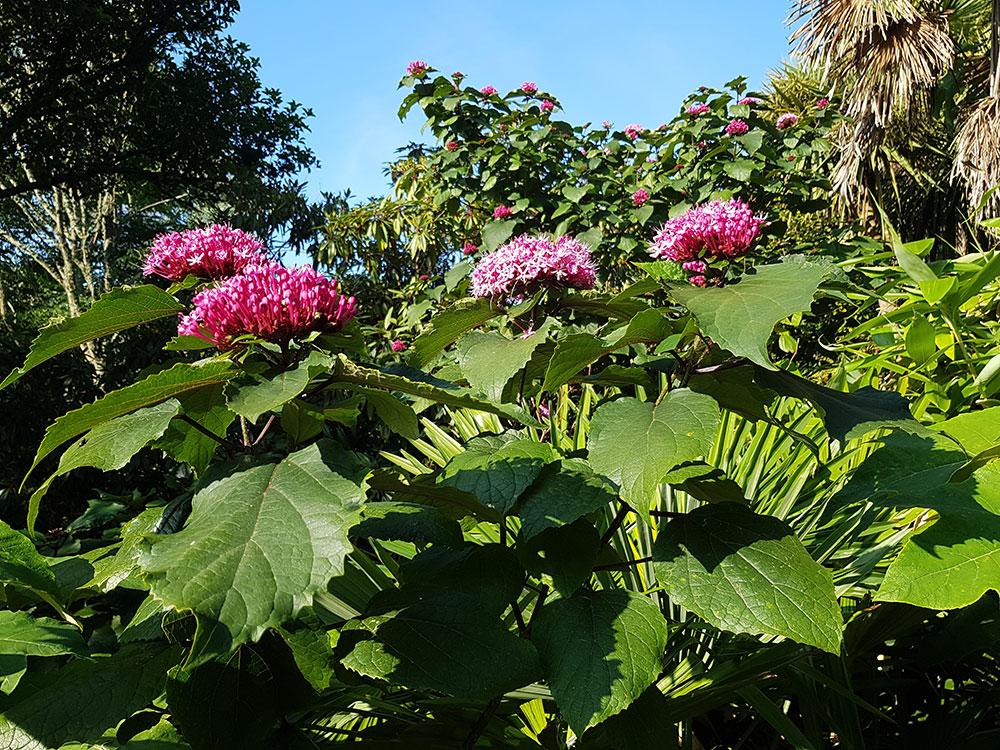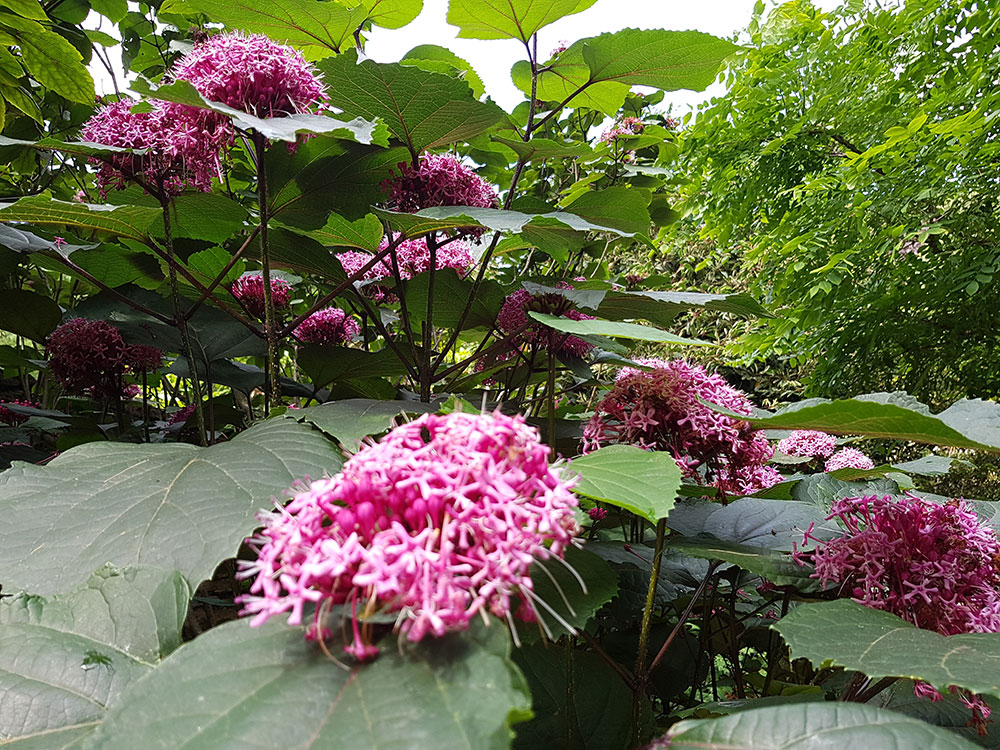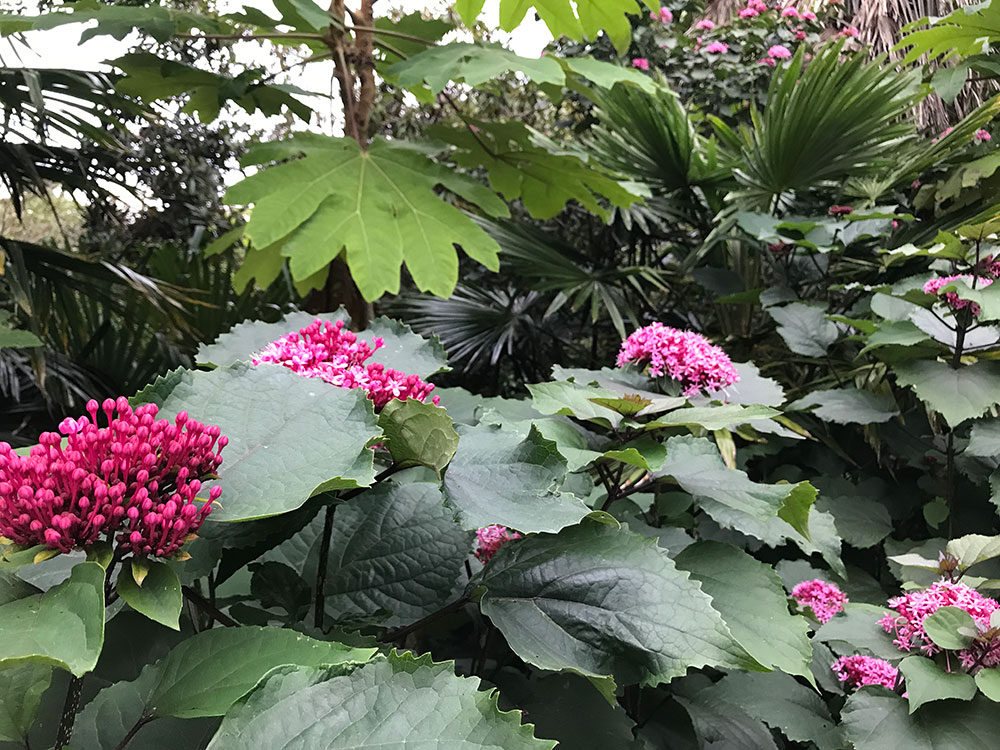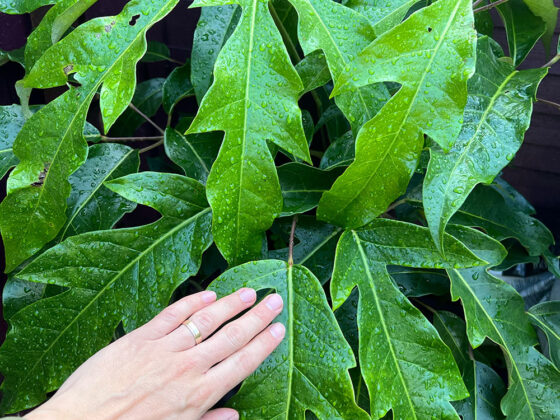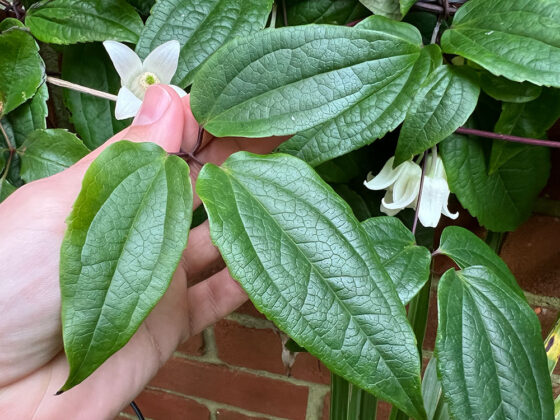

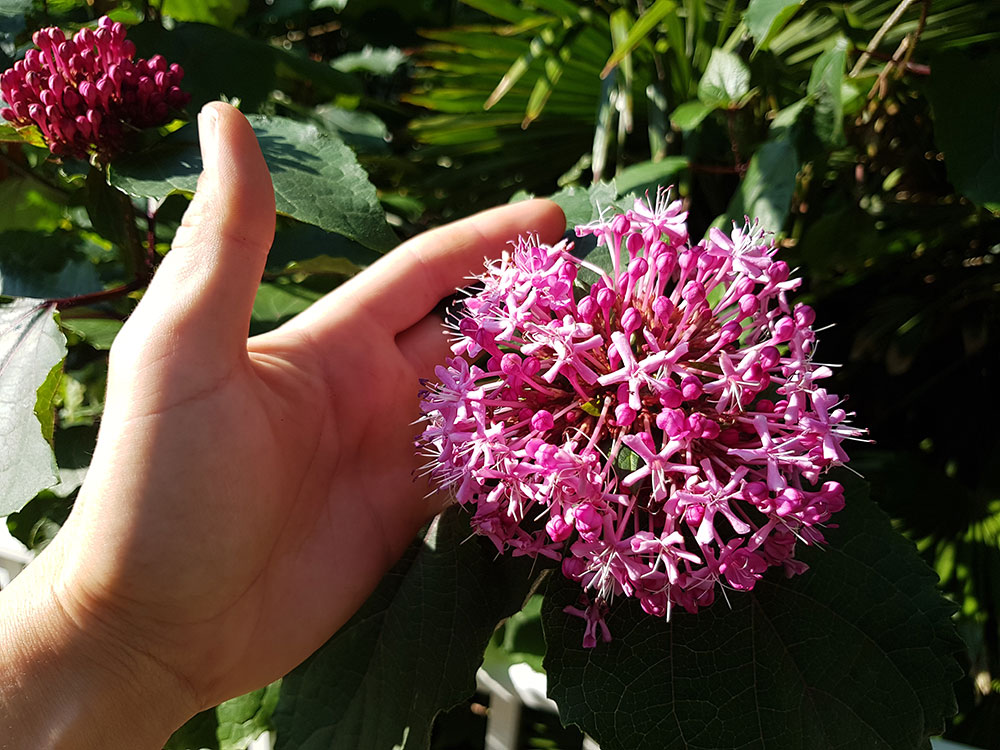
Clerodendrum bungei, often called the Rose Glory Bower, is a deciduous shrub native to China, thriving in warm temperate to subtropical regions. It’s known for its large, heart-shaped leaves with a slightly coarse texture and striking domed clusters of deep pink flowers that appear in late summer. The blooms carry a rich, sweet, musky fragrance, drawing pollinators from afar. The plant spreads via underground suckers, giving it a naturalised, thicket-forming behaviour in suitable conditions.
| KEY PLANT INFORMATION | |
|---|---|
| Family: | Lamiaceae |
| Plant Type: | Deciduous shrub perennial |
| Plant Colours: | Pink-rose flower clusters, green leaves |
| Flowering period: | Late summer–autumn |
| Fragrance: | Strong, sweet, musky |
| Mature Height: | 1.5–2.5 m |
| Light Requirements: | Full sun – partial shade |
| Water Requirements: | Regular moisture, well-drained |
| Cold Hardiness: | –10°C / 14°F |
| Difficulty: | Easy |

Plant Type
Deciduous perennial shrub
This species is a suckering, deciduous shrub that behaves almost herbaceously in colder climates, dying back partially or fully before regrowing in spring. It’s vigorous and can quickly form a substantial clump, making it excellent for bold, exotic or jungle-style planting schemes. Gardeners should be aware of its tendency to spread, but this also makes it resilient, long-lived and able to recover from harsh winters. Its shrub-like architecture allows it to fill space and provide lush seasonal structure.

Mature Height
1.5–2.5 m
Clerodendrum bungei typically reaches 1.5–2.5 m in height, though in warmer microclimates it can approach 3 m. Its height depends heavily on how much top growth survives winter; in cold areas it often regenerates from the base, producing strong, fast-growing stems each year. The plant naturally forms dense, upright growth with large leaves, giving excellent late-season height in tropical-style borders. Because it suckers freely, it can expand laterally as well as vertically, creating a bold, leafy thicket.

Light Requirements
Full sun – Partial shade
This shrub is adaptable but performs best in full sun to light shade. More sun encourages stronger flowering, tighter growth, and richer leaf colour. In partial shade, it remains lush and leafy but may flower slightly less. It thrives particularly well in sheltered, warm microclimates such as against walls or among other tall plants. Excessive shade can cause legginess or reduced bloom production. Overall, its flexible light tolerance makes it easy to position in mixed exotic borders.

Water Requirements
Moderate
Clerodendrum bungei prefers evenly moist, well-drained soil with plenty of organic matter. It thrives in conditions where moisture is consistent but not waterlogged, benefiting from mulching to retain soil moisture in summer. Once established, it shows moderate drought tolerance, although prolonged dryness can reduce flowering and leaf size. Because it produces substantial foliage, maintaining adequate water helps sustain strong growth. Regular watering in the establishment phase and during hot spells will ensure the best floral display.

Cold Hardiness
–10 °C (14 °F)
Hardy to around –10 °C (14 °F), Clerodendrum bungei is reasonably frost-tolerant for a plant with such a tropical appearance. In colder regions, top growth often dies back, but the root system typically survives and resprouts vigorously in spring. Mulching helps protect the crown during severe winters. Its suckering nature contributes to its resilience, as underground stems remain insulated. While prolonged deep freezes may reduce flowering the following year, the plant usually recovers strongly with warm weather.

Propagation tips
Propagation is straightforward thanks to its naturally suckering behaviour. The easiest method is lifting and dividing rooted suckers in spring or autumn. These establish quickly once replanted. Softwood cuttings taken in early summer also root readily with warmth and humidity. Semi-ripe cuttings can be taken later in the season. For controlled spread, consider growing in a large root barrier or periodically removing excess shoots, many of which make perfect propagation material for new plants or sharing.