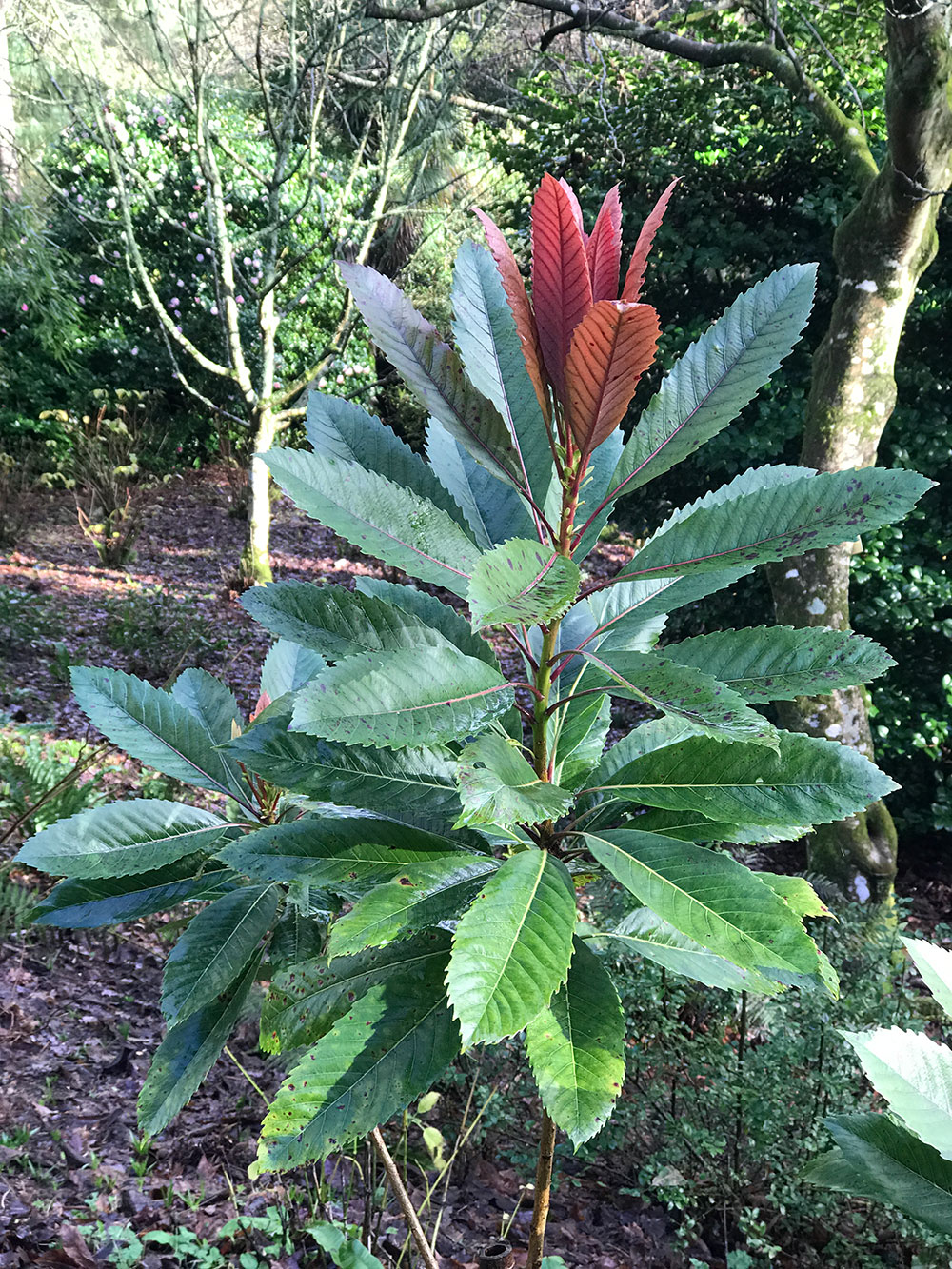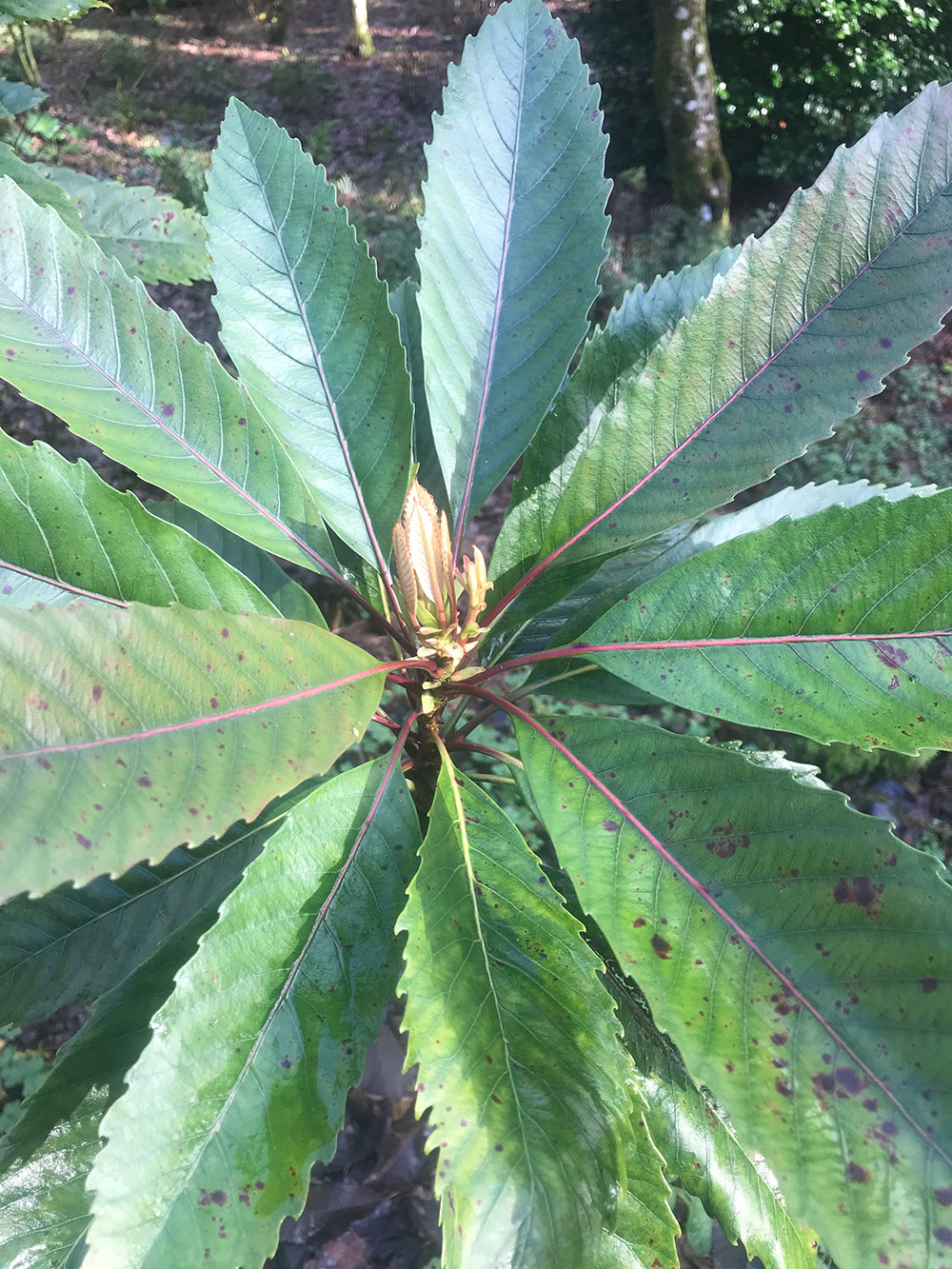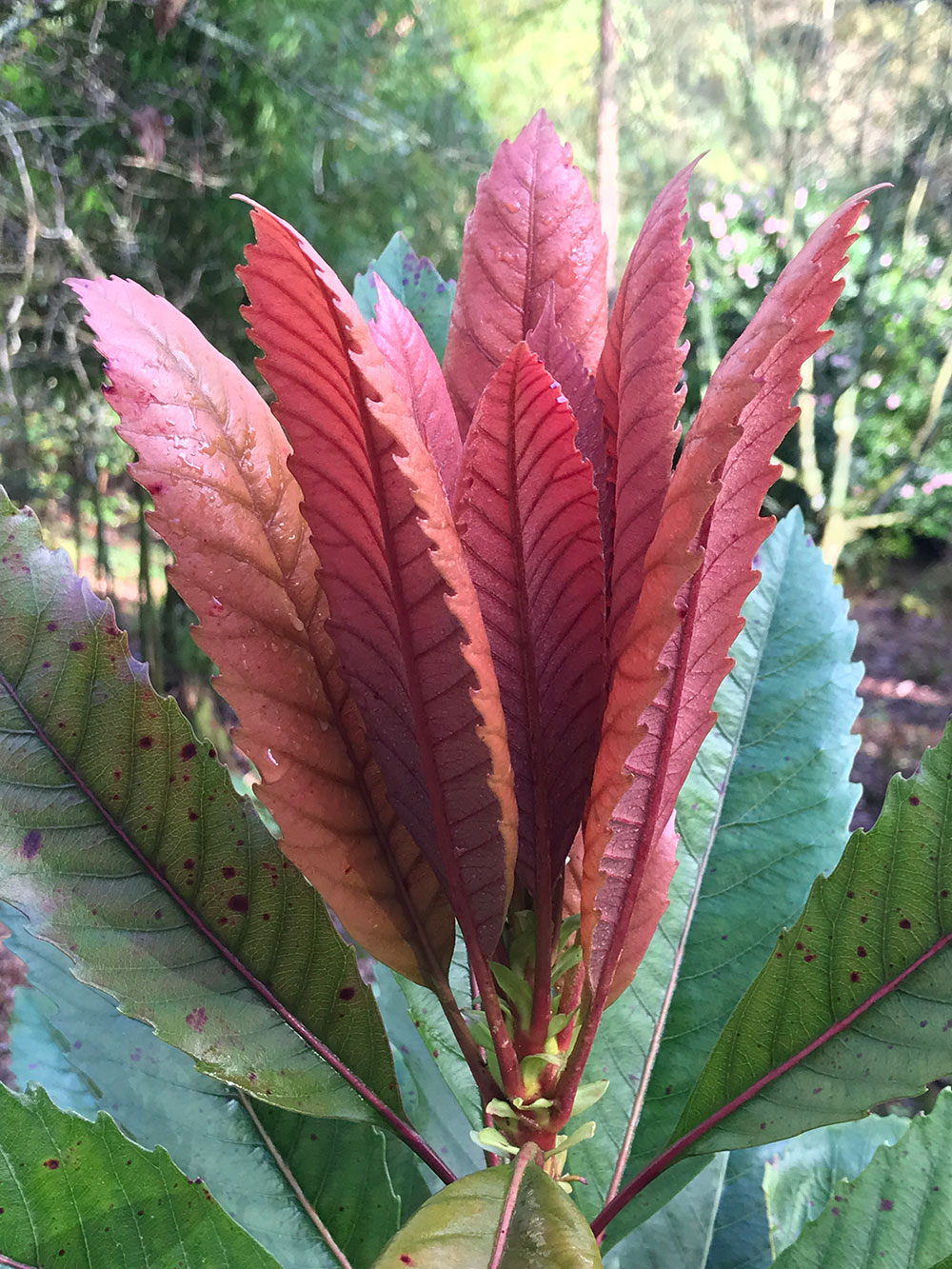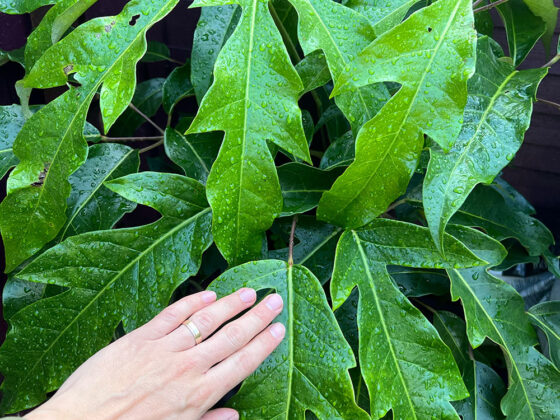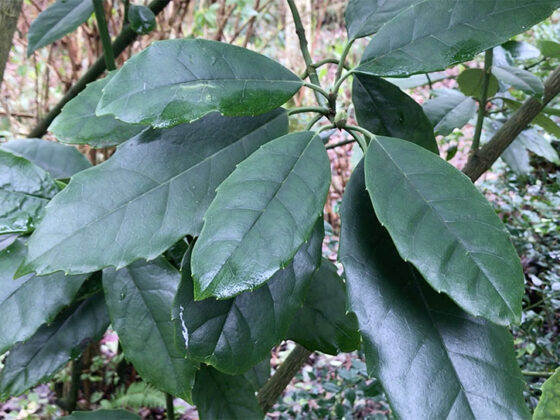

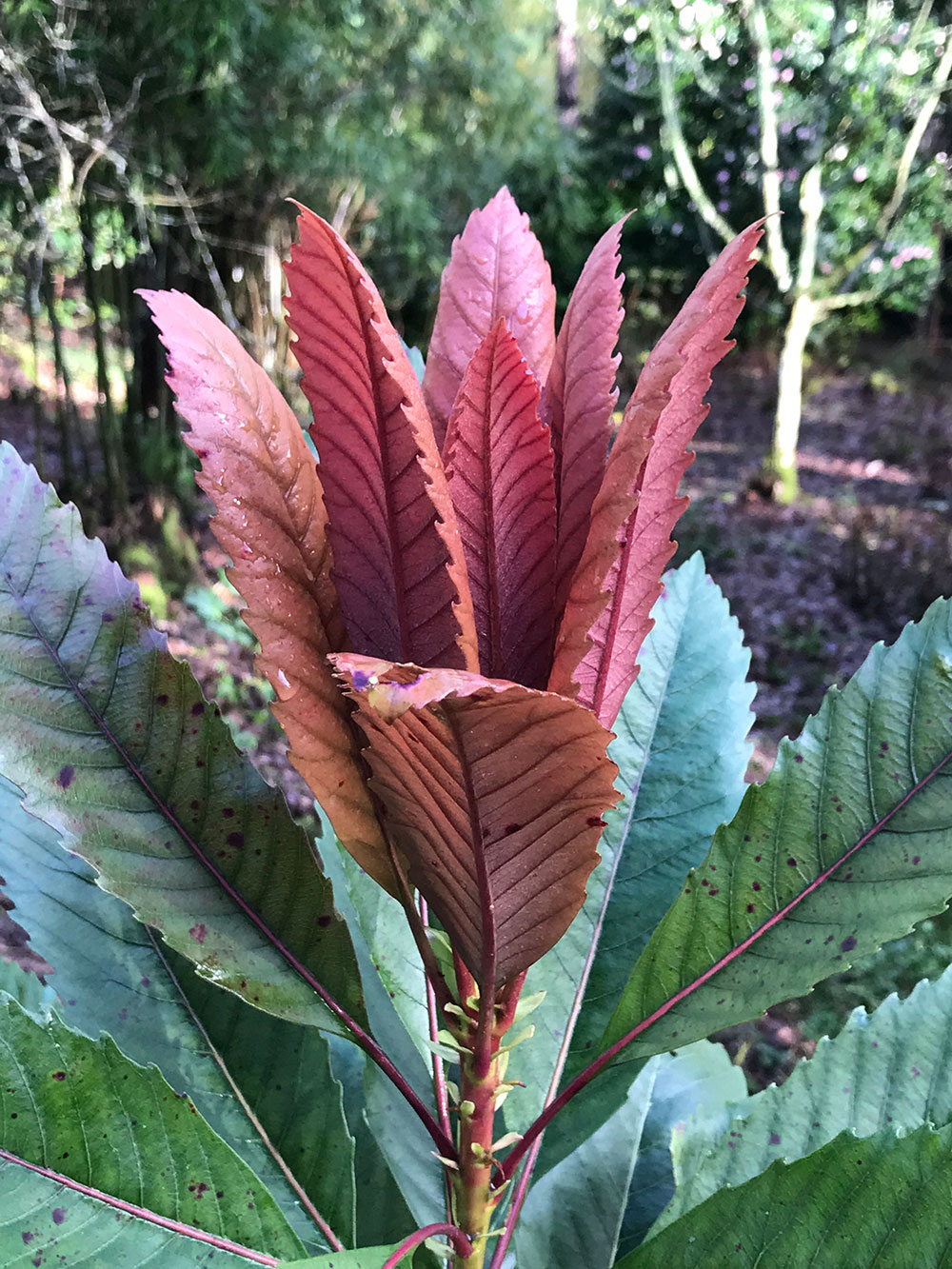
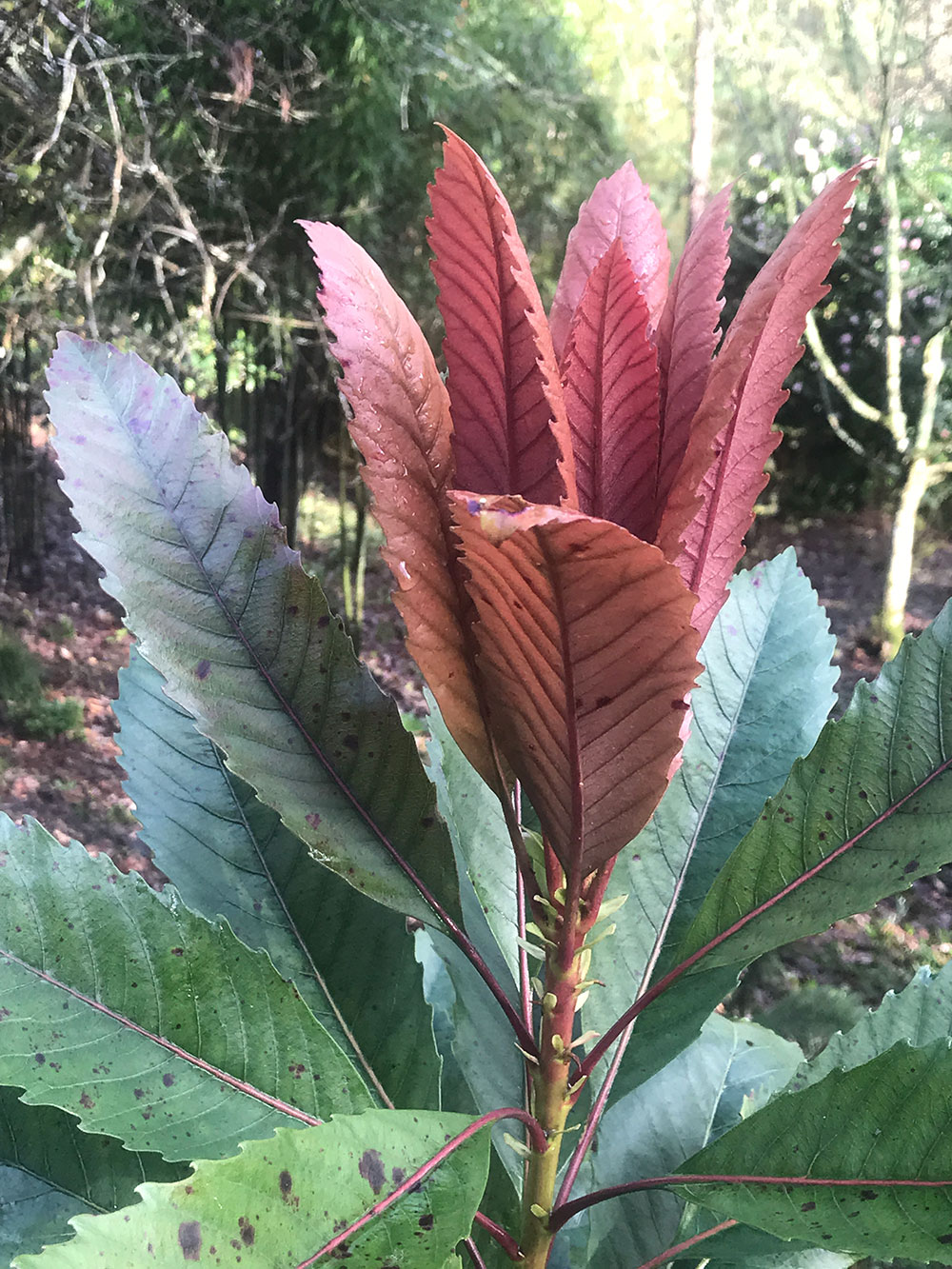
Eriobotrya deflexa is an evergreen tree native to southern China and parts of Southeast Asia. It has large, leathery leaves with a distinctive bronze flush when young, giving it a lush, subtropical appearance. In late autumn and winter, it produces clusters of creamy white flowers that are highly fragrant, followed by small ornamental fruits. Its bold foliage makes it an excellent structural plant in mild UK gardens.
| KEY PLANT INFORMATION | |
|---|---|
| Family: | Rosaceae |
| Plant Type: | Evergreen shrub or tree |
| Plant Colours: | Green, bronze, white |
| Flowering period: | Late autumn to winter |
| Fragrance: | Strongly fragrant |
| Mature Height: | 6–10 m / 20–33 ft |
| Light Requirements: | Sun or partial shade |
| Water Requirements: | Moderate, free draining |
| Cold Hardiness: | –8 °C / 18 °F |
| Difficulty: | Moderate |

Plant Type
Evergreen shrub or tree
This plant grows as a small to medium evergreen tree, sometimes forming a large multi-stemmed shrub when young. It develops a strong woody framework over time and behaves more like a tree than a soft-stemmed exotic. Growth is steady rather than fast, making it manageable in gardens. It is primarily ornamental, valued for foliage texture and winter flowers rather than fruit production.

Mature Height
6–10 metres (20–33 feet)
In ideal conditions, Eriobotrya deflexa reaches 6–10 metres (20–33 feet) over many years. In UK gardens, especially cooler or exposed sites, it often stays closer to 4–6 metres (13–20 feet). Height can be controlled with light pruning, making it suitable for sheltered gardens or as a canopy plant in jungle-style planting schemes.

Light Requirements
Full sun to partial shade
Eriobotrya deflexa performs best in full sun, where foliage colour and flowering are strongest. It will tolerate light shade, particularly in warmer areas, but excessive shade reduces flowering and overall vigour. A sheltered, south- or west-facing position is ideal in the UK, protecting the large leaves from cold winds while maximising light levels.

Water Requirements
Moist but well drained
This species prefers moderate, consistent moisture with excellent drainage. It does not tolerate waterlogged soils, especially in winter, making raised planting or improved drainage important on clay. Once established, it shows reasonable drought tolerance, though prolonged dryness will reduce growth and flowering. Mulching helps conserve moisture and supports healthy root development.

Cold Hardiness
–8 °C (18 °F)
Eriobotrya deflexa is hardy to around –8 °C (18 °F) once established. Young plants are more vulnerable and benefit from winter protection during their first few years. Cold winds and late frosts can damage foliage and flower buds, so a sheltered microclimate is crucial. It suits mild coastal or urban UK gardens best.

Propagation tips
Propagation is usually done from seed, which should be sown fresh for best results. Germination is reliable in warm conditions but seedlings grow slowly at first. Semi-ripe cuttings are possible but less dependable. Keep young plants frost-free during early winters. For gardeners, buying a young plant and focusing on site selection is often the most reliable route.