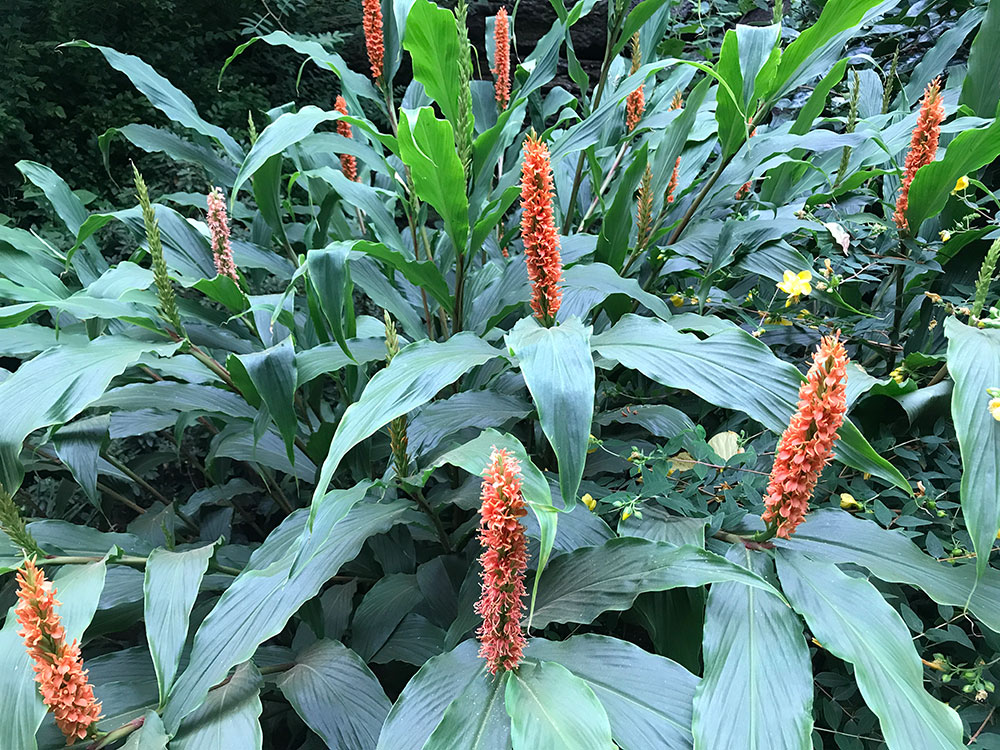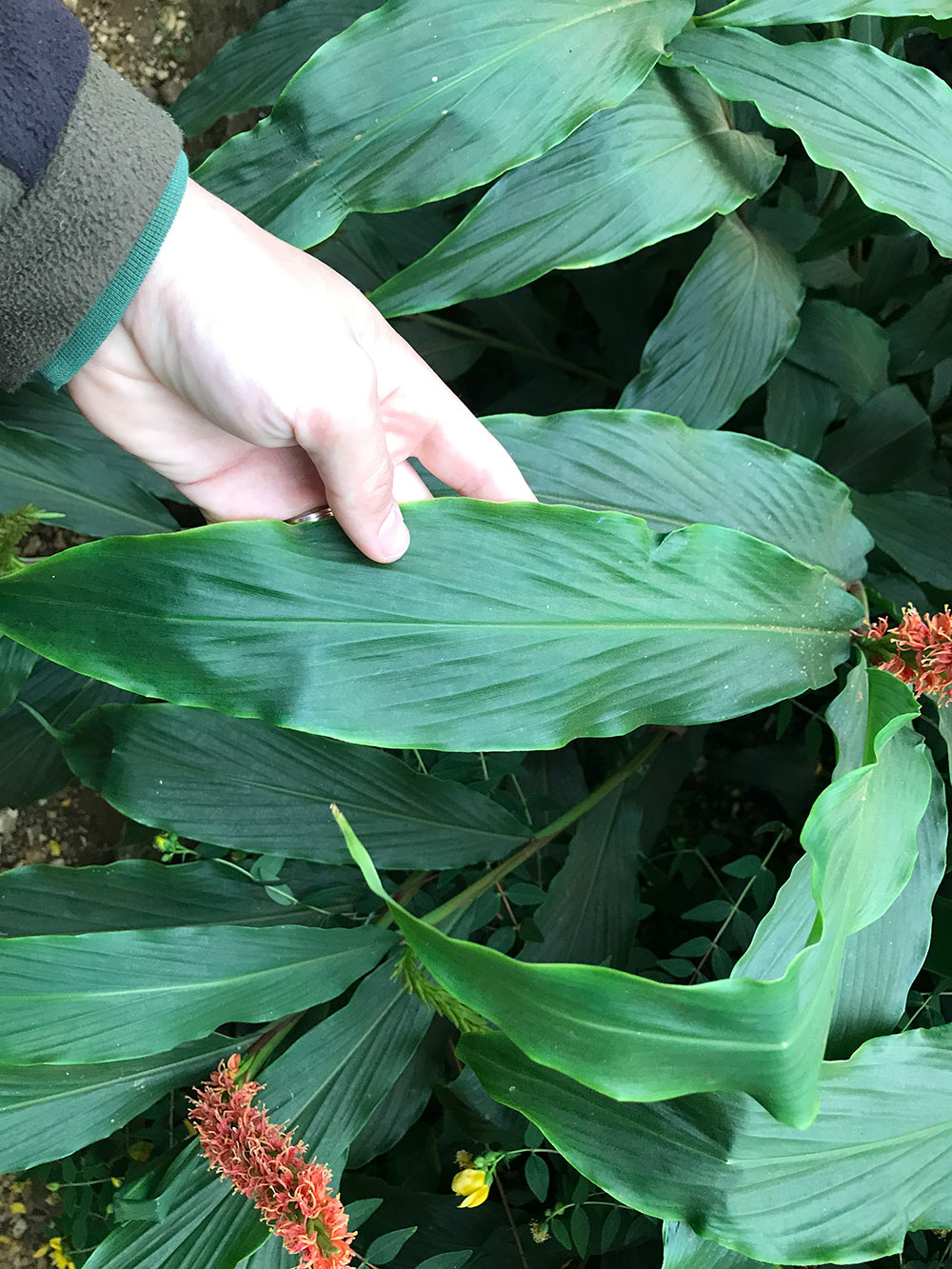

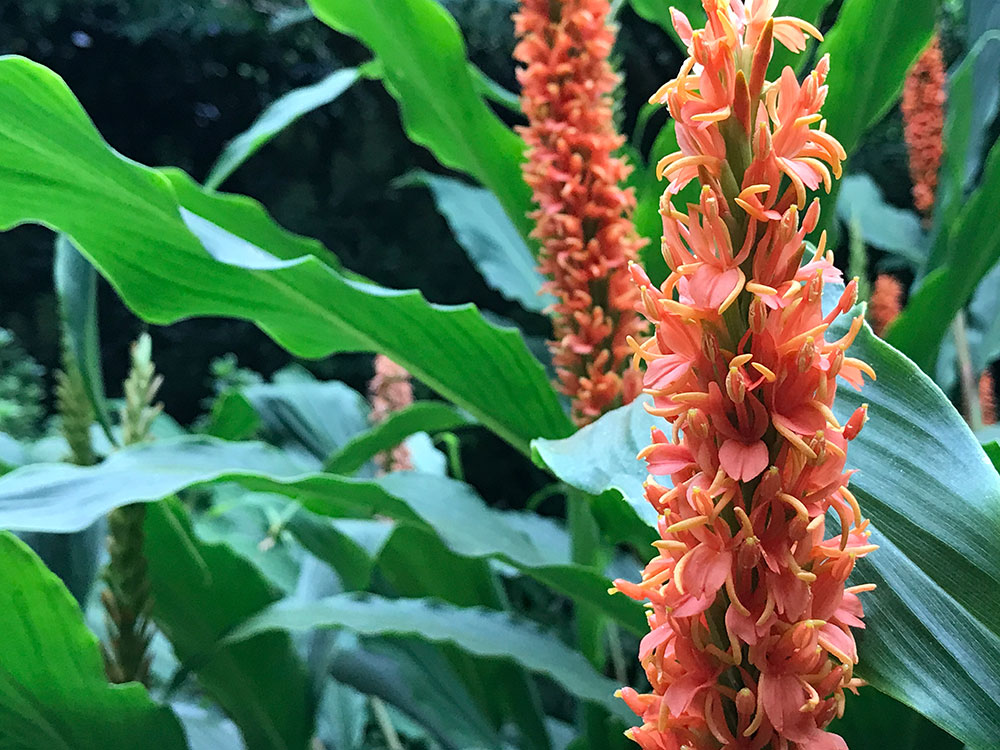
Hedychium densiflorum is a Himalayan ginger native to Nepal, Bhutan, and surrounding regions, where it grows in moist, mountain foothill habitats. It produces upright canes topped with dense cylindrical spikes of orange to yellow flowers, each small but collectively striking. The lance-shaped foliage creates a lush, tropical effect while maintaining a tidy structure. Its compact, dense flower spikes distinguish it from looser-flowered Hedychium species, making it an excellent choice for ornamental and exotic-style gardens.
| KEY PLANT INFORMATION | |
|---|---|
| Family: | Zingiberaceae |
| Plant Type: | Rhizomatous perennial |
| Plant Colours: | Orange-yellow flower spikes |
| Flowering period: | Mid to late summer |
| Fragrance: | Light, sweet scent |
| Mature Height: | 120–150 cm (around 4–5 ft) |
| Light Requirements: | Full sun – partial shade |
| Water Requirements: | Moderate to moist |
| Cold Hardiness: | −10 °C / 14 °F |
| Difficulty: | Easy |

Plant Type
Rhizomatous perennial
This species is a hardy perennial ginger that emerges each spring from fleshy underground rhizomes. Unlike culinary ginger, it is cultivated purely for ornamental interest, valued for its dense flower spikes and elegant foliage. It behaves as a herbaceous perennial in cooler climates, dying back in winter before re-sprouting vigorously once temperatures rise. In warmer climates it may retain growth for longer but still follows a seasonal rhythm typical of Himalayan gingers.

Mature Height
120–150 cm (around 4–5 ft)
In favourable conditions Hedychium densiflorum typically reaches 120–150 cm (around 4–5 ft) in a single season. Its narrow, bamboo-like stems grow rapidly in early summer and hold their shape well, rarely flopping compared to other gingers. The flowering spikes rise neatly above the foliage but do not add excessive height, keeping the plant compact and manageable. Height varies with soil fertility, moisture, and sunlight, with richer soils producing the tallest, fullest clumps.

Light Requirements
Full sun – Partial shade
This species adapts well to a range of lighting conditions but performs best in full sun to bright partial shade. In cooler climates, more sun ensures strong growth and good flowering, while in hotter areas a little afternoon shade can prevent leaf scorch and reduce moisture stress. It tolerates dappled shade but may flower less prolifically. A balance of bright light and sufficient moisture mirrors its native habitats along open, moist mountain slopes.

Water Requirements
Moderate
Hedychium densiflorum enjoys consistently moist, fertile soil throughout the growing season. It thrives with regular watering, especially in summer, but should not sit in stagnant or waterlogged ground. Mulching helps retain moisture and encourage vigorous rhizome growth. During active growth, soil should never dry completely, although mature clumps become more tolerant of short dry spells. Winter requires less moisture, especially in colder climates where the plant goes dormant and wet soils can cause rhizome rot.

Cold Hardiness
−10 °C (14 °F)
This ginger is one of the hardier Hedychium species, tolerating temperatures down to around −10 °C (14 °F) when its rhizomes are well-mulched. In colder regions, it survives winter by retreating fully underground, making it suitable for many temperate gardens. Protection with deep organic mulch helps safeguard it from freeze–thaw cycles. In milder areas it may retain some stems into winter, though the plant typically benefits from being cut back once frost has killed the top growth.
Propagation tips
Propagation is most commonly achieved by dividing established rhizome clumps in spring when new shoots begin to emerge. Each division should have at least one healthy growing point and a substantial piece of rhizome to ensure strong establishment. Replant divisions promptly into warm, moist soil. Seed propagation is possible but slower; seedlings may take several seasons to reach flowering size. Regular division every few years also rejuvenates the plant and encourages more vigorous growth and better flowering.