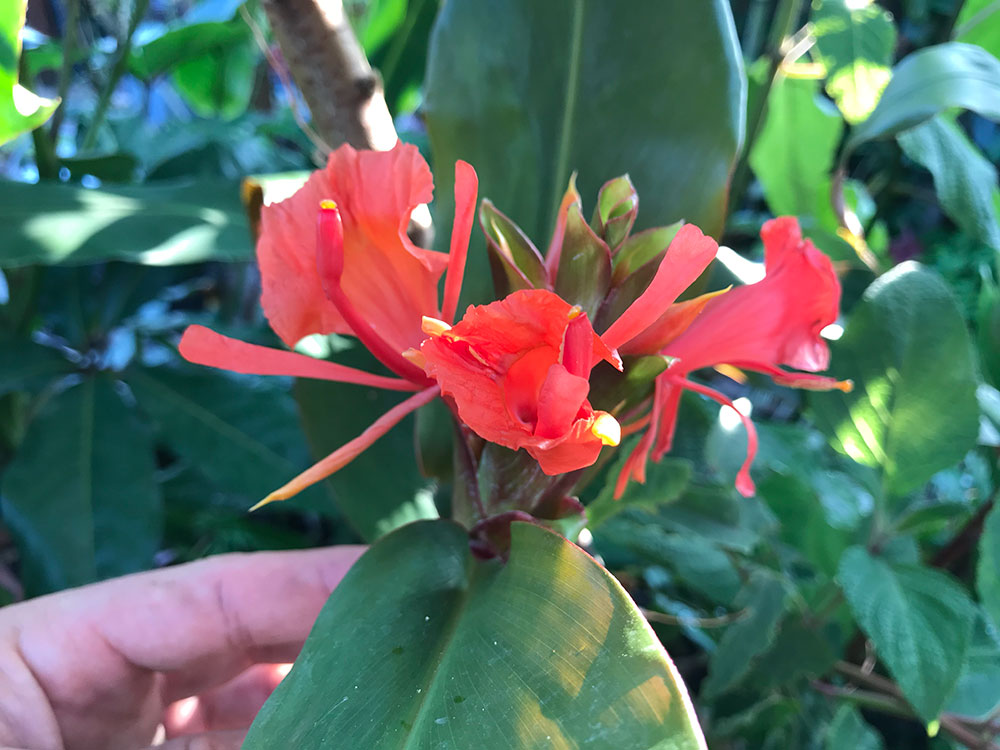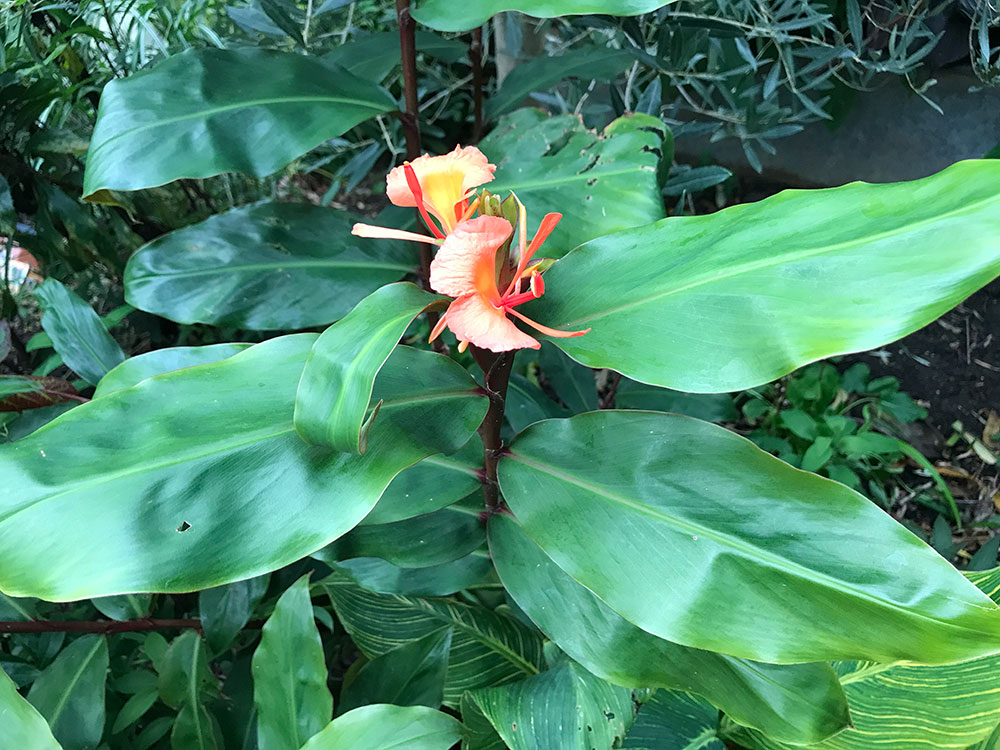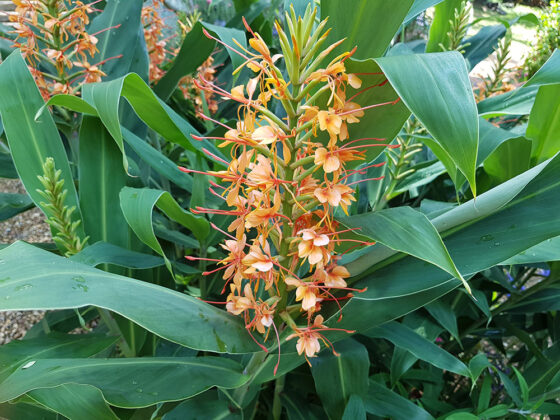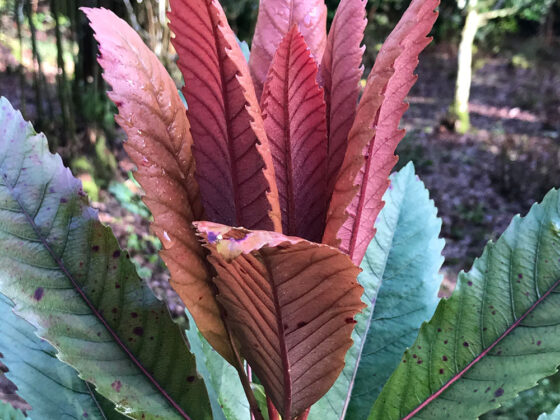

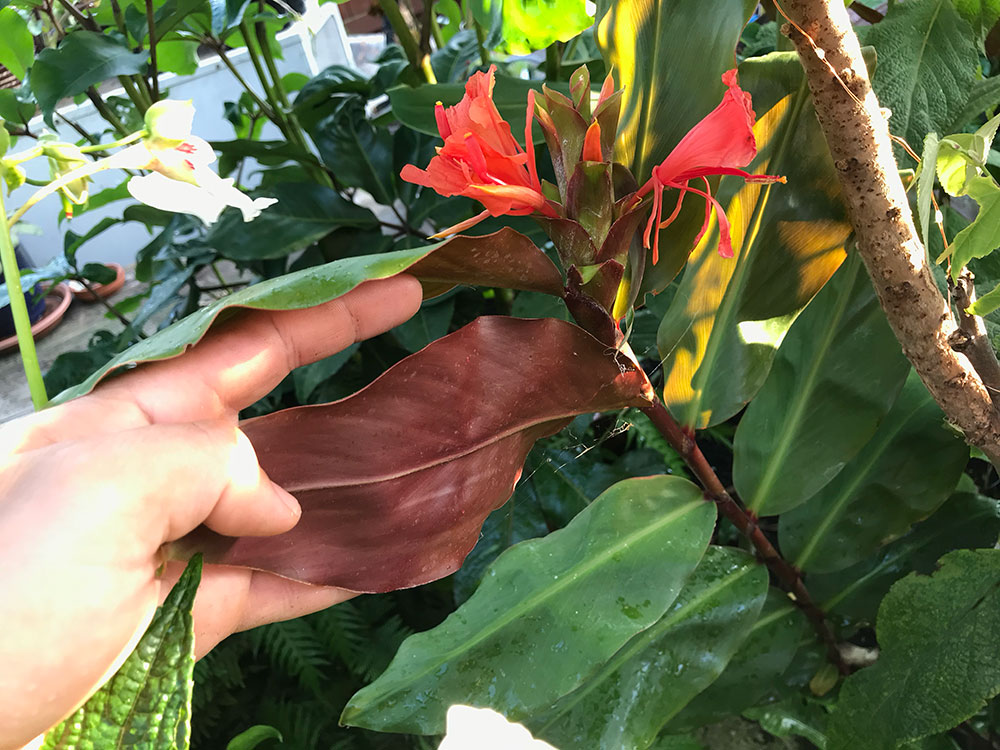
Hedychium greenii is a striking ornamental ginger native to eastern Himalaya regions, particularly Arunachal Pradesh and Bhutan. It is cherished for its deep burgundy-red stems, broad tropical green leaves, and vibrant red floral bracts. The flowers are smaller and less showy than some gingers but add vivid colour late in the season. The plant’s lush, exotic structure makes it a favourite for tropical-style plantings, containers, and sheltered gardens where bold foliage is desired.
| KEY PLANT INFORMATION | |
|---|---|
| Family: | Zingiberaceae |
| Plant Type: | Rhizomatous perennial |
| Plant Colours: | Orange-red flowers, green and maroon leaves |
| Flowering period: | Late summer to autumn |
| Fragrance: | Light, mildly sweet scent |
| Mature Height: | 90–150 cm (3–5 ft) |
| Light Requirements: | Full sun – partial shade |
| Water Requirements: | Regular moisture, well-drained |
| Cold Hardiness: | −5 °C / 23 °F |
| Difficulty: | Easy to moderate |

Plant Type
Rhizomatous perennial
This species is a rhizomatous perennial ginger, producing clumps of leafy, cane-like stems from underground rhizomes. It behaves similarly to other Hedychium species, sending up fresh shoots each spring and flowering late in the growing season. It is grown primarily for its exceptional foliage, which has a more dramatic colour contrast than most gingers. In cooler climates it functions as a herbaceous perennial, dying back to the rhizome when frost arrives.

Mature Height
90–150 cm (3–5 ft)
Hedychium greenii typically reaches 90–150 cm (3–5 ft) depending on climate, soil fertility, and moisture levels. In warm, humid regions it may push toward the taller end of that range, forming dense, upright clumps ideal for mid-border structure. In cooler or shorter-season gardens, stems remain slightly shorter but still maintain their bold presence, making it a versatile plant for both container culture and sheltered garden beds.

Light Requirements
Full sun – Partial shade
This ginger prefers partial sun to bright dappled shade, performing best where it receives gentle morning sun and afternoon protection. Too much direct midday sun can scorch the leaves, while too much shade can reduce flowering and weaken growth. In cooler climates, giving it more sun helps it achieve full height and encourages late-season blooms. In warm climates, filtered shade keeps the foliage lush and prevents leaf edge burn.

Water Requirements
Moderate
Hedychium greenii thrives in evenly moist, rich, well-drained soil. It dislikes drought, which can lead to leaf drop or stalled growth, but it also dislikes prolonged waterlogging around the rhizomes. Consistent watering during warm months supports vigorous cane growth and better flowering. A mulch layer helps retain soil moisture and keep roots cool. In winter, especially in colder zones, rhizomes should be kept drier to prevent rot during dormancy.

Cold Hardiness
−10 °C (14 °F)
This species is marginally hardy, tolerating temperatures to around −5 °C (23 °F) if well mulched. Below freezing, foliage dies back quickly, but the rhizomes may survive light frosts in sheltered microclimates. In colder regions, rhizomes should be lifted and stored frost-free, or grown in containers moved indoors. Long periods below freezing will kill the plant. Gardeners in USDA Zones roughly 8b–11 can grow it outdoors with winter protection.
Propagation tips
Propagation is most reliable through division of the rhizomes in spring, just as new shoots begin to emerge. Each division should have at least one healthy growing bud and a good piece of rhizome. Replant divisions into rich, moist soil and keep them warm to encourage rapid establishment. Hedychium greenii rarely produces viable seed, so vegetative propagation is preferred. Container-grown plants can also be divided every 2–3 years to maintain vigour and prevent overcrowding.