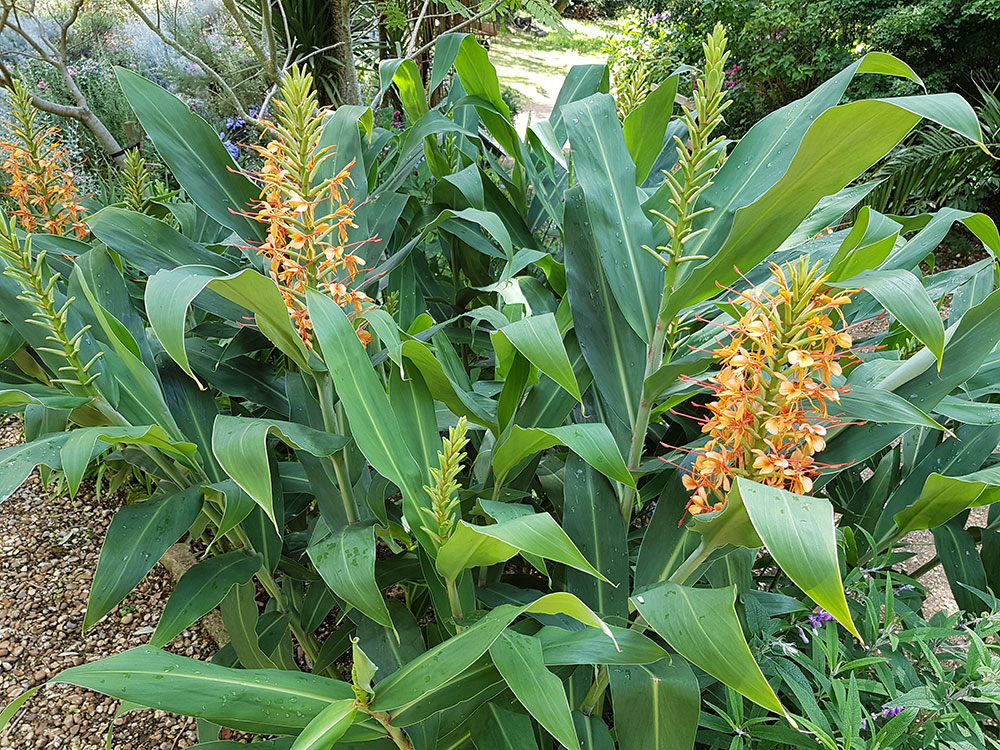

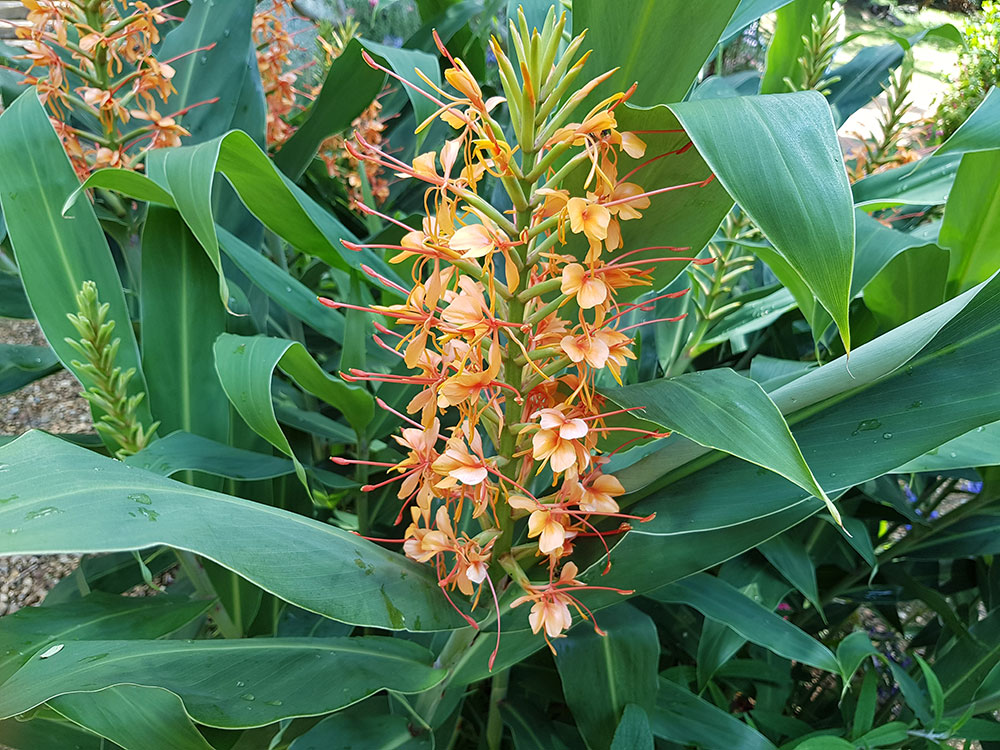
Hedychium ‘Tara’ is a striking ginger hybrid known for its tall, upright growth and vibrant tangerine-orange flower spikes. The blossoms are arranged in dense, showy heads that appear late in the season and bring an exotic touch to temperate gardens. The plant originates from breeding work involving Himalayan Hedychium species, giving it a combination of bold tropical appearance and surprising cold tolerance. Its lush, banana-like foliage adds strong architectural presence throughout summer.
| KEY PLANT INFORMATION | |
|---|---|
| Family: | Zingiberaceae |
| Plant Type: | Rhizomatous perennial |
| Plant Colours: | Orange flowers, green leaves |
| Flowering period: | Late summer to autumn |
| Fragrance: | Light, mildly sweet scent |
| Mature Height: | 150–200 cm (5–6.5 ft) |
| Light Requirements: | Full sun – partial shade |
| Water Requirements: | Regular moisture, well-drained |
| Cold Hardiness: | −8 °C / 18 °F |
| Difficulty: | Easy to moderate |

Plant Type
Rhizomatous perennial
This cultivar is a rhizomatous perennial ginger, growing from thick underground rhizomes that expand gradually each year. It behaves as a herbaceous perennial in cooler climates, dying back to the ground after frost but returning reliably in spring. In mild regions, foliage may persist longer into winter. As a tropical-looking but temperate-tolerant perennial, it fits beautifully in exotic-style borders, mixed herbaceous beds, or as a bold specimen in sheltered garden spots.

Mature Height
150–200 cm (5–6.5 ft)
Hedychium ‘Tara’ typically grows to around 150–200 cm (5–6.5 ft) in good conditions. The height comes from tall, cane-like stems that rise from the rhizomes, each clad in broad, glossy, lance-shaped leaves. Flower spikes add extra visual height late in the season. The plant’s vertical habit makes it excellent for adding height and drama without occupying large horizontal space, perfect for narrow borders or areas where strong vertical structure is needed.

Light Requirements
Full sun – Partial shade
This ginger performs best in full sun to partial shade, preferring bright, warm conditions that encourage robust growth and strong flowering. In cooler climates, full sun helps maximise heat and extend the growing season, which is important for late-blooming cultivars like ‘Tara’. In hotter regions, a little afternoon shade prevents leaf scorch. Sheltered, sunny microclimates—against walls or near heat-retaining surfaces—help it reach full flowering potential and produce the most vivid blooms.

Water Requirements
Moderate
Hedychium ‘Tara’ enjoys consistently moist but well-drained soil. Its rhizomatous roots appreciate regular watering during the growing season, especially in warm weather, to support lush foliage and late-season flowering. However, it dislikes waterlogging, particularly in winter, when overly wet soil can cause rot. Mulching helps retain moisture while improving soil structure. Once established, it tolerates short dry spells but performs best when soil moisture is kept steady throughout summer.

Cold Hardiness
−8 °C (18 °F)
Surprisingly hardy for a ginger, ‘Tara’ tolerates temperatures down to around −8 °C (18 °F) when grown in well-drained soil and mulched heavily in winter. In colder areas, plants die back fully but re-emerge in late spring. Protecting the rhizomes from winter wet is as important as protecting them from cold. Gardeners in marginal climates can lift and store rhizomes or grow in large containers that can be sheltered during severe winter weather.

Propagation tips
Propagation is most easily achieved through division of the rhizomes in spring. Lift or uncover the clump once new shoots are visible and separate sections with at least one healthy bud and a firm piece of rhizome. Replant divisions immediately into moist, enriched soil and keep well-watered until established. Avoid dividing in autumn, as plants need the summer’s growth to store energy. Although possible, seed propagation is slow and rarely used for maintaining named cultivars like ‘Tara’.