

Perennial
Musella lasiocarpa
Golden lotus banana
Also known as: Musa lasiocarpa, Ensete lasiocarpum
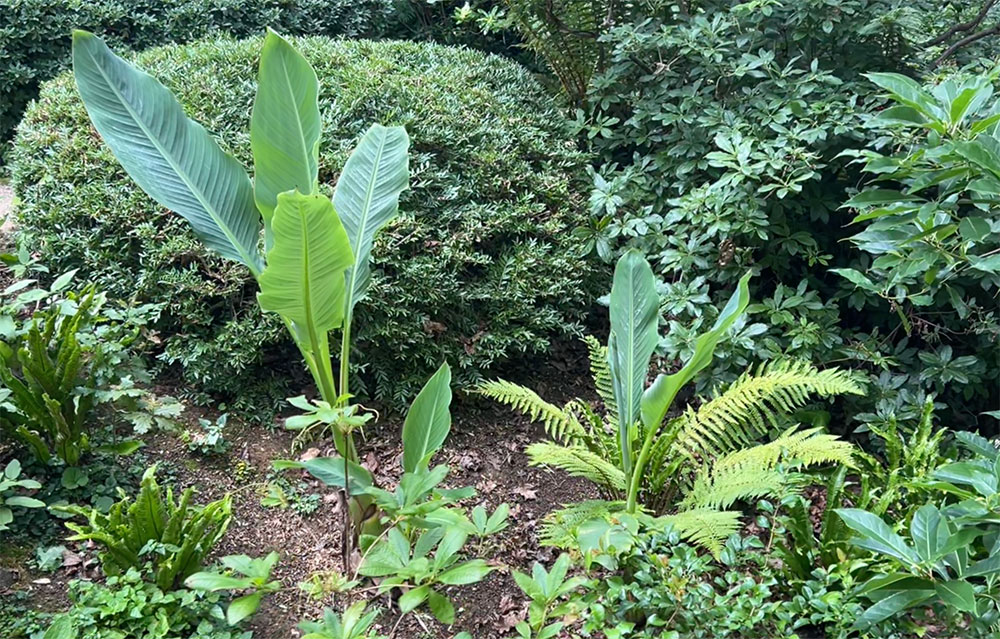
A compact banana relative with upright leaves and a long-lasting golden lotus-like flower head.
- Full sun, Partial shade
- 1–1.5 m (3–5 ft)
- 0.5–1 m (2–3 ft)
- H3 · Zone 8
- May–October
- Deciduous
- RHS Award of Garden Merit
Overview
This Chinese clumping perennial produces stiff, paddle-shaped leaves and, once mature, a striking head of yellow bracts enclosing small flowers. The flowering shoot gradually dies while offsets continue the clump. Leaves are frost tender; protect stems and roots in winter or overwinter containers frost-free.
At a Glance
Growing Conditions
Aspect Suitability
- South-facing
- West-facing
Soil Tolerance
- Clay
- Sandy
- Loam
- Acid
- Neutral pH
- Alkaline
Foliage
- Architectural foliage
Foliage interest: May–October
Seasonal Timeline
- Flowering May Jun Jul Aug Sep Oct
- Foliage May Jun Jul Aug Sep Oct
- Propagate Mar Apr May Jun Jul
How to propagate
Ways to grow more Golden lotus banana: the usual steps for each method.
Offsets, runners and bulblets Mar–Apr Easy
You'll need: A trowel, small pots and compost.
- Find the small plants, offsets or bulblets growing beside the parent plant, or on its runners.
- Gently separate them with some roots, cutting any runner from the parent.
- Pot them up, or replant them at the same depth, and water.
- How long
- Grows on within a few weeks.
- It's worked when
- New leaves on the young plants.
- Then
- Grow them on until they're a good size before planting out.
From seed Mar–May Easy
You'll need: Seed compost, a seed tray or small pots, labels, and a clear lid or plastic bag.
- Fill a tray or pots with seed compost, level it and firm it gently.
- Water the compost and let it drain.
- Sow the seeds thinly on top. Cover them with a fine layer of compost or vermiculite about as deep as the seed is big; leave tiny seeds uncovered.
- Label them, cover with a clear lid or bag, and keep them somewhere bright but out of hot sun.
- Keep the compost just moist, and take the cover off once seedlings appear.
- How long
- Usually comes up in 1 to 3 weeks.
- It's worked when
- Seedlings with their first pair of leaves.
- Then
- When each has its first true leaves, prick them out into their own small pots, holding them by a leaf, never the stem. Harden them off for a week or two before planting out.
Separate offsets only when they have roots. Seed needs warmth and may germinate irregularly; protect young plants during winter.
Maintenance Calendar
- Apr Remove dead foliage and restart watering as growth resumes
- May Move plants outside after frost and acclimatise gradually
- Jun Feed and maintain generous moisture through summer
- Jul Separate well-rooted offsets if required
- Oct Shelter pots frost-free or insulate drained outdoor crowns
- Dec Keep resting plants barely moist and remove rot promptly
Garden Design
Works well in: Modern / Contemporary, Tropical / Exotic
Fits smaller spaces than most bananas. Flowering begins only on mature shoots and the display can last several months.
Companion planting: Cannas, Gingers, Low grasses
Wildlife Value
- Shelter
Safety
No well-established major toxicity; ornamental fruit is not a dessert banana.