

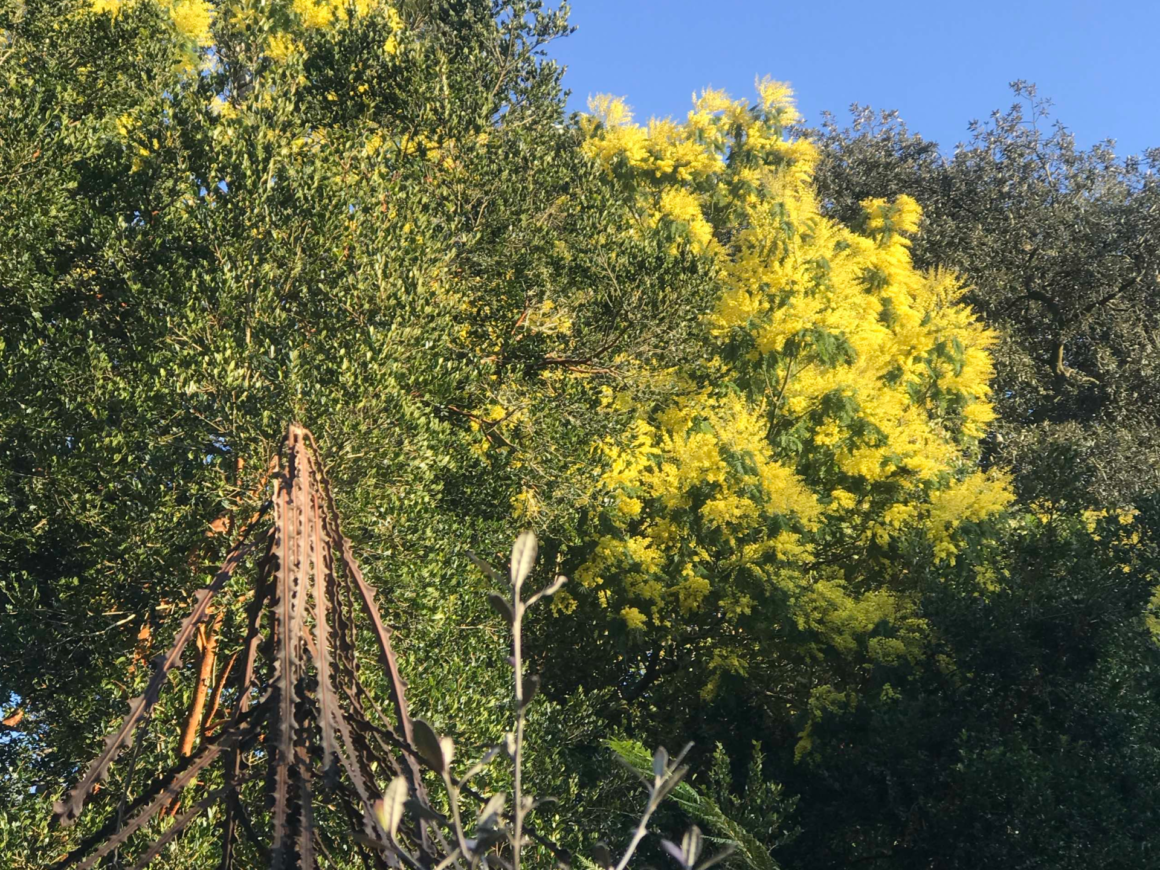
Tree
Acacia dealbata
Mimosa
Also known as: Acacia decurrens var. dealbata, Racosperma dealbatum
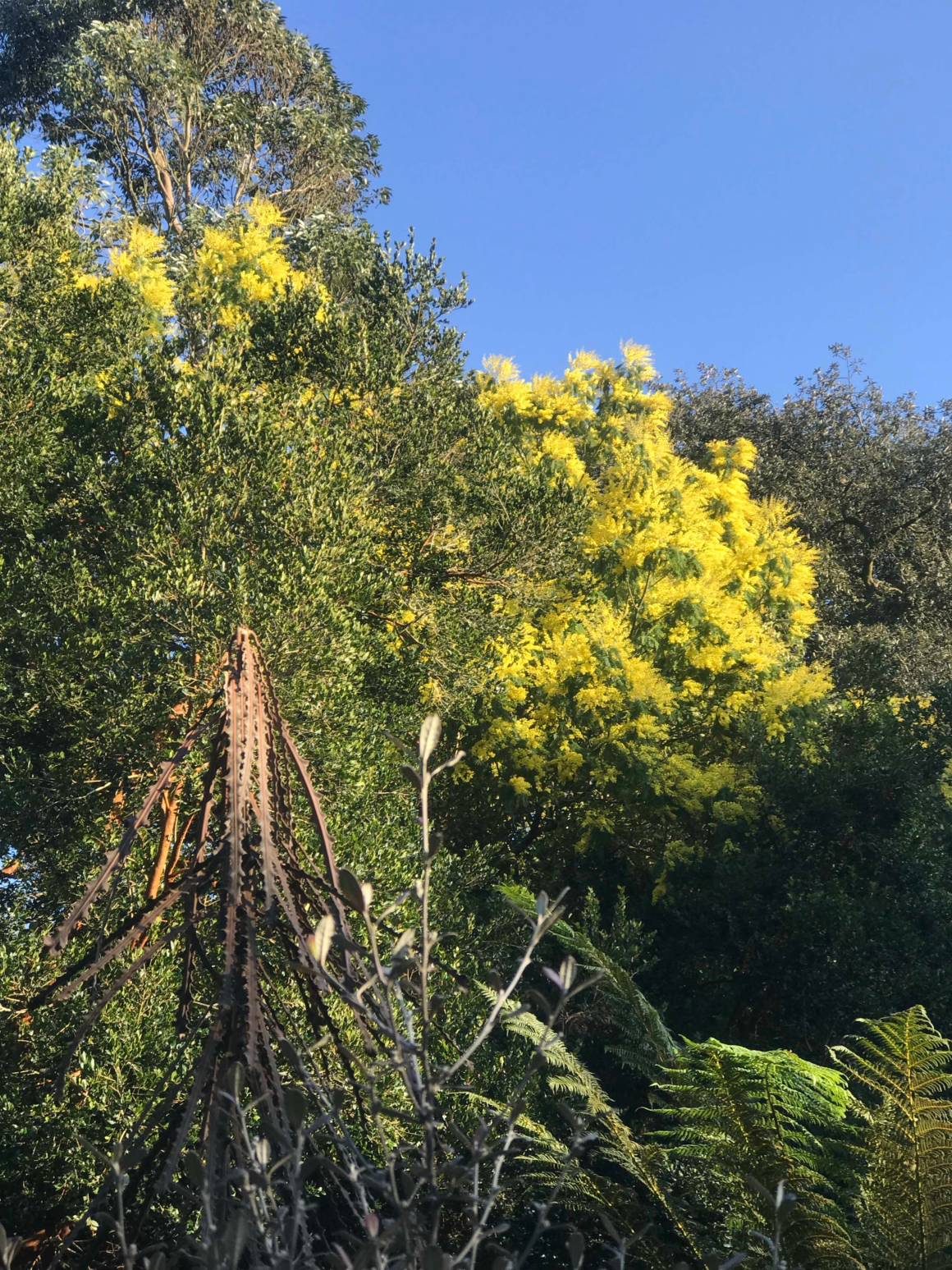
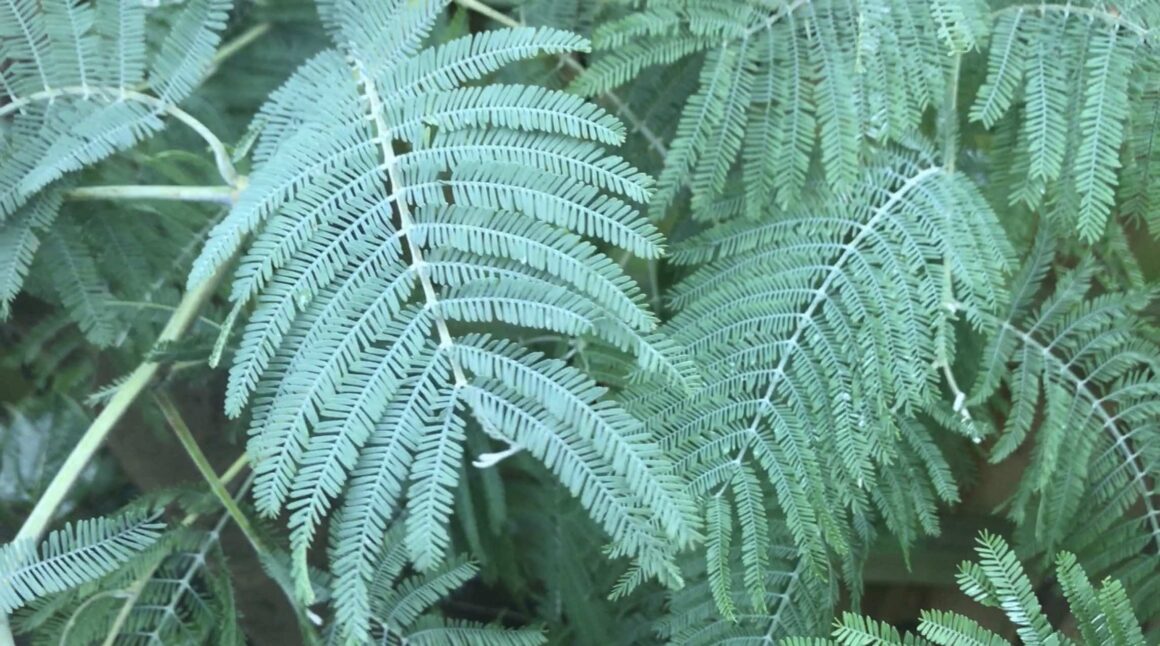
A fast-growing evergreen tree with fern-like silver-grey foliage and clouds of fragrant yellow pom-pom flowers in late winter.
- Full sun
- 6–12 m (20–39 ft)
- 2.5–4 m (8–13 ft)
- H3 · Zone 9
- January–March
- Evergreen
- RHS Award of Garden Merit
Overview
Also known as mimosa or silver wattle, this Australian tree brings an early, sweetly scented flush of bright yellow flowerheads above finely divided, silvery, fern-like leaves from January to March, often before anything else in the garden is in flower. It is best treated as a plant for the mildest, most sheltered UK gardens: a warm, south- or west-facing wall out of cold winds gives it the best chance of coming through a typical winter, and young plants benefit from fleece in their first few years. In colder inland or northern gardens it is safer grown in a large pot that can be moved to a frost-free spot for winter.
At a Glance
Growing Conditions
Aspect Suitability
- South-facing
- West-facing
Site Tolerance
- Coastal
- Drought
Soil Tolerance
- Sandy
- Loam
- Acid
- Neutral pH
Foliage
- Architectural foliage
Foliage interest: 12 months of the year
Seasonal Timeline
- Flowering Jan Feb Mar
- Foliage 12 months of the year
- Fruiting Jul Aug
- Propagate Mar Apr Jul Aug
Maintenance Calendar
- Mar Remove any frost-damaged tips once new growth confirms live wood
- May Lightly shape after flowering, avoiding cuts into bare old wood
- Jun Water deeply while establishing
- Oct Mulch the root area before winter
- Nov Fleece young or newly planted trees during hard frosts
Garden Design
Works well in: Mediterranean, Modern / Contemporary, Tropical / Exotic, Wildlife-friendly
Give it the warmest, most sheltered spot available - a south-facing wall corner works well - and underplant with drought-tolerant Mediterranean shrubs that share its need for sharp drainage.
Companion planting: Mediterranean shrubs, Grasses, Spring bulbs
Wildlife Value
- Bees
- Other pollinators
- Shelter
Safety
No well-established major toxicity; resents hard pruning back into old wood, so shape lightly and early.